


Langley Boiler Installation: Get Your Home Heating Right


Why Reliable Home Heating Matters in Langley's Climate
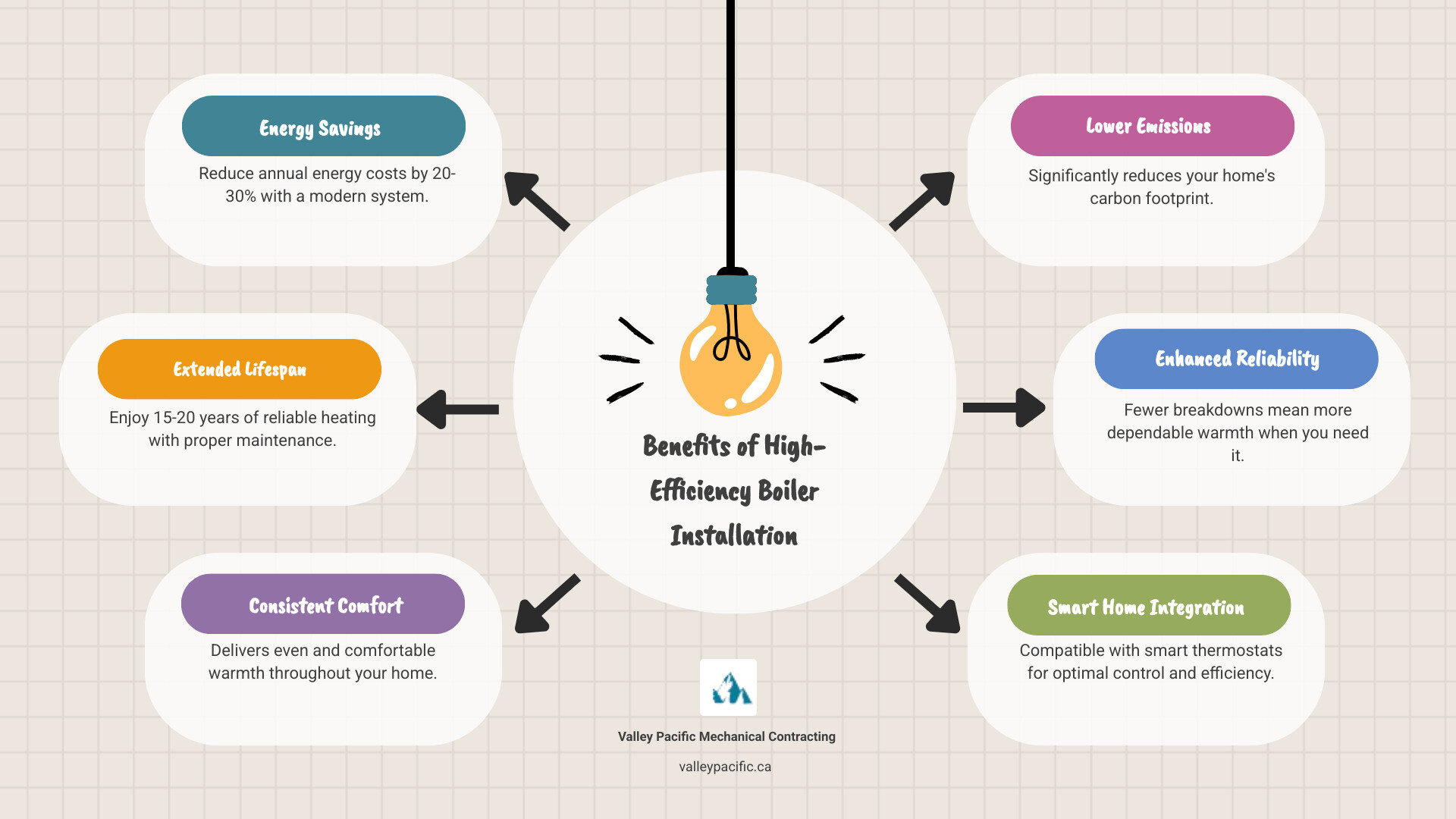
Boiler installation Langley homeowners trust starts with understanding your heating needs. Langley's damp, cool winters demand a heating system that delivers consistent warmth without driving up energy bills or breaking down when you need it most. If your current boiler is over 15 years old, struggles to heat your home evenly, or requires frequent repairs, it's likely time for a professional replacement. Modern high-efficiency boilers can reduce your energy costs by 20-30%, provide more reliable heat, and lower your carbon footprint—all while lasting 15-20 years with proper maintenance.
Quick Guide to Boiler Installation in Langley:
- Best Boiler Types: Combi boilers for smaller homes, system boilers for multiple bathrooms, conventional boilers for larger properties
- Key Installation Steps: Home assessment, old system removal, professional installation with proper venting, permits and inspections, system flush and testing
- Timeline: Most installations complete in 1-2 days
- Efficiency Ratings: Look for AFUE ratings of 90% or higher
- Maintenance: Annual professional servicing recommended
For expert guidance on your heating system, explore our HVAC services in Langley, or request a quote for professional boiler installation today.
This guide walks you through everything you need to know about boiler installation in Langley—from recognizing when it's time to replace your existing system to choosing the right boiler type, understanding the professional installation process, and ensuring your new system operates efficiently for years to come.
Relevant articles related to Boiler installation Langley:
Is It Time for a New Boiler? Key Signs to Watch For
Nobody wants to think about replacing their boiler until it stops working on the coldest night of the year. But here's the thing—your boiler usually gives you plenty of warning signs before it gives up completely. Learning to recognize these signals early can save you from shivering under blankets at 2 AM, waiting for emergency service.
The truth is, there comes a point in every boiler's life when replacement makes more sense than another repair. It's not always an easy decision, but understanding what to look for can help you make the right call before you're forced into an emergency situation.

Signs Your Boiler Needs Replacement
Think of your boiler like a car. After about 15 years of loyal service, things start to wear out. Parts that used to work perfectly begin to struggle. Efficiency drops. And suddenly, you're spending more money to get less heat.
Age is often the first indicator. If your boiler is pushing past the 15-year mark, it's entered its senior years. Even with excellent maintenance, boilers typically last between 15 and 20 years. After that, the decline accelerates. Components wear out, seals deteriorate, and efficiency plummets.
But age isn't the only factor. Rising energy bills often signal a struggling boiler long before it completely fails. When your boiler loses efficiency, it works harder and runs longer to heat your home to the same temperature. You might not notice the difference in performance right away, but you'll definitely notice it in your monthly bills. Modern high-efficiency boilers can cut your heating costs by 20-30%, which means an old, inefficient unit is costing you significantly more every month.
Frequent repairs are another red flag. If you're calling for service several times a year, those repair bills add up quickly. At some point, you're essentially making payments on a new boiler while still using the old one. When repair costs start approaching half the price of a new unit, replacement usually makes better financial sense. Our Boiler Repair Langley Guide can help you understand when repair versus replacement makes the most sense.
Uneven heating throughout your home means your boiler is struggling to distribute warmth effectively. Some rooms feel toasty while others stay stubbornly cold. Radiators heat unevenly or take forever to warm up. This isn't just uncomfortable—it's a sign your boiler can't keep up with your home's heating demands anymore.
Finally, unusual noises deserve your attention. Yes, boilers make some noise during normal operation. But loud banging, persistent whistling, or gurgling sounds indicate internal problems. These noises often point to mineral buildup (called kettling), failing pumps, or deteriorating components.
Common Boiler Problems That Signal a Need for Service
Not every boiler issue means you need a full replacement. Sometimes your system just needs professional attention to get back on track. But even seemingly minor problems can snowball into major headaches if you ignore them.
Water leaks around your boiler should never be dismissed as "just a small drip." Any moisture means something's wrong—whether it's a faulty pressure relief valve, corroded pipes, or a failing seal. Water and heating systems don't mix well, and leaks can cause serious damage to your home and your boiler. If you spot water, our guide on what to do when your boiler is leaking water walks you through the immediate steps.
Pressure problems are incredibly common but shouldn't be ignored. Your boiler needs to maintain the right pressure to heat efficiently. If the pressure gauge keeps dropping, you likely have a leak somewhere in the system or a problem with the expansion vessel. Low pressure means poor heating performance and higher energy bills. Check out our resource on what to do when boiler pressure drops for practical solutions.
No hot water is one of those problems that gets your immediate attention—especially during a cold Langley winter. This frustrating issue could stem from a faulty thermostat, a broken diverter valve, or problems with the heating element. Our troubleshooting guide for no hot water from boiler can help you identify the cause.
Strange noises beyond normal operation deserve investigation. While some sounds are typical, persistent banging, high-pitched whistling, or constant gurgling indicate specific problems. These noises often signal mineral buildup on the heat exchanger, air trapped in the system, or a pump that's on its last legs.
Pilot light issues matter more than you might think. Your pilot light should burn a steady blue flame. If it keeps going out, burns yellow or orange, or flickers constantly, something's wrong with the thermocouple, gas supply, or ventilation. These aren't just performance issues—they're potential safety concerns. Learn more about addressing boiler pilot light problems properly.
The key is catching these problems early. Our technicians have spent 30+ years working with every type of boiler imaginable, from older conventional systems to the latest high-efficiency models. We know what to look for, how to fix it right, and when it makes more sense to recommend boiler installation in Langley rather than another repair. When you work with Valley Pacific Mechanical Contracting, you get honest advice based on what's actually best for your home and your budget—not what's easiest for us.
Choosing the Right Boiler for Your Langley Home
Selecting the perfect boiler for your home is a crucial decision that impacts your comfort, energy bills, and environmental footprint for years to come. With our 30+ years of expertise, we're here to guide you through the options, ensuring you get a headache-free experience.
The good news? Modern boilers are more efficient and reliable than ever. The challenge? Figuring out which type suits your specific needs. Let's break down your options in plain English.
Types of Boilers Explained
Boiler systems are getting more advanced as technology develops, with more electronics placed inside to monitor operation. Understanding the main types available will help you make an informed choice for your boiler installation Langley project.
Combi boilers (short for combination boilers) are the compact champions of the boiler world. They heat water directly from your mains supply whenever you turn on a tap or radiator, eliminating the need for a separate hot water storage tank. This makes them ideal for smaller homes, apartments, or properties with limited space. If you have one or two bathrooms and don't need multiple taps running hot water simultaneously, a combi boiler could be your perfect match. They're energy-efficient because they only heat water when you need it—no energy wasted keeping a tank warm all day.
System boilers work with a separate hot water storage cylinder, making them better suited for homes with higher hot water demands. If your family includes multiple people who shower in the morning, or you have two or more bathrooms that get used at the same time, a system boiler ensures everyone gets hot water without pressure drops or temperature fluctuations. The stored hot water means you can run multiple taps and showers simultaneously without any issues. These systems are also compatible with solar thermal panels if you're thinking about renewable energy down the road.
Conventional boilers (also called regular or traditional boilers) are the workhorses for larger properties. They require both a hot water cylinder and a cold water storage tank, typically installed in your loft or attic. If you live in a larger home with multiple bathrooms and high simultaneous hot water demands, a conventional boiler provides the capacity you need. They're also the best choice if you have an older heating system with a traditional radiator setup, as they work seamlessly with existing pipework. For more details on how different boiler systems operate, visit our guide on boiler heating systems.
| Boiler Type | Best For | Key Benefits |
|---|---|---|
| Combi | Small to medium homes, 1-2 bathrooms, limited space | No storage tank needed, instant hot water, space-saving, energy-efficient |
| System | Medium to large homes, 2-3 bathrooms, multiple users | Handles multiple taps simultaneously, works with solar panels, reliable hot water supply |
| Conventional | Large homes, 3+ bathrooms, existing traditional systems | Highest capacity, compatible with older radiator systems, excellent for high demand |
Sizing and Energy Efficiency
Getting the right boiler size isn't about physical dimensions—it's about heating capacity measured in kilowatts (kW). This is where many homeowners make costly mistakes. A boiler that's too small will struggle to heat your home properly, running constantly and wearing out prematurely. One that's too large wastes energy and cycles on and off inefficiently, also shortening its lifespan.
Proper boiler sizing requires professional load calculations that factor in your home's square footage, insulation quality, number of radiators, hot water usage patterns, and even Langley's specific climate conditions. Our technicians perform these assessments during your consultation to ensure your new boiler is perfectly matched to your needs.
When evaluating efficiency, look for the AFUE rating (Annual Fuel Utilization Efficiency). This percentage tells you how much of the fuel your boiler uses actually goes toward heating your home versus being lost through exhaust. Modern high-efficiency boilers typically have AFUE ratings of 90% or higher, with some condensing models reaching 95-98%. Compare that to older boilers that might only achieve 60-70% efficiency, and you can see why upgrading makes such a difference.
High-efficiency models cost more upfront, but the math works in your favor quickly. A boiler with a 95% AFUE rating versus an old 70% model means you're getting 25% more heat from the same amount of fuel. Over a Langley winter, those savings add up month after month, year after year. Most homeowners see the investment pay for itself within 5-8 years through reduced energy bills alone.
Beyond your wallet, there are environmental benefits to consider. High-efficiency boilers produce fewer greenhouse gas emissions because they extract more heat from the fuel they burn. If sustainability matters to you, upgrading to a modern boiler is one of the most impactful home improvements you can make. Some newer models also qualify for utility rebates, putting even more money back in your pocket while reducing your carbon footprint.
The right boiler choice depends on your unique situation—your home's size, your family's hot water needs, your existing system, and your budget. That's why we always start with a thorough consultation to understand your specific circumstances before recommending a solution. No cookie-cutter approaches, just honest guidance backed by three decades of experience keeping Langley homes comfortable.


