


Deciding Between a Heat Pump and a High-Efficiency Boiler for Coastal BC Winters


Are You Choosing the Right Heating System for a Damp Coastal Climate?
Are you struggling with deciding between a heat pump and a high-efficiency boiler for coastal BC winters? Upgrading an aging heating system is a major investment, especially when you are dealing with the bone-chilling moisture of the Pacific Northwest. Most generic heating advice focuses on surviving deep, dry freezes, but our local climate presents a very different challenge. Coastal British Columbia winters are characterized by high dampness and persistent humidity rather than sub-zero blizzards. This means your heating system needs to do more than just generate hot air; it needs to combat the specific, penetrating chill that moisture brings into your home.
Whether you are looking into heat pump installation and service or you are considering high-efficiency boiler upgrades, understanding how each technology interacts with a mild, damp coastal winter is the first step toward lasting comfort. A boiler offers consistent, draft-free radiant warmth, while a heat pump provides unmatched energy efficiency and dual heating and cooling versatility. Choosing the right path means evaluating exactly how your home handles the unique coastal weather.
Understanding the Pacific Northwest 'Damp Cold' Factor
To make an informed decision about your HVAC upgrade, you first need to understand the science behind our local weather. The "damp cold" is a well-known phenomenon for anyone living in Maple Ridge and the Fraser Valley. While average winter temperatures here typically hover between 3 to 7 degrees Celsius, the high relative humidity and significant rainfall make those mild temperatures feel substantially colder than a dry minus-ten day in the prairies.
Moisture in the air is highly conductive. When the indoor humidity is high, that damp air pulls heat away from your body much faster than dry air does. This is why a home heated to 20 degrees Celsius can still feel incredibly chilly if the heating system does not properly address the ambient moisture. Generic national heating advice often assumes a dry, deep freeze, recommending systems based purely on raw heat output. However, in our region, the way a system delivers heat and manages the indoor environment is just as important as its British Thermal Unit (BTU) rating.
Different heating technologies combat this specific type of chill in very different ways. Forced-air systems circulate warmed air to raise the ambient temperature, while radiant systems warm the physical objects in the room. Understanding this distinction is the key to achieving true indoor comfort during our long, rainy seasons.
The Radiant Comfort Advantage of High-Efficiency Boilers
If your primary goal is to eliminate the penetrating chill of a mild, damp coastal winter, a high-efficiency boiler offers a distinct advantage. Unlike forced-air furnaces or heat pumps that blow heated air through vents, boilers distribute heat through water. This hot water travels through radiators, baseboards, or in-floor piping, providing a completely different physical sensation.
Radiant Heat Transfer: Boilers warm the objects and people in the room directly, rather than just heating the air. This direct transfer is highly effective at counteracting the chilling effect of high indoor humidity.
Draft-Free Operation: Because there are no blowers or fans pushing air around, boiler systems do not create indoor drafts. This means you will not feel the subtle, chilly breezes that sometimes accompany forced-air systems when they cycle on and off.
Non-Drying Warmth: Radiant heat maintains a comfortable indoor environment without circulating dust or severely drying out the air, which is a common complaint with traditional furnaces.
To fully grasp how a modern boiler heating system works, it helps to look at real-world applications. One local homeowner reached out during a recent winter because they urgently needed a new boiler paired with a hot water on demand system. A technician evaluated the property, installed the new equipment in a timely manner, and checked in regularly throughout the process. The customer was incredibly happy with the smooth integration and the immediate improvement in consistent, ambient warmth.
However, boilers do have limitations. They strictly provide heating, meaning they offer no summer cooling capabilities. Additionally, they require a specific indoor mechanical footprint for the boiler unit and piping, which can be difficult to retrofit into a home that only has ductwork.
Why Radiant Heat Feels Different
The physical sensation of radiant heat is often described as feeling like the warmth of the sun on a cool day. Because the heat radiates upward from the floor or outward from a panel, it eliminates cold spots and drafts. The temperature remains stable from floor to ceiling, creating an enveloping warmth that makes a damp coastal evening feel incredibly cozy.
How Air-Source Heat Pumps Perform in High Humidity
Air-source heat pumps have surged in popularity across British Columbia, and for good reason. These systems do not burn fuel to generate heat; instead, they extract ambient thermal energy from the outside air and transfer it inside. Because our mild temperature range rarely drops into deep, prolonged freezes, a heat pump stays in its optimal efficiency zone almost all winter long.
Here is how modern heat pumps handle the specific challenges of our coastal climate:
1. Maintaining Extreme Efficiency: Even when it feels freezing outside, there is still thermal energy in the air. In our typical 3 to 7 degree Celsius weather, a modern heat pump can operate at 200% to 300% efficiency, meaning it produces two to three units of heat for every one unit of electricity it consumes.
2. Reducing the Sensation of Drafts: Older forced-air systems were known for blowing lukewarm air that felt drafty. Today's heat pumps utilize variable-speed fans that deliver a continuous, gentle flow of conditioned air, significantly reducing cold spots and drafts.
3. Managing Coastal Moisture: Persistent outdoor moisture and coastal salt air can impact the longevity of outdoor mechanical equipment. Choosing a heat pump designed with anti-corrosion coatings and robust defrost cycles is critical for ensuring the outdoor unit survives our wet winters without freezing up.
4. Providing Essential Dehumidification: While they heat your home in the winter, heat pumps reverse their operation in the summer. They act as powerful air conditioners, drawing heat and excess humidity out of your home to keep you comfortable during July and August heat waves.
Year-Round Climate Control
The increasing necessity of summer cooling in BC cannot be ignored. As our summers grow warmer and longer, having a reliable cooling system is no longer just a luxury. A heat pump consolidates your heating and cooling needs into a single system footprint, offering year-round climate control that a standalone boiler simply cannot match.
Head-to-Head Comparison: Heat Pump vs. Boiler
When weighing your options, seeing the differences side-by-side can help clarify which system aligns with your household priorities. Both systems represent a significant upgrade over outdated mid-efficiency furnaces or baseboard heaters, but they excel in different areas.
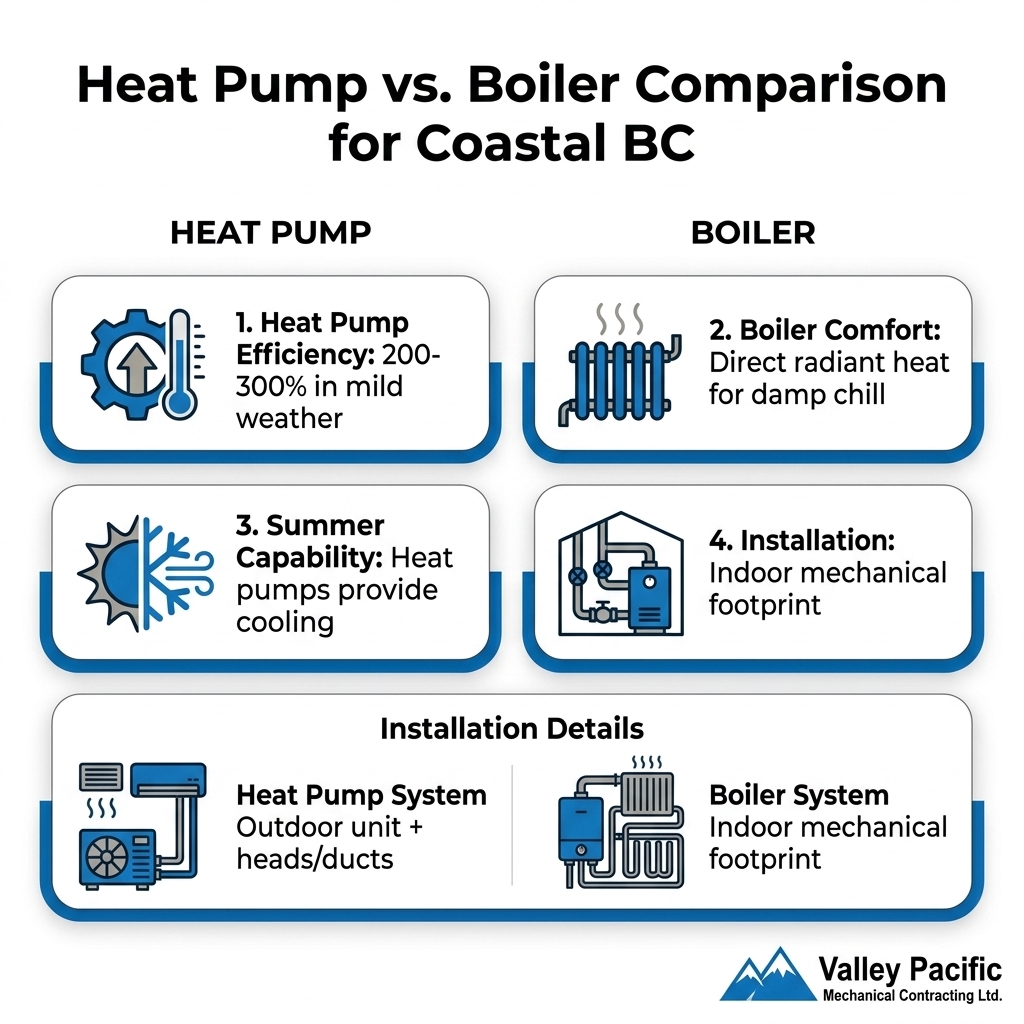
• Energy Efficiency — High-Efficiency Boiler: High (up to 95%+ AFUE), but consumes fuel to generate heat. — Air-Source Heat Pump: Extremely High (200-300% in mild climates) by moving existing heat.
• Comfort Feel — High-Efficiency Boiler: Radiant, draft-free warmth that heats objects and people directly. — Air-Source Heat Pump: Forced air with variable-speed delivery to minimize indoor drafts.
• Installation Footprint — High-Efficiency Boiler: Requires an indoor mechanical room and a network of pipes/radiators. — Air-Source Heat Pump: Requires an outdoor compressor unit and either ductwork or indoor wall heads.
• Summer Capability — High-Efficiency Boiler: Heating only. No cooling or summer dehumidification provided. — Air-Source Heat Pump: Dual function. Provides high-efficiency air conditioning and dehumidification.
• Lifespan & Maintenance — High-Efficiency Boiler: Typically lasts 15-20 years with annual flushing and professional servicing. — Air-Source Heat Pump: Typically lasts 12-15 years; requires regular filter changes and outdoor coil cleaning.
Ultimately, the choice often comes down to what infrastructure your home already has. If you have existing ductwork, a heat pump is often the most logical step. If your home is already piped for hot water radiators, upgrading to a high-efficiency boiler will provide superior comfort with less invasive retrofitting.
Navigating Energy Incentives and Long-Term Value
The upfront cost of a major heating upgrade can be daunting, but financial considerations extend far beyond the initial installation quote. Utility and provincial incentive programs exist to encourage homeowners to transition to greener, more efficient technologies. Qualifying heat pump installations and high-efficiency boiler upgrades may be eligible for these generic rebates, which can significantly mitigate your out-of-pocket expenses.
When evaluating your options, it is important to weigh the long-term return on investment against the initial cost. Because heat pumps operate at such high efficiency during our mild winters, the month-over-month energy savings can be substantial. Conversely, modern condensing boilers use significantly less fuel than their older counterparts, providing their own long-term financial relief.
To maximize your return, you need a professional to assess your home's eligibility for programs like FortisBC energy rebates. Navigating the paperwork and ensuring the equipment meets specific efficiency tiers is complex. A licensed contractor will ensure that your chosen system not only fits your home but also qualifies for the maximum available incentives.
Making the Right Choice with Local HVAC Experts
The "best" heating system does not exist in a vacuum; it depends entirely on your home's existing architecture, your ductwork or piping infrastructure, and your personal comfort preferences. A system that works perfectly for a newly built open-concept home might struggle in a century-old heritage house.
This is why a professional home assessment is critical. A technician must perform load calculations and system sizing to ensure the equipment is neither underpowered nor oversized. Valley Pacific Mechanical's deep roots in Maple Ridge and the Fraser Valley mean our technicians understand exactly how coastal moisture and temperature fluctuations impact both boiler and heat pump longevity. Working with a team that knows the local climate ensures your system is calibrated for exactly what our weather throws at it.
A local contractor can walk you through complex installation options and find workable solutions for tight mechanical rooms or difficult duct runs. For example, one local customer recently needed complex solutions for a residential project. The installation team arrived exactly as promised, provided outstanding work, and the final project results looked better than anticipated because the system was customized to the home's unique layout. Expert guidance takes the guesswork out of the process, making your decision straightforward and stress-free.
Before you make a final call, scheduling an assessment for residential mechanical installations will give you a clear, tailored roadmap for your property.
Frequently Asked Questions About Heating System Upgrades in BC
Which heating system is best for damp coastal winters?
The best system depends on your home's infrastructure and your comfort goals. High-efficiency boilers excel at providing draft-free, radiant warmth that cuts through the damp chill effectively. Heat pumps, on the other hand, offer incredible energy efficiency in mild weather and the added bonus of summer cooling. A professional assessment is the best way to determine which option suits your specific floor plan.
Do heat pumps work well in high humidity?
Yes, modern heat pumps perform exceptionally well in high humidity. During the summer, they act as powerful dehumidifiers while cooling your home. In the winter, their variable-speed fans help circulate conditioned air evenly, though it is important that the outdoor unit is properly installed to handle coastal moisture and manage its defrost cycles effectively.
Should I switch from a boiler to a heat pump in BC?
Switching from a boiler to a heat pump is a major structural decision. If your home relies on hot water radiators and lacks ductwork, installing a central heat pump requires extensive retrofitting, though ductless mini-splits are a viable alternative. Many homeowners choose to stick with a high-efficiency boiler for winter warmth and add a smaller ductless heat pump specifically for summer cooling.
Can a heat pump replace a boiler directly?
A heat pump cannot serve as a simple drop-in replacement for a boiler because they use entirely different distribution methods. Boilers pump hot water through pipes, while standard heat pumps blow air through ducts. There are specialized air-to-water heat pumps available, but they require careful engineering to ensure they can heat the water to the temperatures required by traditional radiators.
How does the dampness in the Fraser Valley affect my perceived indoor temperature?
High relative humidity makes the air feel much colder than the thermostat indicates. Moisture in the air conducts heat away from your skin rapidly, creating a bone-chilling sensation. Heating systems that warm objects directly, like boilers, or systems that actively manage airflow, like variable-speed heat pumps, are necessary to counteract this damp cold effect.
Do I need a backup heat source with a heat pump in coastal British Columbia?
Because coastal BC rarely experiences prolonged, deep sub-zero freezes, a high-quality cold-climate heat pump can usually handle the entire winter heating load on its own. However, many systems are installed with auxiliary electric heat strips that automatically engage during the few days a year when temperatures drop unusually low, ensuring you never lose comfort.
Secure Your Home's Winter Comfort Today
Whether you ultimately decide that the radiant warmth of a boiler or the year-round versatility of a heat pump is right for your home, professional installation is the key to long-term reliability. Your comfort depends on a system that is correctly sized, expertly installed, and tailored to handle the persistent dampness of our coastal climate.
Do not wait until the chill sets in to upgrade your aging equipment. Schedule an assessment today to evaluate your home's specific needs and explore your options for high-efficiency boiler upgrades or heat pump installations. Contact our team to book your consultation and take the first step toward a warmer, more comfortable winter.


