


Preparing Your Maple Ridge Boiler System for the First Fall Frost


Waking Up Your Maple Ridge Boiler After Summer Dormancy
Autumn in the Fraser Valley is approaching quickly, and preparing your Maple Ridge boiler system for the first fall frost requires specific attention after months of summer dormancy. When the crisp, damp weather replaces the warm summer days, your heating equipment is suddenly forced to wake up from a long sleep and take on an immediate, heavy load. If you need assistance verifying that your equipment is ready for the transition, our team at Valley Pacific Mechanical Contracting Ltd. handles all types of boiler heating systems. We have spent years ensuring Maple Ridge homes stay perfectly comfortable through the coldest months.
During the late-summer to early fall transition before the first frost, boilers that have been sitting completely inactive face unique start-up challenges. Unlike forced-air furnaces that might share ductwork with an air conditioner, hydronic heating systems often sit entirely dormant for half the year in the Pacific Northwest. This extended period of inactivity allows water to settle, pressure to fluctuate, and air to separate within the closed loop of your pipes.
The biggest challenge for any homeowner is knowing exactly what to look for before turning the thermostat up. You need to understand the critical decision point: which pre-season checks you can safely perform yourself, and when a professional is required to step in. A simple visual inspection is safe, but dealing with trapped air and pressurized water requires specific training. By taking proactive steps right now, you prevent the sudden, stressful reality of a no-heat emergency on the first freezing night of the year.
Waking up your boiler is a deliberate process. It is not as simple as flipping a switch. The system needs to be evaluated while it is still cold, then carefully brought up to operating temperature while monitoring for proper circulation. Understanding this process helps you protect the heart of your home's heating infrastructure.
The Hidden Impact of Inactivity on Hydronic Heating Systems
Hydronic heating systems rely on a delicate balance of water, pressure, and continuous circulation to deliver consistent warmth. When your boiler is turned off completely during the warmer months, that delicate balance is interrupted. The hidden mechanics of summer dormancy can create several underlying issues that only reveal themselves when you finally call for heat.
The Problem of Stagnant Water:
In our experience servicing local hydronic systems, the most frequent issue we encounter stems from water sitting completely still inside your pipes, radiators, and baseboards for months. Over time, the dissolved air naturally present in the water begins to separate. Because air is lighter than water, these microscopic bubbles slowly rise to the highest points in your heating system. By the time autumn arrives, these tiny bubbles have grouped together to form large air pockets, commonly known as airlocks.
The Cause of Uneven Heating:
When you finally turn the system on, the circulator pump attempts to push hot water through the loops. However, water cannot easily flow through pipes that are blocked by trapped air. This forces the hot water to take the path of least resistance, bypassing certain zones entirely. You might notice that radiators on the main floor get blazing hot, while the radiators on the upper floors remain completely cold.
The Solution and System Strain:
These air pockets do more than just leave certain rooms cold; they force your boiler to work significantly harder. The circulator pump runs continuously, trying to push water against an invisible wall of air, which reduces overall efficiency and increases wear and tear. Recognizing these symptoms early during the late-summer to early fall transition before the first frost is the key to preventing a breakdown.
• Radiators are cold at the top and hot at the bottom — What is Happening Inside: Air has gathered at the highest point of the radiator, blocking hot water. — Impact on the Boiler: System runs longer than necessary to reach target room temperature.
• Gurgling or trickling sounds in the pipes — What is Happening Inside: Air bubbles are actively moving through the pipes along with the water. — Impact on the Boiler: Cavitation in the circulator pump, which can cause premature failure.
• Upper floors stay cold while lower floors overheat — What is Happening Inside: A complete airlock is preventing water from traveling vertically. — Impact on the Boiler: Severe strain on the pump and uneven energy consumption.
Safe Homeowner Checks: Verifying Your Baseline Pressure
Before you ever turn the thermostat to "heat," there is one crucial diagnostic step every homeowner should take. Checking your cold boiler baseline pressure gauge reading is the most important DIY task you can perform. This simple visual check tells you volumes about the health of your system after its long summer rest.
Most standard residential boilers have a combination gauge, often called a tridicator, which displays both the internal temperature and the water pressure. You will typically find this gauge mounted on the front or top of the boiler jacket, clearly marked with numbers indicating PSI (pounds per square inch).
1. Locate the gauge: Find the circular dial on your boiler. It usually has two needles—one for temperature and one for pressure.
2. Check the reading while cold: Ensure the boiler has not been running. The system must be completely cool to room temperature to get an accurate baseline.
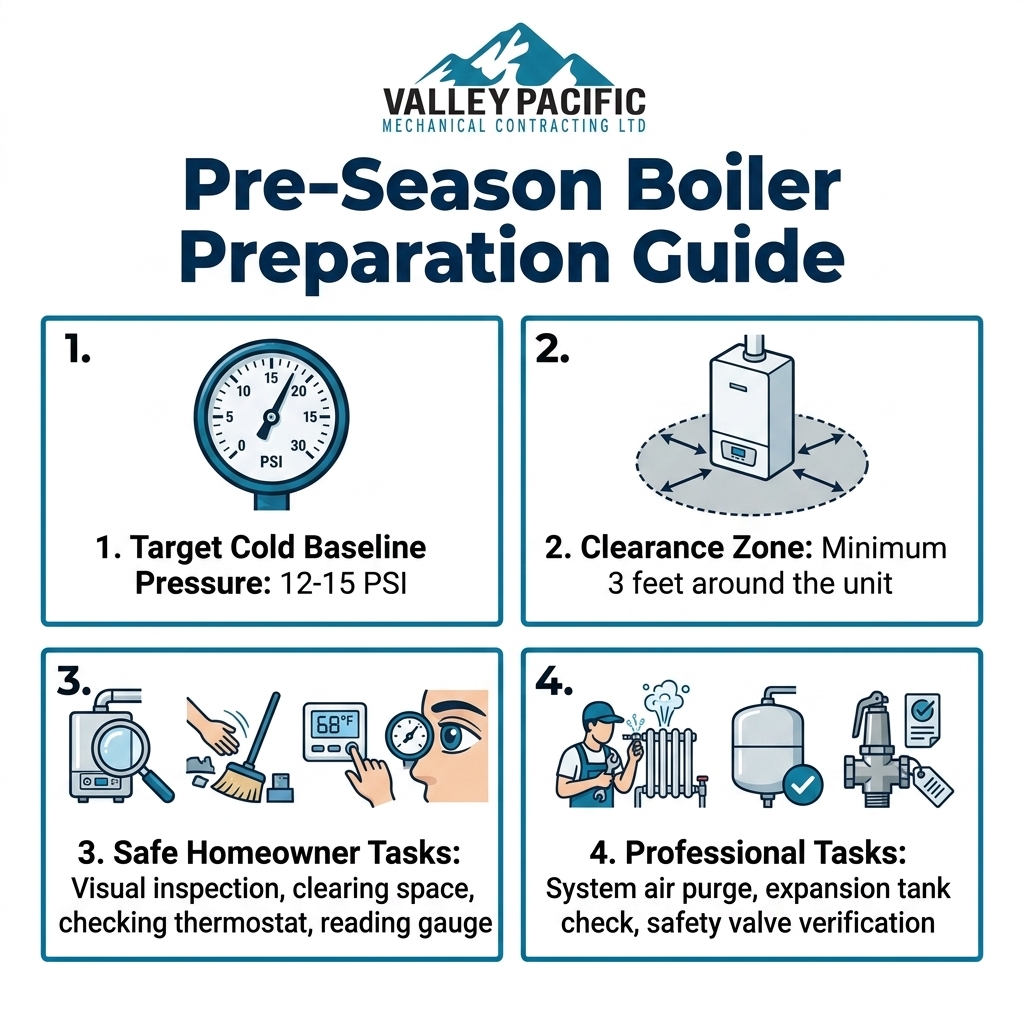
3. Verify the target zone: A healthy cold boiler baseline pressure gauge reading should sit reliably between 12 and 15 PSI.
4. Document your findings: Take a clear photo of the gauge with your smartphone. If the needle is outside the normal range, you will want to share this exact reading with your technician.
It is important to note the difference between cold baseline pressure and operating pressure. When the boiler eventually fires up and heats the water, the water expands. This thermal expansion will cause the pressure gauge to rise slightly, often reaching around 20 PSI during normal operation. However, the cold reading is your true indicator of system health.
Understanding What Your Gauge is Telling You
If you look at the gauge and the needle is resting below 12 PSI, your system lacks the necessary force to push water up to the second or third floor of your home. Low pressure usually indicates a slow, hidden water loss that occurred over the summer, or a failure in the automatic fill valve.
Conversely, if your cold reading is sitting significantly above 15 PSI, your system is over-pressurized before it even starts heating. This points to a potential failure in the pressure reducing valve or a waterlogged expansion tank, which can cause the safety relief valve to trip and spill water onto your mechanical room floor.
Why a Professional Air Purge is Crucial Before Freezing Temperatures
If your cold boiler baseline pressure gauge reading is low, or if you heard gurgling sounds during a brief test run, the system needs to be purged. A system purge is the highly technical process of safely forcing trapped air out of the hydronic loops while simultaneously introducing fresh water at the exact right pressure.
While checking the gauge is a safe homeowner task, attempting a DIY air purge is extremely hazardous. Purging a boiler requires manipulating manual feed valves, adjusting zone valves, and managing purge stations that handle scalding hot water under pressure. One wrong turn of a valve can introduce more air into the system, flood your mechanical room, or cause severe burns. This is strictly work for a licensed professional.
A professional purge ensures that water flows evenly and quietly through every zone in your home. This uninterrupted flow protects the primary heat exchanger from overheating and stops the circulating pumps from burning out due to cavitation. Technicians will also evaluate the boiler expansion tank during this process to ensure it has the correct air charge to handle thermal expansion safely.
A pattern we see often is homeowners waiting until it is too late. Last winter, our team at Valley Pacific responded to a local homeowner who experienced a total winter breakdown, leaving them with no hot water precisely when they needed it most. Fortunately, our technicians arrived within a day and repaired the entire system in just a few hours, restoring service immediately. By scheduling a professional purge before the season starts, you prevent your system from suffering a similar sudden failure when the first real cold snap hits.
Preparing the Surrounding Environment for Optimal Performance
While the internal mechanics of the boiler require professional attention, there are several highly effective steps you can take to prepare the physical environment around your heating equipment. A clean, accessible mechanical room is vital for safe operation and efficient servicing.
Over the summer, it is common for the area around the boiler to become a makeshift storage space. Boxes, cleaning supplies, and off-season gear tend to migrate toward the mechanical room. Before scheduling any residential heating services, you should ensure the area is completely ready.
• Establish a clearance zone: Clear a minimum of three feet of space all the way around the unit. This ensures proper airflow for combustion and gives technicians the safe access they need to maneuver tools and equipment.
• Remove combustible materials: Never store paint, solvents, gasoline, or paper products anywhere near your heating equipment. The ambient heat from the boiler can create a severe fire hazard.
• Dust and sweep the area: A clean floor helps you easily spot any small drips or leaks that might indicate a failing valve or a weeping pipe joint.
• Check the thermostat: Verify that the thermostat has fresh batteries, is set to "heat," and is properly communicating with the boiler. A simple communication error can mimic a major system failure.
• Listen during a brief test: Turn the heat up just enough to trigger the boiler for five minutes. Listen carefully. If you hear kettling (a rumbling sound like boiling water) or loud gurgling, turn it off immediately. These are clear signs of trapped air and scale buildup.
Preparing the environment not only keeps your home safe but also saves time when your technician arrives. When the workspace is clear, the focus remains entirely on optimizing your heating system during the late-summer to early fall transition before the first frost.
The Comprehensive Value of Pre-Season Maintenance
Waking up your boiler involves much more than just pushing air out of the pipes. A professional pre-season tune-up is a comprehensive physical for your entire heating infrastructure. The true value of this maintenance lies in catching minor wear and tear before it escalates into a catastrophic mid-winter repair.
During a full inspection, technicians do a deep dive into the safety mechanisms that protect your home. They will manually test the pressure relief valve to ensure it opens and closes properly without sticking. They will inspect the electrical connections, verify the ignition sequence, and analyze the combustion gases to ensure the burner is operating cleanly and safely.
Valley Pacific Mechanical Contracting Ltd. brings highly specific local expertise to this process. Understanding the Lower Mainland climate means recognizing how our damp, crisp autumns and extended cold snaps affect specific boiler models. This local insight allows our technicians to fine-tune your preventative maintenance, catching pressure anomalies and purge requirements early.
The impact of having a trusted professional evaluate your system cannot be overstated. For example, our team recently helped a Maple Ridge homeowner who reached out after experiencing ongoing trouble with a two-year-old heating system. After a comprehensive inspection, we provided a newly configured setup that exceeded their expectations and delivered reliable value. Whether you need a simple tune-up or complex HVAC repair in Maple Ridge, having a technician thoroughly explain the work performed builds absolute confidence in your system's reliability. Proactive maintenance extends the lifespan of your heavy equipment and keeps your monthly energy consumption as low as possible.
Frequently Asked Questions About Waking Up Your Boiler
What should boiler pressure be when cold?
A standard residential boiler should typically display a cold baseline pressure between 12 and 15 PSI. This reading should be taken when the system has been completely off and the water has cooled to room temperature. If the pressure drops below 12 PSI, the system may struggle to circulate water to the upper floors of your home.
When should I turn my boiler on for winter?
You should perform a brief test run during the late-summer to early fall transition, well before the first frost hits Maple Ridge. Testing the system in September or early October allows you to identify trapped air or pressure issues while the weather is still mild. Waiting until the first freezing night risks leaving your family in the cold if the system fails to start.
Why do boilers need to be purged?
Boilers need to be purged to remove trapped air that separates from the water during long periods of summer inactivity. Air pockets block the flow of hot water, causing cold radiators and forcing the circulator pump to overwork. A professional purge forces this air out, restoring even heat distribution and protecting the pump from damage.
How do I prepare my boiler for winter?
Start by clearing a three-foot perimeter around the unit and removing any combustible materials from the mechanical room. Next, check the cold baseline pressure gauge to ensure it reads between 12 and 15 PSI. Finally, schedule a professional pre-season inspection to handle the technical tasks like air purging, safety valve testing, and expansion tank verification.
How does Maple Ridge's damp climate affect a dormant boiler?
The Pacific Northwest climate means boilers often sit entirely inactive for several consecutive months during the summer. This complete dormancy increases the likelihood of dissolved air separating into large airlocks and seals drying out. When the crisp, damp autumn weather arrives, the sudden demand places a massive load on a system that hasn't moved in months.
Can I bleed my boiler radiators myself?
While some homeowners use a bleed key to release small amounts of air from individual radiators, a full system air purge at the boiler level should only be done by a professional. Purging involves managing live water pressure, manipulating feed valves, and handling scalding water. Incorrectly bleeding a system can introduce more air or cause dangerous pressure drops.
Secure Your Home's Comfort Before the Freezing Temperatures Arrive
Taking the time to understand your heating system during the late-summer to early fall transition before the first frost provides incredible peace of mind. By safely checking your cold boiler baseline pressure gauge reading and clearing the space around your equipment, you take active control of your home's comfort.
However, recognizing when to call a professional for a technical air purge is what truly protects your investment. Trapped air and pressure imbalances will only cause unexpected failures when the system is stressed by freezing weather. Do not wait for the seasonal rush to begin. Secure your spot on the schedule now and ensure your home is ready for whatever the Pacific Northwest winter brings. Reach out today to discuss a comprehensive preventative maintenance plan and keep your system running flawlessly.


