


Understanding the Electrical Requirements for a New Boiler Installation


Are Your Home's Electrical Systems Ready for a Modern Boiler Upgrade?
Is your home actually wired to handle a modern heating system? When preparing for an upgrade, understanding the electrical requirements for a new boiler installation is just as important as choosing the right mechanical equipment. At Valley Pacific Mechanical Contracting Ltd., our team frequently encounters homeowners who are surprised to discover that upgrading from an old, traditional heating unit to a modern electronic high-efficiency boiler requires specific electrical updates that their existing home infrastructure simply lacks. The concrete problem lies in the technological leap between generations of heating equipment: older homes often do not have the dedicated circuits and multi-wire low-voltage setups needed to support today's advanced systems.
The critical decision point for any property owner is understanding exactly what electrical upgrades are required to safely power and control the system before the physical installation begins. Without this knowledge, you risk unexpected delays, blown budgets, or compromised safety. Preparing your home requires a coordinated approach that bridges the gap between plumbing and electrical work. If you are exploring comprehensive HVAC and mechanical services, knowing the electrical scope ahead of time ensures a smooth, code-compliant transition to reliable, energy-efficient heating.
The Shift from Mechanical to Electronic Heating Systems
To understand why a modern electronic high-efficiency boiler demands so much more from your electrical panel, it helps to look at how heating technology has evolved. Older mechanical boilers were relatively simple devices. They relied on basic standing pilot lights, heavy-duty mechanical relays, and simple gas valves. Because they operated primarily on mechanical principles, their electrical footprint was minimal. Some older systems could even operate during a power outage if they utilized a millivolt gas valve powered by the heat of the pilot light itself.
Today's systems are entirely different. Modern heating equipment functions more like a specialized computer that happens to heat water. These units are packed with sensitive microprocessors, digital sensors, and motorized components that require clean, consistent power. During a recent winter season in Maple Ridge, our team installed a new boiler with a hot water on demand system for a local homeowner. We efficiently handled the complex setup, checking in regularly to ensure the new electronic components integrated perfectly with the home's infrastructure. This level of care is necessary because an electronic system is highly sensitive to the quality of its electrical supply.
When you schedule a new boiler installation, you are essentially undertaking an electrical upgrade as well as a mechanical one. The sensitive electronic control boards inside modern units can easily be damaged by voltage drops, power surges, or electrical interference from shared circuits.
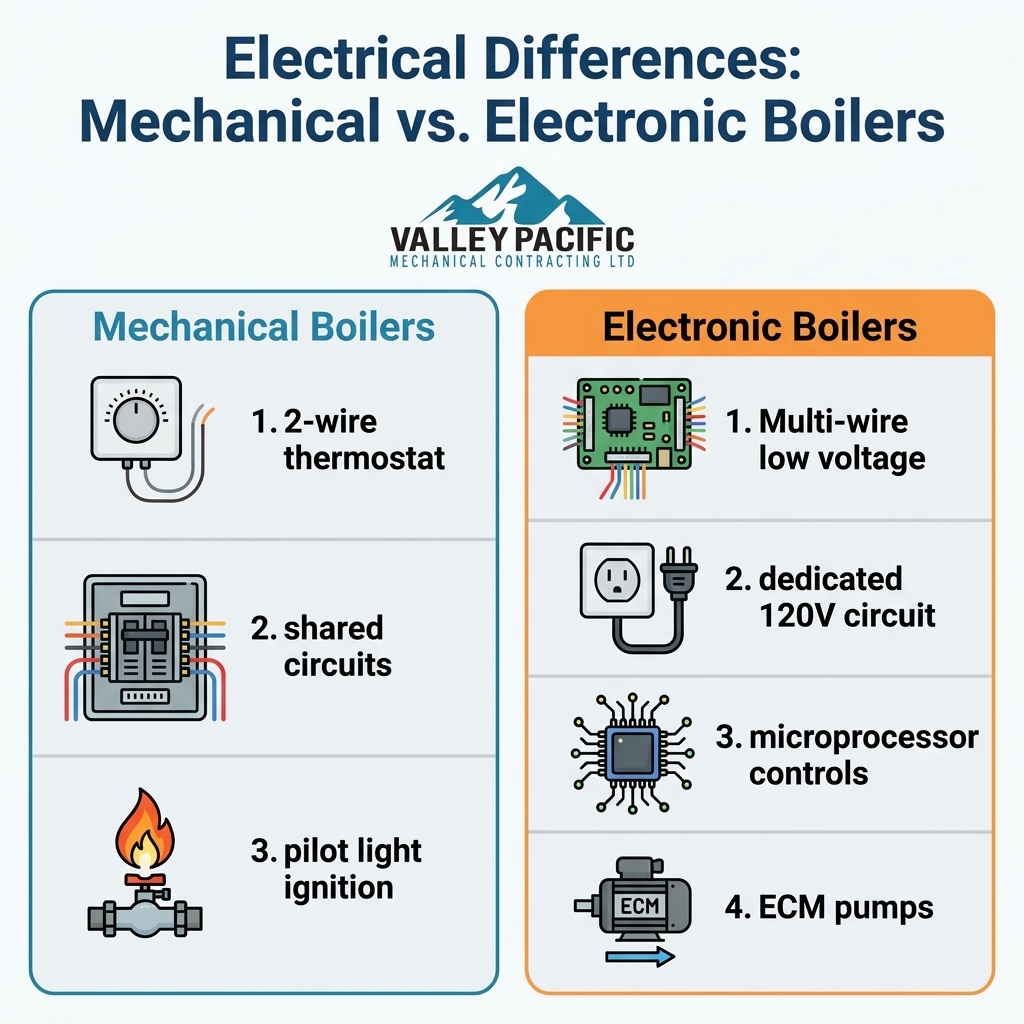
• Control Mechanism — Older Mechanical Boilers: Mechanical relays and simple switches — Modern Electronic Boilers: Advanced microprocessors and digital boards
• Ignition Type — Older Mechanical Boilers: Standing pilot light (always on) — Modern Electronic Boilers: Electronic spark or hot surface ignition
• Thermostat Wiring — Older Mechanical Boilers: Basic 2-wire setups — Modern Electronic Boilers: Multi-wire low-voltage (18/5 or 18/8)
• Power Requirements — Older Mechanical Boilers: Minimal; often shared with other devices — Modern Electronic Boilers: Requires a strict dedicated 120V circuit
• Pump Technology — Older Mechanical Boilers: Standard single-speed mechanical pumps — Modern Electronic Boilers: Variable-speed ECM (Electronically Commutated Motor) pumps
How Microprocessors Control Modern Heating
The brains of a modern boiler rely on continuous data from various sensors to optimize fuel usage and maintain exact water temperatures. Furthermore, these systems utilize ECM (Electronically Commutated Motor) pumps. Unlike old single-speed pumps that simply turn on and off, ECM pumps adjust their speed dynamically based on the heating demand. This variable-speed operation saves significant energy but requires complex electronic drives. These smart diagnostics, digital displays, and modulating gas valves all require clean, uninterrupted power to function without throwing error codes or locking out the system.
Why Your New System Requires a Dedicated 120V Circuit
One of the most rigid requirements for a modern heating upgrade is the installation of a dedicated 120V circuit. A dedicated circuit means that the electrical wire runs directly from your main breaker panel to the boiler, without supplying power to any other outlets, lights, or appliances along the way. This is not merely a recommendation; it is a strict operational necessity for protecting the equipment and ensuring consistent performance.
When a circuit is shared, the electrical load fluctuates based on what else is running. If your heating system shares a line with a basement freezer, a washing machine, or even heavy-duty power tools, the sudden draw of electricity when those other appliances turn on can cause a momentary voltage drop. Here is what happens when you attempt to run a modern electronic high-efficiency boiler on a shared circuit:
1. Nuisance Tripping: The combined electrical draw of the boiler's ignition sequence and another appliance starting simultaneously can overload the breaker, tripping it and shutting off your heat entirely.
2. Voltage Fluctuations: Even if the breaker does not trip, the momentary dip in voltage (often noticed as lights dimming) starves the boiler's microprocessors of the clean power they need.
3. Component Wear: ECM pumps and draft inducer motors that frequently operate under low-voltage conditions run hotter and fail much sooner than their rated lifespan.
4. Warranty Invalidation: Manufacturer specifications explicitly require a dedicated 120V circuit. Failing to provide one usually voids the factory warranty on expensive electronic parts.
Protecting Sensitive Control Boards
The underlying vulnerability: The control boards in today's heating equipment are essentially miniature computers. Just as you would not plug a high-end desktop computer into a circuit known for power surges and brownouts, you should not subject a modern boiler to unstable power. A dedicated line ensures a consistent amperage and voltage supply, protecting these sensitive internal electronics from electrical faults and ensuring the system operates exactly as the manufacturer intended.
Updating Low-Voltage Thermostat Wiring for Smart Controls
Beyond the high-voltage power required to run the pumps and burners, a modern electronic high-efficiency boiler also relies on a complex network of low-voltage wiring to communicate with the rest of the house. The communication bridge between your living space and your mechanical room is the thermostat wire, and this is another area where older homes often fall short.
Why is the old 2-wire setup insufficient?
Older mechanical boilers typically used a simple 2-wire thermostat system. One wire sent a 24-volt signal up to the thermostat, and when the room temperature dropped, a mechanical switch inside the thermostat closed, sending that voltage back down the second wire to tell the boiler to fire up. It was a simple "on" or "off" command. Modern systems, however, do much more than simply turn on and off. They modulate their heat output, run diagnostic checks, and often integrate with domestic hot water production.
What does modern low-voltage wiring entail?
To support these advanced features, modern electronic boilers require multi-wire low-voltage cables, commonly referred to as 18/5 (five wires) or 18/8 (eight wires) thermostat wire. These additional wires serve several critical functions. They provide a dedicated common wire (the "C-wire") to power the digital screens and Wi-Fi radios in smart thermostats. They also allow for multi-stage heating commands, where the thermostat can tell the boiler to run at a lower, more efficient capacity during mild weather, or ramp up to full capacity during a deep freeze.
Is pulling new wire always necessary?
Pulling new low-voltage wire is a standard part of the upgrade process. In our experience working on older Maple Ridge homes, if the existing wiring is buried behind finished walls and cannot be easily replaced, our technicians must sometimes install specialized communication modules or add-a-wire kits. However, running a fresh, multi-wire cable is always the preferred method we recommend to ensure robust communication, precise temperature staging, and the ability to utilize advanced smart diagnostics.
Service Disconnects and Grounding: Meeting Safety Codes
Safety is the foundational reason behind all electrical codes, and heating equipment is heavily regulated due to the combination of electricity, water, and combustible fuel. Upgrading your system means bringing the immediate electrical connections up to current safety standards, which involves two critical components: the service disconnect switch and proper grounding.
The role of the service disconnect: Current electrical codes require a dedicated service disconnect switch located within sight of the boiler. This switch looks similar to a standard light switch but is clearly labeled for the heating system. Its primary purpose is safety for service technicians. If our team needs to perform emergency mechanical installations or repairs, we must be able to cut the power to the unit immediately, without having to run upstairs or to the other side of the house to find the main breaker panel. This line-of-sight requirement ensures the equipment cannot be accidentally energized while someone is working on it.
The absolute necessity of proper grounding: Grounding provides a safe, designated path for electricity to follow in the event of a fault. Mixing old home wiring—which sometimes lacks a true ground wire—with new high-efficiency HVAC equipment poses significant safety risks. If a loose wire or a water leak causes a short circuit, a properly grounded system will immediately trip the breaker. An ungrounded system, however, can energize the metal casing of the boiler, creating a severe shock hazard. Furthermore, the sensitive microprocessors in modern systems rely on a solid ground reference to function correctly; without it, they can suffer from erratic behavior or premature failure. Adhering strictly to current electrical codes regarding grounding is non-negotiable for a safe installation.
The Importance of Licensed Installation and Permitting
Because installing a modern heating system requires extensive knowledge of both plumbing and electrical systems, it is not a project that can be left to handymen or attempted as a DIY endeavor. Technical Safety BC mandates that all new electrical circuits and gas appliance installations must be performed by licensed professionals and properly permitted. This regulatory oversight exists to protect property owners from the catastrophic risks of improper installation.
A safe, code-compliant installation requires dual-expertise. The technician must understand the mechanical flow of water and gas, while also possessing the electrical knowledge to correctly size breakers, route 120V wiring, and configure low-voltage control boards. Working with a company like Valley Pacific Mechanical ensures all mechanical and electrical upgrades meet stringent BC safety codes, providing peace of mind through a fully compliant installation process.
Recently, our licensed technicians helped a local property owner with a complex boiler system upgrade. By choosing a team that demonstrated strict adherence to electrical and mechanical codes, they secured a top-tier installation that fully protected their investment. The risks of unpermitted work are substantial. If an unpermitted electrical modification causes a fire or a system failure, insurance companies can deny the claim. Furthermore, manufacturers will instantly void the warranty on a modern electronic high-efficiency boiler if they determine it was installed without the proper permits or by an unlicensed individual in Maple Ridge. Proper permitting is the ultimate proof that your system was installed to the highest safety standards.
Ensuring System Reliability During Winter Extremes
The technical electrical requirements discussed above—dedicated circuits, proper grounding, and multi-wire thermostats—might seem like dry regulatory details, but they directly translate to real-world comfort and property protection. The primary benefit of a code-compliant electrical setup is absolute system reliability, especially when you need it most.
We've spent years keeping homes warm during Maple Ridge's cold and damp winter months, and we know firsthand that a reliable, uninterrupted power supply to the heating system is critical. If a boiler shares a circuit with other appliances, the increased electrical load during the holidays or deep winter can cause the breaker to trip. If this happens overnight or while you are away at work, the boiler trips offline unexpectedly. The consequences of losing heat during a cold snap go far beyond temporary discomfort. The severe property risks include freezing pipes, which can burst and cause extensive water damage to your home.
A properly wired, dedicated 120V circuit prevents these nuisance trips, ensuring your boiler heating system runs continuously regardless of what other appliances are operating in the house. By investing in the necessary electrical preparation up front, you guarantee that your heating equipment will maintain safe indoor temperatures and provide unwavering winter comfort, no matter how severe the weather gets.
Frequently Asked Questions About Boiler Electrical Upgrades
Does a new boiler need a dedicated circuit?
Yes, a dedicated 120V circuit is required to protect sensitive electronics and prevent breaker trips. Because modern heating equipment utilizes advanced microprocessors and variable-speed pumps, it requires a clean, uninterrupted power supply. Sharing a circuit with other appliances can cause voltage drops that damage the control board or overload the breaker, leaving you without heat.
Why do modern boilers require new thermostat wiring?
Older 2-wire setups cannot power modern smart thermostats or communicate advanced diagnostic data. Today's high-efficiency systems often feature multi-stage heating and digital displays that require a constant power source (the "C-wire") and additional communication wires. Upgrading to a 5-wire or 8-wire low-voltage cable ensures your thermostat can fully control and monitor the new equipment.
What are the electrical requirements for a high-efficiency boiler?
A dedicated circuit, proper grounding, a service disconnect switch, and updated low-voltage wiring are the standard electrical requirements. The system must be wired directly to the breaker panel to ensure stable voltage, and a line-of-sight disconnect switch must be installed for technician safety. All work must comply with local electrical codes to ensure safe operation.
Does a combi boiler need electricity?
Yes, they require electricity to power the electronic ignition, internal pumps, and control boards. Even though the primary fuel source for heating the water is typically natural gas or propane, the internal mechanics that move the water and manage the combustion process are entirely electrical. Without a reliable power source, a combi boiler cannot function.
Why does my new boiler need new wiring?
The shift from basic mechanical relays to advanced microprocessors means your new boiler is essentially a computer that requires stable power. Old wiring may lack proper grounding, or it may be tied into shared circuits that experience voltage fluctuations. New wiring ensures the system receives the exact electrical specifications required by the manufacturer, preventing premature part failure.
Can a boiler share a circuit with other appliances?
No, sharing a circuit risks voltage drops and breaker trips, which can damage the boiler and violate safety codes. When another appliance on the same circuit turns on, it draws a surge of power that can starve the boiler's electronics. For safety, reliability, and warranty compliance, heating systems must have their own independent electrical line.
Consult with a Local Expert About Your Boiler Upgrade
Understanding the electrical requirements for a new boiler installation empowers you to make informed decisions about your home's infrastructure. While the mechanical plumbing is a large part of the job, recognizing that a modern electronic high-efficiency boiler requires dedicated circuits, updated thermostat wiring, and strict code compliance ensures you are fully prepared for the scope of the project.
Because these upgrades involve main breaker panels and complex low-voltage communication systems, they carry significant safety risks if handled incorrectly. DIY electrical work on heating systems is dangerous and can lead to voided warranties or severe property damage. At Valley Pacific Mechanical Contracting Ltd., we urge you to always rely on licensed professionals who understand both the mechanical and electrical demands of today's advanced equipment. If your current system is aging, schedule a professional inspection with our team to assess your home's electrical readiness. Taking the right steps now guarantees a clear, high-level overview of the electrical differences between old and new boilers, empowering you to understand the scope of work and enjoy reliable, safe heating for years to come.


