


Comparing Daikin and York Heat Pumps for Maple Ridge Climates


Are You Choosing the Right System for Pacific Northwest Weather?
Are you struggling to decide between top-tier HVAC brands for your upcoming installation, wondering which one will actually survive our local climate? Comparing Daikin and York heat pumps for Maple Ridge climates goes far beyond looking at standard energy stickers. Generic national ratings like SEER2 and HSPF2 simply do not account for the unique, heavy moisture demands of our regional weather. If you are looking for reliable HVAC services, making the right choice now prevents headaches and expensive utility bills down the road.
Most manufacturers test their equipment in controlled laboratories or average climates. However, the real test of a heating system in our area is how it handles heavy moisture and near-freezing temperatures without excessive compressor noise. When the thermometer drops and the rain turns to sleet, you need equipment that will not freeze into a block of ice or keep you awake at night with loud operational shifts. This guide provides an objective look at how these two major brands stack up in these exact conditions, giving you the clear criteria needed to make an informed decision for cold, wet Maple Ridge winters.
The Hidden Impact of High Humidity on Heat Pump Efficiency
Most homeowners assume that extreme, sub-zero cold is the hardest test for a heating system. In reality, sub-zero dry climates are actually much easier on heat pumps than near-freezing wet climates. The Fraser Valley / Maple Ridge weather patterns—characterized by heavy rainfall and temperatures hovering right around the freezing mark from November to March—create the absolute peak conditions for rapid outdoor coil frost accumulation.
The science of winter condensation: Between 0°C and 5°C, the outside air holds a massive amount of moisture. As your outdoor unit pulls ambient heat from this damp air, condensation naturally forms on the metal coils. Because the refrigerant circulating inside that coil is significantly colder than the outside air, that condensation instantly turns to frost. In a dry climate like Alberta, there simply is not enough moisture in the air to cause this rapid buildup, which is why generic cold-weather performance metrics can be highly misleading for coastal residents.
When thick frost builds up, it acts as an insulator, choking off vital airflow. This forces the system to temporarily switch modes to melt the ice, interrupting the heating process inside your home. A system's ability to manage this specific environmental factor is the true measure of its regional performance. If you are planning a heat pump installation and replacement, understanding how different brands tackle this heavy moisture is critical to ensuring your home stays warm without your utility meter spinning out of control.
Defrost Cycle Logic: Time-Temperature vs. Demand-Defrost
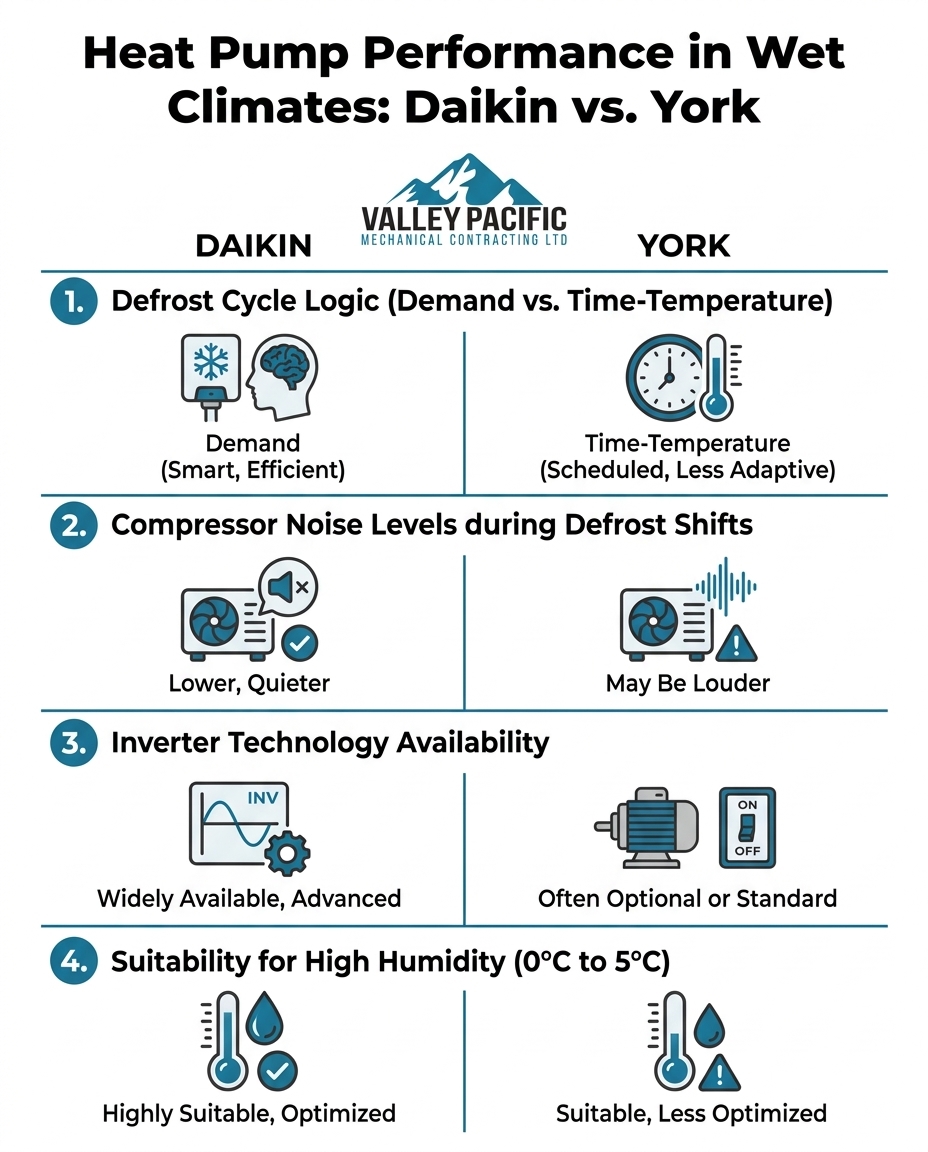
To keep frost from suffocating the outdoor unit, all heat pumps must run a defrost cycle. However, the internal logic they use to decide exactly when to initiate that cycle makes a massive difference in both efficiency and indoor comfort. This is where we see a distinct split in technology when evaluating Daikin and York heat pumps.
There are two primary ways a system manages frost buildup: traditional time-temperature logic and advanced demand-defrost logic. Understanding the difference is the key to selecting a system that will not waste energy during a wet winter.
• Trigger Mechanism — Time-Temperature Logic: Runs on a preset timer (e.g., every 60 or 90 minutes) if the coil is cold. — Demand-Defrost Logic: Uses advanced sensors to detect actual frost thickness and airflow restriction.
• Energy Efficiency — Time-Temperature Logic: Lower. Often runs unnecessary cycles when the coil is clear. — Demand-Defrost Logic: High. Only utilizes energy for defrosting when absolutely necessary.
• Compressor Wear — Time-Temperature Logic: Higher due to frequent, forced operational shifts. — Demand-Defrost Logic: Lower, as the system avoids needless reversing cycles.
• Climate Suitability — Time-Temperature Logic: Adequate for dry, consistently cold regions. — Demand-Defrost Logic: Essential for coastal areas with fluctuating winter moisture.
How Unnecessary Defrosting Wastes Energy
To understand why demand-defrost logic is so vital, you have to look at the mechanics of a defrost cycle. When a heat pump needs to melt ice, it temporarily runs in reverse. It essentially acts like an air conditioner, taking heat from inside your home and sending it outside to warm up the outdoor coil. To prevent blowing freezing air into your living room during this process, backup electric heat strips usually engage to offset the chill.
If a system relies on a basic time-temperature timer, it might shift into this energy-heavy mode every 90 minutes all winter long—even on days when the coil is completely clear of frost. This forces you to pay for backup electric heating you do not actually need. Demand-defrost logic prevents this unnecessary energy waste and excessive compressor wear. For coastal BC winters where moisture levels fluctuate wildly throughout the day, demand-defrost logic is not just a luxury feature; it is an absolute necessity for keeping utility bills manageable.
Acoustic Performance: Managing Compressor Noise in Winter
A major concern for homeowners upgrading their HVAC system is outdoor unit noise, especially when the equipment must sit near property lines, patios, or right outside a bedroom window. Because cold, wet Maple Ridge winters force heat pumps into frequent defrost cycles, the acoustic impact of those cycles is a critical factor in your daily comfort.
The source of the noise: When a unit shifts into defrost mode, a mechanical component called the reversing valve physically changes the direction of the pressurized refrigerant flow. In standard systems, this creates a sudden, loud "whoosh" sound, immediately followed by the compressor ramping up to maximum speed to melt the ice quickly. At two o'clock in the morning, this abrupt mechanical noise can easily wake up light sleepers.
Both brands have made significant strides in sound dampening over the last decade, utilizing swept-wing fan blades and heavy-duty insulated compressor blankets to muffle standard operational hums. However, the way their compressors handle the harsh shift into defrost mode varies. Standard single-stage models from any manufacturer will always have a more noticeable acoustic shift. Premium models utilize advanced compressor technology to soften this transition, slowly adjusting pressures to keep decibel levels low even during the harshest weather shifts.
Inverter Technology and System Adaptability
The secret to achieving both superior defrost efficiency and whisper-quiet noise reduction lies in the compressor technology itself. Older or budget-friendly heating systems rely on single-stage compressors. These traditional units only have two speeds: 100 percent on, or 100 percent off. When they start up, they start hard, drawing maximum power and generating maximum noise.
Modern inverter technology completely changes how a system operates. Instead of blasting on and off, an inverter-driven compressor acts like the gas pedal in your vehicle. It gently ramps up and down, modulating its output to match the exact heating load required to keep your home comfortable. If your home only needs a small amount of heat to maintain temperature, the inverter runs at a low, ultra-quiet speed. This smooth, continuous modulation significantly reduces the harsh acoustic shifts associated with standard defrost cycles.
When comparing Daikin and York heat pumps, both brands offer inverter options in their higher-tier product lines. Daikin, in particular, is globally recognized for pioneering variable-speed inverter technology and integrating it deeply across their residential lineup. Working with a specialized installation team maximizes these advanced features. For example, there are distinct benefits of choosing a Daikin Comfort Pro Dealer, as these certified professionals receive rigorous, specialized training in configuring these precise inverter systems for optimal performance in unique microclimates.
Why Local Calibration Outperforms Factory Settings
Even the most advanced, top-tier equipment can fail or severely underperform if it is left on generic factory default settings. A heat pump shipped to a distributor in dry, freezing Saskatchewan will have the exact same out-of-the-box default parameters as one shipped to the damp Fraser Valley / Maple Ridge area. If your installer does not adjust those parameters, you will not get the efficiency you paid for.
A typical pattern we see involves homeowners struggling with systems that run constantly but never quite keep the house warm. One local homeowner recently reached out because they needed help deciding on the best equipment for their specific needs after a frustrating experience with an older unit. Our technician helped them evaluate their options based on their property layout and completed a meticulous installation, ensuring every setting was dialed in for the local climate. The customer was thankful for a system that finally matched their home's actual requirements. This highlights why proper configuration is so vital.
Certified Daikin Comfort Pro Dealers know exactly how to calibrate systems for optimal defrost cycles in BC's wet winters, giving them an operational edge. Here is what proper local calibration involves:
1. Adjusting Defrost Intervals: Setting the control board parameters to match the specific, heavy moisture load of the coastal microclimate rather than relying on a generic national average.
2. Tuning Airflow Speeds: Ensuring the indoor blower pushes exactly enough warm air to compensate during defrost cycles without creating uncomfortable, cool drafts in living spaces.
3. Configuring Lockout Temperatures: Programming the exact outdoor temperature where any backup heating systems should engage, maximizing energy efficiency while protecting the compressor.
4. Optimizing Inverter Ramping: Setting the compressor logic to favor slow, quiet starts over aggressive heating demands, extending the lifespan of the equipment.
Whether you are installing a brand-new variable-speed system or need HVAC repair in Maple Ridge for an existing unit, choosing an installation team that understands these regional climate demands is the most important decision you will make.
Navigating Warranties, Reliability, and Incentives
Beyond daily performance and defrost capabilities, choosing between Daikin and York heat pumps means looking at long-term protection and value. Manufacturer warranties differ between brands, but both offer substantial coverage for registered equipment—often up to 10 or 12 years on critical components like parts and compressors. However, a warranty only covers the cost of a broken part; it does not cover the frustration of sitting in a freezing house waiting for a repair.
Long-term reliability often comes down to the quality of the initial setup. One homeowner contacted our team after experiencing constant trouble with a two-year-old heating system installed poorly by another company. We ultimately installed a new, properly sized system that delivered results far better than expected, leaving the customer more than satisfied with the reliable heat. Getting it right the first time prevents premature breakdowns and ensures you actually get the lifespan promised by the manufacturer.
Additionally, upgrading to high-efficiency systems with advanced defrost logic often qualifies for generic provincial or federal energy incentives. To navigate these opportunities successfully:
• Verify equipment ratings: Ensure your chosen model meets the specific SEER2 and HSPF2 minimums required by regional energy programs before signing a contract.
• Use certified contractors: Most incentive programs strictly require that the installation is performed by licensed, approved professionals to ensure safety and compliance.
• Keep all documentation: Save your AHRI certificates, commissioning reports, and invoices, as these documents are mandatory for processing any claims.
Always consult with your installation team to confirm your system meets the criteria for current heat pump rebates and promotions so you do not miss out on available savings.
Make a Confident Choice for Your Home's Comfort
Deciding between these two leading brands ultimately comes down to your specific priorities and the realities of your local weather. If your home is exposed to the heavy moisture of cold, wet Maple Ridge winters, prioritizing advanced demand-defrost logic and quiet, inverter-driven operation will yield the best long-term results. You do not have to navigate technical specifications, acoustic ratings, and climate data alone. Objective guidance from local experts makes the final decision clear, stress-free, and perfectly tailored to your property. Reach out today for a customized assessment of your heating needs, and secure a system that provides reliable, quiet comfort no matter what the Pacific Northwest weather brings.
Frequently Asked Questions
Is Daikin better than York for heat pumps?
The "better" brand depends entirely on your specific climate needs and budget priorities. Daikin is widely recognized for its industry-leading inverter technology and advanced demand-defrost logic, making it highly effective in wet coastal climates. York offers robust, reliable traditional systems that perform well, though their standard models may lack the nuanced variable-speed control of premium Daikin units.
How does the Daikin defrost cycle work in wet weather?
Daikin utilizes advanced demand-defrost logic to monitor outdoor coil temperatures and system run times continuously. Instead of defrosting on a rigid timer, sensors detect the exact moment frost begins to restrict airflow. The system then briefly reverses its operation to melt the ice, ensuring it only uses energy for defrosting when absolutely necessary in damp conditions.
Are York heat pumps noisy during winter?
York heat pumps maintain competitive sound ratings overall, though standard single-stage models may produce a noticeable "whoosh" sound during defrost shifts. Premium York models utilize swept-wing fan blades and compressor sound blankets to dampen operational noise. If acoustic performance is a primary concern, upgrading to an inverter-driven model from either brand will significantly reduce winter noise levels.
Which heat pump handles BC winters best?
Systems equipped with demand-defrost logic and inverter-driven compressors handle BC winters the best. Because coastal winters feature high humidity between 0°C and 5°C, rapid frost accumulation is a major challenge. Heat pumps that can intelligently manage frost without running unnecessary defrost cycles will provide the most consistent comfort and energy savings.
How long do Daikin heat pumps last in cold weather?
With proper professional maintenance, a Daikin heat pump typically lasts 15 to 20 years in cold weather. The key to longevity is ensuring the outdoor unit is kept clear of debris and snowdrifts so the defrost cycle can operate efficiently. Regular annual tune-ups also prevent minor wear and tear from turning into major compressor failures.
What is the difference between time-temperature and demand-defrost heat pumps?
Time-temperature systems run a defrost cycle on a fixed clock (such as every 90 minutes) whenever the coil is cold, regardless of whether ice is actually present. Demand-defrost systems use sensors to detect actual frost buildup and only run the cycle when airflow is restricted. Demand-defrost is far more energy-efficient and reduces unnecessary wear on the compressor.


