


Same-Day Furnace Fixes: Rapid Response in Langley


When Your Furnace Fails in the Middle of a Langley Winter

Emergency furnace repair in langley, bc is something every homeowner hopes they'll never need—but when your heating system fails during one of our damp, chilly winters, you need help fast. Whether it's the middle of the night, a holiday weekend, or the coldest week of January, a broken furnace isn't just uncomfortable—it can be dangerous.
If you need immediate help, here's what you need to know:
- 24/7 availability: Most emergency furnace repair services in Langley operate around the clock
- Typical response time: Same-day or next-day service for urgent calls
- Signs of a true emergency: No heat, gas smell, carbon monoxide alarm, strange noises, or yellow pilot light
- What to do first: Turn off your furnace if you smell gas, evacuate if your CO detector sounds, and call a licensed technician immediately
- Expected service: Safety inspection, diagnostic testing, and on-the-spot repairs when possible
For comprehensive guidance on all types of furnace issues, check out our guide to furnace repair in Langley, or if you're ready to schedule service now, visit our furnace repair service page.
Langley's climate—with its wet winters and occasional cold snaps—places steady demand on home heating systems. When a furnace stops working, it's not just about comfort. Temperatures can drop quickly in an unheated home, risking frozen pipes, water damage, and health concerns for vulnerable family members. That's why understanding when you need emergency service, what to do while you wait, and how to prevent future breakdowns can make all the difference in keeping your home safe and warm.
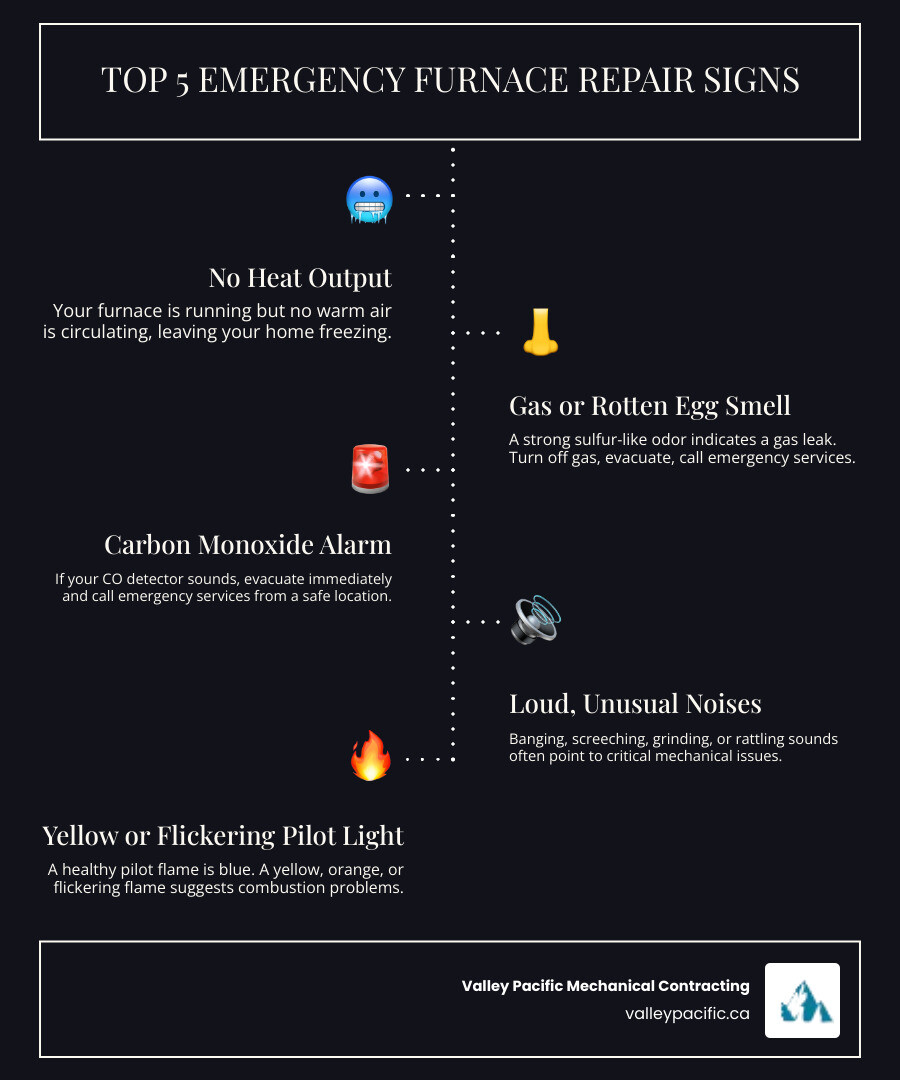
Is It a Real Emergency? Key Signs You Need Immediate Help
When your furnace decides to call it quits, especially during Langley's colder months, it can be hard to determine if it's a minor hiccup or a full-blown emergency. Knowing the difference can save you time, stress, and potentially prevent dangerous situations. We're here to help you recognize the critical signs that demand immediate attention for emergency furnace repair in langley, bc.
Here are the key indicators that you need to contact us for urgent assistance:
- No Heat: This is often the most obvious sign. If your furnace is running but blowing cold air, or if it's not turning on at all, and your home temperature is rapidly dropping, it's an emergency. This can lead to dangerously cold indoor conditions, especially for children, the elderly, or those with health conditions.
- Strange Noises: Furnaces typically make some noise, but if you hear loud banging, screeching, grinding, or whining sounds, it's a red flag. These noises can indicate serious mechanical problems, such as a failing motor, a loose or broken component, or issues with the blower. Ignoring these can lead to more extensive damage or even complete system failure.
- Unusual Smells: While a faint burning smell when your furnace first kicks on for the season can be normal (due to dust burning off), persistent or strong odours are not. A metallic smell might indicate an overheating component, while a foul, rotten egg smell points to a gas leak. A chemical smell could signify an oil leak. Any strong or unusual odour warrants immediate investigation.
- Yellow Pilot Light: For gas furnaces, the pilot light should always be a strong, steady blue flame. If you notice a yellow, orange, or flickering pilot light, it suggests incomplete combustion, which can produce carbon monoxide – a dangerous, odourless gas. This is a critical safety concern.
- Frequent Cycling: If your furnace is constantly turning on and off in short bursts, it's "short cycling." This can be a sign of an improperly sized unit, a clogged air filter, or a faulty thermostat. While not always an immediate danger, it indicates inefficiency and can lead to excessive wear and tear, potentially causing a complete breakdown.
- Water Leaks: Any standing water around your furnace is a cause for concern. For high-efficiency furnaces, a small amount of condensation is normal, but excessive pooling could indicate a clogged condensate drain line or a crack in the heat exchanger. Left unaddressed, water leaks can lead to water damage, rust, and mold growth.
For more detailed information on common furnace issues and how we can help, our guide to furnace repair in Langley offers comprehensive insights.
Signs of a Gas Leak
A gas leak is one of the most serious furnace emergencies, posing immediate threats to health and safety. Natural gas itself is odourless, but utility companies add a chemical called mercaptan, which gives it a distinctive, unpleasant "rotten egg" smell.
Key signs of a gas leak include:
- The Smell of Rotten Eggs: This is the most recognizable indicator. If you detect this odour, act immediately.
- Hissing Sounds: You might hear a faint or distinct hissing sound near your furnace or gas lines, indicating gas escaping.
- Visible Damage: Look for any visible damage to gas lines or connections.
If you suspect a gas leak:
- Evacuate Immediately: Get everyone, including pets, out of the house.
- Do NOT Use Electrical Switches: Avoid turning lights on or off, using cell phones indoors, or operating any appliances, as a spark could ignite the gas.
- Call Emergency Services: Once you are safely outside and away from the building, call 911 and your natural gas provider.
- Call Us: After contacting emergency services, reach out to us for professional assessment and repair.
Your safety is paramount, and a suspected gas leak should never be taken lightly.
Carbon Monoxide Alarm
Carbon monoxide (CO) is a silent killer. It's an invisible, odourless, and tasteless gas produced by fuel-burning appliances, including furnaces, when combustion is incomplete. Symptoms of CO exposure can often be mistaken for the flu, making it particularly dangerous.
Symptoms of CO exposure include:
- Headache
- Dizziness
- Nausea and vomiting
- Fatigue and weakness
- Shortness of breath
- Confusion
If your carbon monoxide detector alarms:
- Evacuate Immediately: Just like with a gas leak, get everyone out of the house into fresh air.
- Call Emergency Services: Contact 911 once you are safely outside.
- Call Us: Inform us of the situation. Our technicians are trained to identify and resolve CO-producing furnace issues safely.
It's crucial to have working CO detectors on every level of your home, especially near sleeping areas. Test them regularly and replace batteries annually. This simple preventative measure can save lives.
What to Do While You Wait for the Technician
When faced with a furnace emergency, panic can set in, but a few calm, practical steps can make a big difference in ensuring safety and preparing for our technician's arrival. Your safety is our top priority, and taking these measures can also help us diagnose and resolve the issue more efficiently.
Here's what you should do while you wait for our emergency furnace repair in langley, bc team:
- Safety First: If you suspect a gas leak or your carbon monoxide detector has alarmed, follow the evacuation steps outlined above. Your family's well-being is paramount.
- Check Thermostat Settings: It might seem obvious, but sometimes the simplest solutions are overlooked. Ensure your thermostat is set to "Heat," the temperature setting is higher than the current room temperature, and the fan is set to "Auto" (not "On," which would just blow cold air). Also, check if the batteries need replacing.
- Check Air Filter: A severely clogged air filter can restrict airflow, causing your furnace to overheat and shut down. While you shouldn't attempt a repair, a quick visual check can sometimes reveal a filter that's long overdue for replacement. If it looks very dirty, note this for our technician.
- Check the Circuit Breaker: Go to your electrical panel and look for the breaker labeled "Furnace" or "HVAC." If it's tripped (usually in the middle position), flip it completely off, then back on. Sometimes, this can reset the system. If it trips again immediately, do not force it, and wait for our technician.
- Ensure Furnace Switch is "On": Most furnaces have a power switch located on or near the unit, resembling a light switch. Make sure it hasn't been accidentally flipped to the "Off" position.
- Clear a Path to the Furnace: Make sure the area around your furnace is clear and easily accessible for our technician. Remove any clutter, storage boxes, or furniture that might obstruct access.
- Gather Information: Jot down notes about the problem. When did it start? What exactly happened? What sounds or smells did you notice? Have you done any recent maintenance? This information is invaluable for our diagnostic process.
How to Prepare for an Emergency Furnace Repair in Langley, BC Visit
To ensure a smooth and efficient repair visit, having specific details ready for our technician can significantly speed up the diagnostic process.
Here's a list of information to provide your technician:
- Furnace Make and Model: This helps us understand the specific system we're working with and allows us to anticipate potential issues or parts needed.
- Description of the Problem: Be as specific as possible. Instead of just "it's broken," describe the symptoms: "no heat," "loud banging noise when it tries to start," "yellow flame," "short cycling every 5 minutes."
- History of Issues: Have you had similar problems before? When was the last time the furnace was serviced or repaired? Any past issues can provide clues.
- Recent Changes: Have you replaced the thermostat, changed the air filter, or had any other work done on your home recently that might be related?
- Ensure Safe Access: Confirm that the path to your furnace is clear and safe, and that any pets are secured.
By taking these steps, you'll not only help us provide the fastest and most effective emergency furnace repair in langley, bc, but you'll also ensure your home is ready for our expert intervention.
The Professional Emergency Furnace Repair in Langley, BC Process
When you call us for emergency furnace repair in langley, bc, you're tapping into our commitment to a "headache-free" experience, backed by over 30 years of expertise and 24/7 emergency service. We understand the urgency, especially when the temperatures drop.
Our professional repair process is designed for speed, accuracy, and lasting solutions:
- Rapid Dispatch: As soon as you call, our team is on standby to respond. We pride ourselves on quick response times, knowing that every moment without heat counts during a Langley winter. Whether it’s the middle of the night or a holiday, we're just a call away.
- Systematic Diagnostics: Upon arrival, our certified and licensed technicians begin a thorough diagnostic process. This isn't just guesswork; it's a systematic approach:
- Safety Checks: First and foremost, we perform critical safety checks, including testing for gas leaks and carbon monoxide, to ensure your home is safe.
- Visual Inspection: We visually inspect all components for obvious damage, wear, or blockages.
- Error Code Retrieval: Modern furnaces often display error codes that can provide valuable clues about the malfunction. We interpret these codes to pinpoint issues.
- Measurements and Testing: Using specialized diagnostic tools, we take precise measurements of electrical currents, temperatures, and pressures to identify the root cause of the problem, separating symptoms from actual failures.
- Functional Testing: We'll observe the furnace's operation to confirm the diagnosis.
- Transparent Repair vs. Replacement Advice: Once the diagnosis is complete, we'll explain the issue in clear, simple terms. We'll present your repair options, detailing what's needed to fix it. If the furnace is older (typically beyond 12-15 years for many furnaces and heat pumps) or if the repair cost is substantial compared to replacement, we'll discuss whether repair or replacement is the most cost-effective and beneficial long-term solution for your home. We aim to empower you with the information to make the best decision for your comfort and budget.
- Expert Repair: Our technicians are trained to handle all types of furnace issues across various brands. We arrive with a well-stocked service vehicle, allowing us to complete most repairs on the spot, restoring your heat as quickly as possible.
- Post-Repair Testing: After the repair, we rigorously test the furnace to ensure it's operating safely and efficiently. We won't leave until we're confident your heating system is working as it should.
We offer comprehensive furnace services, from emergency repairs to new installations, ensuring your home remains warm and cozy, no matter the weather.
Common Furnace Failures in Langley's Climate
Langley's unique climate, characterized by damp, chilly winters and cold "shoulder seasons," places specific demands on heating systems. This environment can contribute to certain types of furnace failures more frequently than in drier regions. Understanding these can help you better identify potential issues.
Here are some common furnace failures we often see in Langley's climate:
- Moisture Issues and Corrosion: The persistent dampness in Langley can lead to increased humidity within and around furnace components. This moisture can accelerate corrosion, particularly on metal parts like the heat exchanger, burners, and electrical connections. Corrosion can weaken components, leading to leaks, inefficiencies, or electrical malfunctions.
- Clogged Condensate Drains: High-efficiency furnaces produce condensate (acidic water) as a byproduct of combustion, which drains away through a PVC pipe. In a humid environment, these lines are more prone to clogging with algae or debris. A clogged condensate drain can cause water to back up, triggering safety switches that shut down the furnace to prevent water damage.
- Blower Motor Failure: The blower motor is responsible for circulating heated air throughout your home. In Langley, furnaces often run for extended periods during the long, damp winters. Continuous operation can lead to increased wear and tear on the blower motor, eventually causing it to fail. Signs include unusual noises or no air circulation.
- Ignition System Problems: Whether it's a pilot light that won't stay lit or an electronic ignition system that fails, ignition issues are a frequent cause of no-heat calls. Damp conditions can sometimes affect electronic components or gas flow, leading to intermittent or complete ignition failure.
- Cracked Heat Exchangers: While less common, a cracked heat exchanger is a serious safety concern. The extreme temperature fluctuations and potential for corrosion in damp environments can contribute to the development of cracks. A cracked heat exchanger can allow dangerous carbon monoxide gas to mix with your home's breathable air. Our diagnostic process always includes thorough safety checks for this.
Understanding these climate-specific challenges helps us provide targeted and effective Langley heat pump repair guide and furnace repair solutions, ensuring your system is robust enough for our local conditions.
Types of Heating Systems We Service
Our expertise extends across a wide range of heating systems commonly found in Langley homes. We are equipped to diagnose, repair, and maintain virtually any type of furnace or heating unit, ensuring we can provide effective emergency furnace repair in langley, bc regardless of your system.
The types of heating systems our skilled technicians typically service include:
- Gas Furnaces: These are among the most common heating systems in Langley, using natural gas to heat air that is then distributed throughout the home via ductwork. We service all major brands and models, addressing issues from ignition problems to blower motor failures.
- Electric Furnaces: For homes without natural gas access or those preferring an electric option, electric furnaces use electric heating elements to warm the air. We handle repairs related to heating elements, sequencers, and electrical controls.
- Heat Pumps: Increasingly popular for their energy efficiency, heat pumps provide both heating and cooling by transferring heat between indoors and outdoors. Our technicians are experienced in resolving heat pump issues such as refrigerant leaks, compressor failures, and defrost cycle problems. For more details on heat pump repairs, consult our Langley heat pump repair guide.
- Boilers: While less common for forced-air heating, many homes, especially older ones, use boilers for radiant heating systems or hot water. We are proficient in repairing boilers, addressing issues like no heat, pilot light problems, low pressure, and leaks. You can find more information on this particular service on our boiler repair in Langley, BC page.
- Ductless Systems (Mini-Splits): These systems offer zoned heating and cooling without ductwork, ideal for additions or homes where duct installation is impractical. We service these units, resolving issues specific to their compact design and advanced controls.
Our goal is to be your go-to solution for all heating needs, ensuring that no matter your system, you receive prompt, professional, and reliable service.
The Dangers of Delaying Furnace Repairs
When your furnace is acting up, it can be tempting to put off calling for emergency furnace repair in langley, bc, especially if it's still providing some heat or the issue seems minor. However, delaying repairs can lead to a cascade of problems, ranging from increased discomfort to serious safety hazards and costly property damage. We strongly advise against postponing necessary repairs.
Here are the potential risks of delaying emergency furnace repair:
- Health Risks: A malfunctioning furnace can directly impact your health. Inadequate heating can lead to dangerously cold indoor temperatures, increasing the risk of hypothermia, especially for vulnerable populations. Furthermore, issues like a cracked heat exchanger or incomplete combustion can release carbon monoxide, an invisible, odourless, and deadly gas. Gas leaks also pose immediate health and explosion risks.
- Fire Hazards: Electrical problems, overheating components, or gas leaks within a faulty furnace can easily ignite, leading to a house fire. Frayed wires, clogged filters, or a dirty burner can all contribute to dangerous conditions that escalate quickly if ignored.
- Frozen Pipes and Water Damage: During Langley's cold winters, a lack of consistent heat is a primary cause of frozen pipes. When water inside pipes freezes, it expands, causing the pipes to burst. This can lead to extensive water damage throughout your home, requiring expensive plumbing repairs and potentially structural remediation. Our plumbing services in Langley often respond to such emergencies, which could have been prevented by timely furnace repair.
- Escalating Damage: A small, seemingly minor issue can quickly snowball into a major, more expensive repair if left unaddressed. For example, a worn-out fan motor that makes a strange noise might eventually seize completely, damaging other components like the blower wheel or control board. What could have been a simple part replacement turns into a much larger, more complex, and costly overhaul.
- Higher Utility Bills: A furnace that isn't operating efficiently due to a fault will work harder and consume more fuel to try and heat your home. This directly translates to a noticeable spike in your energy bills. Delaying repairs means you'll continue to pay more than necessary for less effective heating.
- Complete System Failure: The ultimate risk of delaying repairs is the complete breakdown of your furnace. This often happens at the most inconvenient times—during the coldest night of the year or a holiday weekend. A total system failure might force an expensive emergency replacement that could have been avoided with a timely repair.
Don't let a small problem become a catastrophic one. Prioritizing emergency furnace repair in langley, bc not only protects your comfort but also safeguards your family, your home, and your wallet.
How to Prevent Future Furnace Emergencies
While we're always ready to respond to your emergency furnace repair in langley, bc needs, our ultimate goal is to help you avoid them altogether. Proactive maintenance is the single most effective way to extend the life of your furnace, ensure its efficient operation, and significantly reduce the likelihood of unexpected breakdowns. Think of it as preventative medicine for your heating system.
Here are key preventative measures Langley residents can take to avoid furnace emergencies:
- Regular Maintenance Benefits: Just like your car, your furnace needs annual check-ups. Regular professional maintenance helps catch minor issues before they escalate, ensures all components are working optimally, and maintains the system's efficiency. This means fewer breakdowns, lower energy bills, and a longer lifespan for your unit.
- Annual Tune-Ups: We recommend scheduling a professional furnace tune-up once a year, ideally before the start of the heating season in the fall. During a tune-up, our technicians will:
- Inspect all major components for wear and tear.
- Clean burners, the heat exchanger, and the blower assembly.
- Check electrical connections and gas pressure.
- Lubricate moving parts.
- Test safety controls and the thermostat.
- Perform a combustion analysis to ensure efficient and safe operation.
- Changing Air Filters Regularly: This is perhaps the easiest and most impactful maintenance task you can perform. A dirty air filter restricts airflow, forcing your furnace to work harder, which reduces efficiency and can lead to overheating and breakdowns. We advise checking your filter monthly and replacing it every 1-3 months, or more frequently if you have pets, allergies, or a busy household.
- Thermostat Checks: Ensure your thermostat is functioning correctly. Consider upgrading to a programmable or smart thermostat to optimize heating schedules and save energy. Test its settings periodically to make sure it accurately controls your furnace.
- Keeping Outdoor Units Clear: If you have a heat pump or a high-efficiency furnace with an outdoor vent, ensure the outdoor unit or vent is clear of leaves, debris, snow, and ice. Blockages can impede airflow and hinder the system's ability to operate efficiently, potentially causing it to freeze up or fail.
By investing a little time and effort into preventative maintenance, you can enjoy consistent warmth, lower energy costs, and the peace of mind that comes with a reliable heating system. For a comprehensive understanding of how to maintain your system, refer to our complete guide to furnace maintenance in Langley, BC.
Conclusion: Restoring Warmth and Peace of Mind in Your Langley Home
Living in Langley, BC, means appreciating the unique beauty of our climate, but it also means being prepared for those damp, chilly winters. Your furnace isn't just an appliance; it's the heart of your home's comfort and safety. Recognizing the signs of an emergency—from a complete lack of heat to the dangerous presence of carbon monoxide or gas—and knowing how to react quickly are crucial for protecting your family and property.
We've explored the critical indicators that demand immediate professional attention, the urgent steps you should take while waiting for assistance, and the essential role our certified technicians play in diagnosing and resolving complex furnace issues. We've also highlighted the significant dangers of delaying repairs, which can turn a minor problem into a major health risk, fire hazard, or costly property damage.
At Valley Pacific Mechanical, we are dedicated to providing a "headache-free" experience. With over 30 years of expertise and a commitment to 24/7 emergency service, we are always ready to respond rapidly to your call. Our team is equipped to service all types of heating systems, ensuring that no matter your setup, you receive the highest standard of care.
Preventing future emergencies starts with proactive measures like regular maintenance, timely filter changes, and annual tune-ups. These simple steps can significantly extend your furnace's lifespan and keep it running efficiently year after year.
Don't let a furnace breakdown leave you in the cold. For emergency furnace repair in langley, bc, trust the experts who prioritize your comfort and safety.
Get rapid and reliable furnace repair in Langley, BC and experience the peace of mind that comes with a warm, safe home.


