


The Exact Process for Claiming 2026 Heat Pump Rebates in Pitt Meadows


Navigating the 2026 Heat Pump Rebate Bureaucracy Without Voiding Your Eligibility
You are ready to upgrade your home heating, but figuring out the exact process for claiming 2026 heat pump rebates in Pitt Meadows feels like navigating a maze. Provincial and federal energy incentives are excellent opportunities to upgrade your home's comfort, but they come with a strict set of bureaucratic rules. Homeowners often make the critical mistake of purchasing equipment or starting an installation out of order, which instantly voids their eligibility for these valuable incentives.
The key to a successful claim is understanding the exact chronological roadmap before any physical work begins. Bureaucratic complexity does not have to stop you from upgrading your system, provided you know exactly which administrative hoops to jump through and when. When planning heat pump installations, your first priority must be aligning your project timeline with current FortisBC rebate requirements and provincial guidelines.
If you live in Pitt Meadows, you already know that a reliable heating system is a necessity. Securing the rebates to help fund that system requires a methodical approach. This guide breaks down the precise sequence of energy audits, equipment selection, and certified contractor verifications required to secure your rebate without making procedural errors.
Step 1: Schedule the Pre-Upgrade Energy Audit Before Purchasing Equipment
Provincial rebate programs mandate a pre-upgrade energy evaluation before any equipment is purchased or installed. This is the most critical administrative step in the entire process. If you buy a heat pump, sign a contract for installation, or allow a technician to begin work before this audit is officially completed, you will permanently void your rebate eligibility. There are no exceptions to this rule.
As a Certified BC HVAC Contractor, we regularly see homeowners who attempt to secure an audit after the installation is underway, only to discover their claim is rejected. The pre-upgrade evaluation establishes the baseline energy efficiency of your home. Without this baseline, provincial authorities have no way to measure the improvement your new heat pump provides, making it impossible to approve your claim.
Why Timing is Critical for Eligibility
The strict chronological sequence required by provincial authorities is designed to ensure that energy upgrades are genuinely beneficial for the specific property. The timeline must always follow this order: pre-upgrade audit, equipment purchase and installation, followed by a post-upgrade audit. Starting this process early is highly recommended. Administrative backlogs for energy advisors can stretch for weeks, especially as seasons change and demand spikes. Planning ahead ensures you are not stuck waiting for an audit while your current heating system is failing.
What the Energy Advisor Evaluates
During the initial home assessment, a registered energy advisor will conduct a thorough inspection of your property's current energy performance. This report dictates which heat pump upgrades will qualify for maximum incentives.
• Insulation levels: The advisor will check the insulation in your attic, walls, and basement to determine how well your home retains heat.
• Existing heating systems: They will document the make, model, and efficiency of your current primary heating source.
• Air sealing and drafts: A blower door test is often used to measure how much air escapes through gaps in windows, doors, and the foundation.
• Window and door efficiency: Upgrading to a heat pump may require complementary upgrades if your home is losing too much thermal energy through single-pane glass.
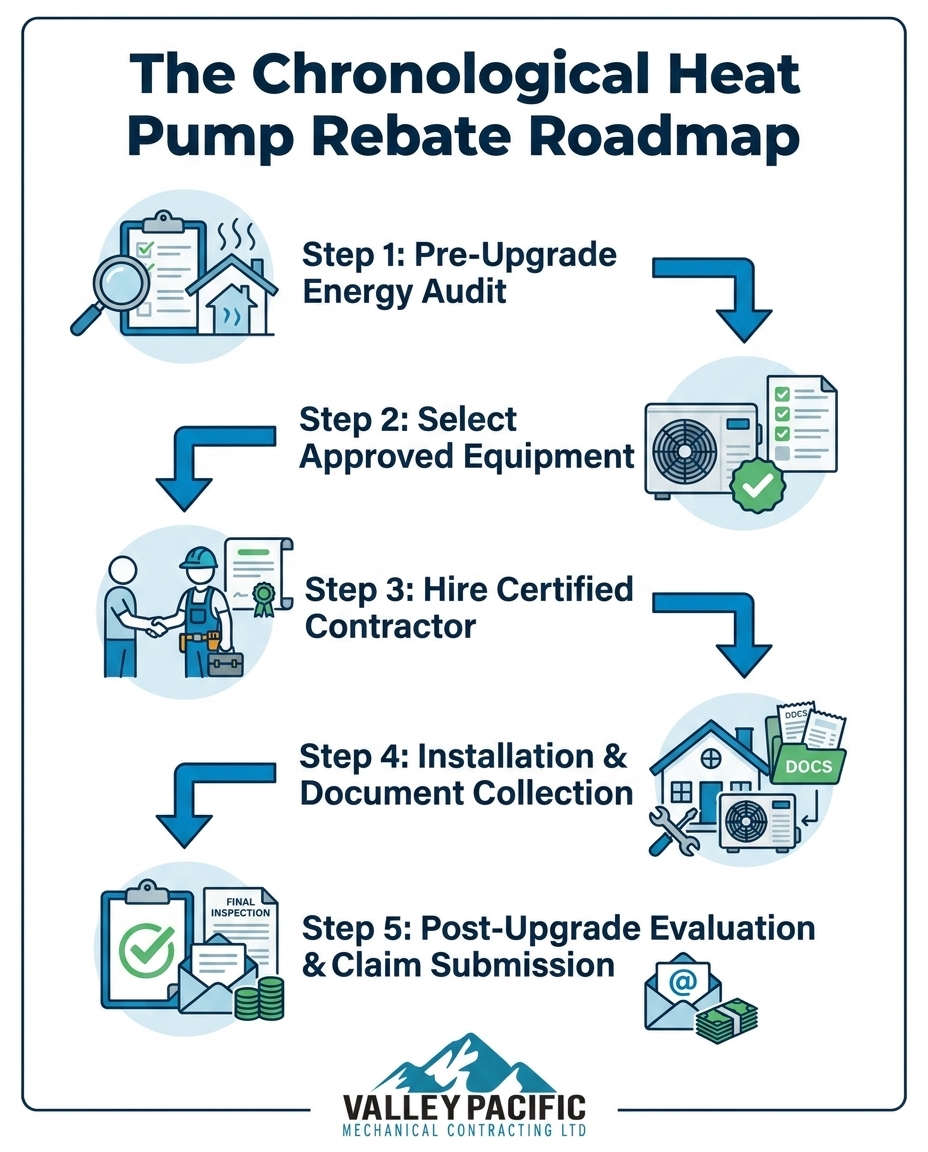
Step 2: Selecting High-Efficiency Equipment for Coastal Winters
Once your pre-upgrade audit is complete, the next step is selecting equipment that meets the strict performance metrics required by provincial rebate programs. Not all heat pumps qualify for incentives. Models must be listed on approved provincial directories and meet specific efficiency thresholds to be eligible.
In Pitt Meadows, our damp, chilly coastal winters dictate the specific high-efficiency heat pump performance ratings required for provincial rebate eligibility. A system that works well in a dry, mild climate will struggle against the heavy moisture and near-freezing temperatures typical of a coastal winter. Proper sizing is equally important; a unit that is too large will short-cycle and fail to dehumidify the air, while an undersized unit will run constantly, driving up your energy bills and wearing out prematurely.
Understanding Provincial Performance Metrics
Rebate programs look for specific efficiency ratings to ensure the equipment will perform reliably while reducing overall grid demand. You must verify a model's eligibility on provincial databases before making a commitment. Understanding the hidden costs of delaying your BC heat pump rebate includes recognizing that older, less efficient models are rapidly being phased out of qualifying lists.
• SEER2 (Seasonal Energy Efficiency Ratio) — What It Measures: Cooling efficiency over a typical season. — Why It Matters for Rebates: Higher SEER2 ratings are required to prove the system won't overdraw power during summer cooling.
• HSPF2 (Heating Seasonal Performance Factor) — What It Measures: Heating efficiency over a typical winter season. — Why It Matters for Rebates: Critical for Pitt Meadows winters; dictates how well the unit handles damp, cold conditions efficiently.
• COP (Coefficient of Performance) — What It Measures: The ratio of heating provided to electrical energy consumed at specific temperatures. — Why It Matters for Rebates: Rebate programs often require a minimum COP at freezing temperatures to ensure cold-weather reliability.
Working with a professional to cross-reference your energy advisor's recommendations with the provincial qualifying list ensures you select a system that is both comfortable for your home and compliant with rebate standards.
Step 3: Partnering with a Provincially Recognized Local Installer
Rebate eligibility strictly requires installation by a provincially recognized, certified HVAC contractor. Attempting a DIY installation, or hiring an uncertified "under-the-table" installer, results in instant disqualification from all provincial and federal incentive programs. The government requires a paper trail proving that the equipment was installed safely, properly, and according to the manufacturer's exact specifications.
Valley Pacific Mechanical's expertise as a certified local contractor actively ensures homeowners meet these strict compliance, installation, and audit requirements. We understand that the installation is only half the job; coordinating the technical specifications with your energy audit is what actually secures your funding. When serving the Pitt Meadows service area, a certified contractor takes on the responsibility of ensuring every technical detail matches the provincial guidelines.
Verifying Provincial Compliance Credentials
There is a significant difference between a contractor holding a standard municipal business license and one holding provincial rebate certification. A standard license simply means a business is legally allowed to operate. Provincial certification means the contractor has undergone specific training and vetting by the rebate authorities.
Credentials to verify before signing a contract:
• Program Registered Contractor (PRC) Status: Ensure they are listed on the official provincial directory of approved installers.
• Valid Gas Contractor License: If your heat pump installation involves modifying or removing an existing gas furnace, this is legally required.
• Refrigerant Handling Certification: Technicians must be certified to handle the refrigerants used in modern heat pumps safely.
• Local Experience: A Certified BC HVAC Contractor will be familiar with the exact documentation formatting required by local rebate portals.
Step 4: Managing Installation Day and Gathering Required Documentation
Installation day is about more than just placing the new equipment; it is a critical administrative milestone. The documentation generated during the physical installation is vital for your final claim. Responsive contractors provide these documents promptly to prevent claim delays, ensuring you have everything you need before the technicians even leave your driveway.
A typical pattern we see is homeowners scrambling to track down missing paperwork weeks after the installation. In one instance during a recent winter, a local homeowner's 20-year-old furnace broke down during the coldest days of the year. A certified team provided a rapid consultation, quotation, and installation within days. Crucially, they also supplied all the properly formatted rebate documents immediately upon completion. The heating was restored quickly, and the homeowner received their rebate without administrative delays because the paperwork was handled proactively.
Ensuring Proper Invoice Formatting
Provincial rebate portals are notoriously strict about invoice formatting. A missing date or an incomplete model number will trigger an administrative rejection, forcing you to start the submission process over. A rebate-compliant invoice must contain very specific anatomy.
• Contractor Information: Full company name, address, contact information, and specific provincial certification numbers.
• Detailed Equipment Specs: The exact make, model number, and serial number of both the indoor and outdoor units.
• Itemized Labor and Materials: Clear separation of equipment costs, labor costs, and any necessary modifications (like electrical panel upgrades).
• Installation Date: The exact date the work was completed, which must fall between your pre-upgrade and post-upgrade energy audits.
• Proof of Payment: The invoice must be clearly marked as "Paid in Full" with a zero balance remaining.
Step 5: Completing the Post-Upgrade Evaluation and Submitting the Claim
The final administrative step to successfully submit and secure your rebate is completing the post-upgrade energy evaluation. This second audit is just as mandatory as the first. The energy advisor returns to your home to verify that the approved equipment was installed correctly and to measure the actual efficiency improvements against the baseline established in Step 1.
Once the post-upgrade evaluation is complete, the advisor will update your EnerGuide rating and provide the final reports needed for your submission. You then have a specific timeframe—usually within a set number of days following the second audit—to submit all your paperwork to the provincial authorities through their online portal.
Scheduling the Follow-Up Audit
Do not wait until the installation is finished to schedule your post-upgrade evaluation. Because of administrative backlogs, it is best to book this second appointment while your installation is being scheduled. The second audit measures the efficiency improvements by verifying the new equipment's specifications and often conducting a second blower door test to ensure no new drafts were created during the installation process.
Final Review Checklist Before Submission:
1. Confirm you have the initial pre-upgrade energy audit report.
2. Gather the fully itemized, zero-balance invoice from your certified contractor.
3. Collect all manufacturer specification sheets and AHRI certificates provided by your installer.
4. Confirm you have the final post-upgrade energy evaluation report.
5. Double-check that all names and addresses match perfectly across every single document.
Common application errors, such as mismatched addresses or blurry document uploads, cause significant processing delays for Pitt Meadows homeowners. Taking the time to review this checklist ensures your claim moves smoothly through the approval queue.
Frequently Asked Questions About BC Heat Pump Rebates in 2026
What is the exact process for claiming a heat pump rebate in BC?
The process requires a strict sequence of steps to ensure eligibility. You must first complete a pre-upgrade energy audit, select qualifying equipment, hire a provincially certified contractor for the installation, and finally complete a post-upgrade energy audit before submitting your documents.
Do I have to get an energy audit before a heat pump installation?
Yes, a pre-upgrade energy audit is absolutely mandatory for provincial rebates. If you purchase equipment or begin installation before this audit is completed, your rebate eligibility is permanently voided.
Why must I use a certified contractor for heat pump rebates?
Rebate programs require certified contractors to guarantee the equipment is installed safely and performs at the required efficiency levels. Using an uncertified installer results in immediate disqualification from incentive programs.
Can I buy the heat pump myself and hire someone to install it for the rebate?
No, rebate programs generally require that the equipment be supplied and installed by the same certified contractor. This ensures the warranty is valid and the equipment matches the exact specifications approved by the program.
What documentation do I need from my installer to submit my rebate claim?
You will need a highly detailed invoice marked "Paid in Full." This invoice must include the contractor's certification numbers, exact make and model numbers of all units, serial numbers, and the specific date of installation.
Secure Your Rebate Eligibility with a Certified Local Expert
Following the exact order of operations is the only way to secure your eligibility for provincial and federal energy incentives. From the initial pre-upgrade energy audit to the final submission portal, every administrative step must be handled with precision. One minor procedural error can jeopardize your entire claim.
Partnering with the right certified professionals makes this bureaucracy entirely manageable. A Certified BC HVAC Contractor understands the paperwork just as well as the equipment, ensuring your installation is fully compliant with all 2026 regulations. Reach out to a local expert today to verify current requirements, schedule your assessments in the correct order, and start your heating upgrade process correctly.


