


How a Clogged Drain Valve Affects Your Boiler's Efficiency


The Silent Efficiency Killer Inside Your Heating System
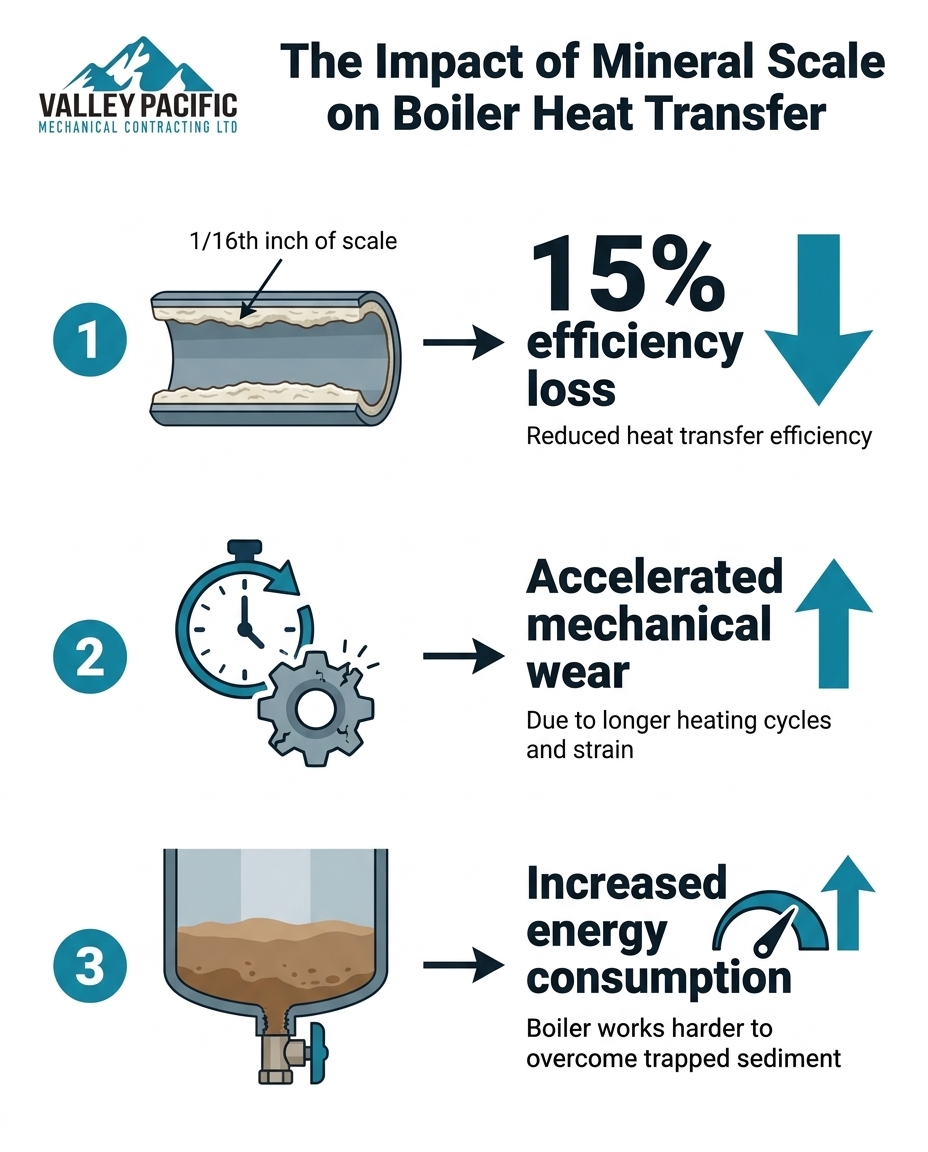
Did you know that just 1/16th of an inch of mineral scale inside your heating equipment can reduce heat transfer efficiency by up to 15 percent? That tiny layer of sediment forces your system to consume far more fuel just to keep your home comfortable. If you are wondering how a clogged drain valve affects your boiler's efficiency, the answer lies in this trapped mineral layer. When the valve meant to flush out this debris becomes blocked, that hidden insulator is left to harden, causing your system to work overtime and struggle to reach your thermostat set points.
For a deeper dive into how your equipment operates, explore our guide to boiler systems, or secure your peace of mind by scheduling routine boiler maintenance.
In our years of providing heating services during the peak winter heating months in Maple Ridge BC, our team has found that a 15 percent drop in efficiency becomes immediately noticeable to homeowners. The cold, damp weather demands consistent, reliable warmth, but an inefficient system will leave your home feeling drafty and uncomfortable. You might hear the system running continuously, yet the rooms never quite reach that cozy temperature you expect. This constant cycling is a direct result of the system fighting against its own internal buildup.
The primary culprit preventing the routine removal of this sediment is a compromised drain valve. Situated at the bottom of the unit, this small mechanical component plays a massive role in the overall health of your heating infrastructure. Understanding the physics of heat transfer—and how a simple blockage disrupts it—is the first step in protecting your equipment before you need to make a decision on professional diagnostic service.
How Mineral Scale Acts as an Unwanted Insulator
To understand why a clogged valve is so detrimental, you have to look at the underlying physics of heat transfer within hydronic heating boiler tanks. At Valley Pacific Mechanical, our plumbers frequently deal with local water conditions in the Lower Mainland that introduce dissolved minerals, such as calcium and magnesium, into your plumbing. When this water is subjected to high heat inside the boiler, these minerals precipitate out of the liquid. Because they are heavier than water, they settle directly on the bottom of the tank, right over the primary heat exchanger.
This is where the concept of thermal insulation comes into play. The precipitated mineral scale forms a physical barrier between the heat source and the water it is trying to warm. Instead of the heat transferring smoothly and rapidly into the water, it must first bake through a dense, rock-like layer of sediment. If you want to understand more about how these components work together, reviewing the anatomy of a boiler heating system provides great context.
Because the heat transfer is blocked, the boiler must fire longer and harder to push the necessary thermal energy through the mineral layer. This continuous overworking leads to accelerated mechanical wear and tear on the entire system. Burners degrade faster, internal metal components suffer from heat stress, and the overall lifespan of the unit drops significantly.
The Compounding Cost of Thermal Resistance
The relationship between scale thickness and energy waste is entirely compounding. The longer the sediment remains trapped inside hydronic heating boiler tanks, the harder it bakes onto the tank floor. What starts as a loose sludge eventually solidifies into a rigid crust.
• Clean / Freshly Flushed — Impact on Heat Transfer: Maximum efficiency; direct contact with water. — Effect on System Cycles: Short, normal heating cycles.
• Loose Sediment (Sludge) — Impact on Heat Transfer: Mild thermal resistance; some heat escapes. — Effect on System Cycles: Slightly extended run times to reach temperature.
• Hardened Mineral Scale (1/16"+) — Impact on Heat Transfer: Severe thermal barrier; up to 15% efficiency loss. — Effect on System Cycles: Continuous, overworked cycles and high fuel use.
This hardening process is why routine flushing is non-negotiable. Once the scale solidifies, standard flushing procedures are no longer enough to remove it, and the system suffers permanent thermal resistance until professional chemical descaling or part replacement is performed.
Why the Drain Valve is Critical for System Health
The drain valve is a small, often overlooked component located at the absolute lowest point of hydronic heating boiler tanks. Its basic mechanical purpose is simple: it provides an exit pathway for water and accumulated debris during routine maintenance. Because gravity naturally pulls the heaviest mineral deposits down to the bottom of the tank, those minerals settle directly around and inside the valve pathway.
When a technician opens this valve during a flush, the pressurized water forces the loose sediment out. However, if maintenance is neglected, that same gravity-fed sediment packs tightly against the valve's internal mechanisms. Over time, the hard water deposits calcify, locking the valve in place. The very sediment the valve is meant to expel becomes the material that seizes it shut.
When one local customer recently reached out to us for routine maintenance on their heating equipment, Nabil and our team provided thorough, professional equipment maintenance, ensuring components like the drain valve were functioning correctly. Catching these issues early means the customer feels reassured with a reliable service provider, rather than waiting for the valve to fail completely.
Without a functioning valve, routine flushing becomes impossible. The insulating layer of sediment is trapped permanently inside the tank, continuously degrading the system's efficiency with every heating cycle.
The Anatomy of a Seized Valve
A healthy, operational drain valve turns smoothly and creates a watertight seal when closed. A seized valve, on the other hand, is essentially welded shut by calcified hard water deposits.
Internally, the rubber washers and gaskets that prevent leaks degrade rapidly when surrounded by sharp, hardened scale. If the internal stem of the valve is heavily calcified, the simple act of trying to turn the handle can strip the threading or tear the degraded rubber gasket, transforming a clogged valve into a leaking one.
Warning Signs Your Boiler Valve is Trapping Sediment
Recognizing the symptoms of severe sediment buildup and a potentially clogged valve can save you from a complete system breakdown during the winter heating months in Maple Ridge BC. While diagnosing the exact state of the valve requires a professional, there are several clear indicators that we typically see when a system is choked by mineral scale.
• "Kettling" noises: A deep rumbling, popping, or banging sound coming from the tank is a classic sign of trapped sediment. This happens when water becomes trapped beneath the hardened mineral layer, boils rapidly, and bursts through the scale as steam bubbles.
• Longer-than-usual heating cycles: If your system is running constantly but the house still feels chilly, the thermal insulator at the bottom of the tank is blocking the heat from reaching the water.
• Inconsistent hot water delivery: For combination systems, a sudden drop in hot water capacity or fluctuating temperatures often points to sediment displacing water volume in the tank.
• Cold spots in the house: Radiators or baseboards that fail to heat up fully indicate that the water leaving the boiler isn't reaching its target temperature, thanks to the scale barrier.
Noticing these signs is the first step in diagnosing a seized valve. If you observe any of these symptoms, it is time to look into professional residential heating services to assess the health of your equipment.
The Risks of Attempting to Clear a Seized Valve Yourself
When faced with a clogged drain valve on hydronic heating boiler tanks, the instinct for some homeowners is to grab a wrench and apply force. We strongly advise against this highly dangerous mistake. A clogged boiler drain valve is a diagnostic symptom requiring licensed professional intervention, not a weekend DIY project.
The most severe risk is scalding. The water inside an active boiler is pressurized and near boiling. If a brittle, calcified valve snaps off under the pressure of a wrench, that scalding water will spray uncontrollably into the room. There is no quick way to stop this flow once the valve body is broken, posing a massive physical danger to anyone nearby.
Furthermore, if the valve is forced open but the internal washer tears due to scale damage, you will not be able to close it again. This leads directly to catastrophic basement flooding. We recently saw this firsthand when a homeowner experienced a complete boiler breakdown while on vacation during the winter, leaving them with no hot water. Our technician Jamie came within a day and repaired the whole system within hours, restoring service before the cold could cause deeper issues. A broken valve can trigger a similar emergency, dumping gallons of water into your home in minutes.
Improper flushing techniques can also backfire by pushing loose sediment further into the delicate circulator pumps, destroying the impellers and turning a simple valve replacement into a massive system overhaul.
Why Force is Never the Answer
Older boilers often feature standard brass or even plastic gate valves. Over years of heat cycling and mineral exposure, these materials become incredibly fragile. The calcification acts like a glue holding the weakened metal or plastic together.
Applying torque to these weakened components causes cascading mechanical failures. The handle may snap, the stem may shear off, or the entire valve body can crack away from the tank threading. Professional technicians have the tools and training to mitigate these risks safely.
How Experts Safely Restore Heat Transfer and Efficiency
When sediment has compromised your hydronic heating boiler tanks and the valve is seized, restoring efficiency requires a careful, methodical approach. Professional technicians do not simply force the old valve open; they follow a strict protocol to ensure safety and long-term reliability.
At Valley Pacific Mechanical, our technicians walk customers through every step of this diagnostic and repair process, ensuring homeowners fully understand the ongoing health of their mechanical systems. Transparency is a core part of the service we provide.
1. System Isolation and Depressurization: The technician first shuts down the fuel supply and power to the unit. They then safely isolate the boiler from the rest of the home's plumbing and carefully relieve the internal pressure, ensuring no boiling water can escape unexpectedly.
2. Safe Valve Removal: Using specialized tools, the technician carefully extracts the calcified, seized valve without damaging the tank's threading.
3. Upgrading to a Full-Port Ball Valve: The old, restrictive gate valve is replaced with a high-quality, full-port ball valve. This modern valve design features a straight, wide-open pathway that prevents future sediment from easily clogging the exit, making subsequent maintenance much smoother.
4. Professional-Grade Flushing: With the new valve in place, the technician performs a high-velocity flush. This safely agitates and removes the insulating sediment layer from the bottom of the tank.
5. System Restoration and Testing: The system is refilled, pressurized, and fired up. The technician monitors the heat transfer rate to ensure efficiency has been fully restored.
When another customer needed reliable and skilled professionals for their failing system, our team provided expert service that left them impressed and confident in their equipment. By relying on professional plumbing services in Maple Ridge, you ensure this delicate process is handled correctly the first time.
Frequently Asked Questions About Boiler Sediment and Valves
Why is my boiler losing efficiency?
Your boiler is likely losing efficiency because a layer of mineral scale has formed at the bottom of the tank. This sediment acts as a thermal insulator, blocking the heat from transferring into the water. As a result, the system has to burn more fuel and run for longer periods to achieve the same level of warmth, driving up your energy costs.
What happens if a boiler drain valve is clogged?
If a boiler drain valve is clogged, routine maintenance flushing becomes impossible. The heavy mineral sediment that naturally falls to the bottom of hydronic heating boiler tanks gets trapped permanently. Over time, this trapped sediment hardens into a thick crust that destroys heat transfer efficiency and accelerates wear on the system's internal components.
Can sediment ruin a boiler?
Yes, excessive sediment can absolutely ruin a boiler if left unaddressed. The insulating layer forces the heat exchanger to operate at much higher temperatures than intended, which can cause the metal to warp, crack, or fail prematurely. Additionally, loose sediment can migrate into circulator pumps, destroying the impellers and causing total system failure.
How do you know if your boiler needs flushing?
You know your boiler needs flushing if you hear loud rumbling or popping noises, commonly known as "kettling," coming from the tank. Other signs include longer heating cycles, higher energy bills, and radiators that fail to get fully hot. These symptoms indicate that sediment is blocking heat transfer and needs to be professionally removed.
Is a seized boiler drain valve dangerous to fix yourself?
A seized boiler drain valve is highly dangerous to fix yourself due to the risks of severe scalding and flooding. The water inside the boiler is pressurized and extremely hot; if you accidentally break a brittle valve while trying to force it open, that boiling water will spray uncontrollably. This is a repair that always requires a licensed professional.
How often should a professional check and flush my boiler?
A professional should check and flush your boiler at least once a year as part of annual preventative maintenance. Regular servicing ensures that sediment is removed while it is still loose sludge, preventing it from hardening into scale and seizing the drain valve. Annual checks keep hydronic heating boiler tanks operating safely and at peak efficiency.
Protect Your Heating System's Efficiency Before Winter Peaks
Addressing a clogged drain valve is essential for removing the insulating sediment that quietly destroys your heating system's efficiency. When that mineral scale is allowed to build up, your equipment is forced to work harder, consume more fuel, and endure unnecessary mechanical stress. Restoring that lost efficiency not only saves energy but also protects you from unexpected mid-winter breakdowns.
As the winter heating months in Maple Ridge BC approach, ensuring your system can breathe and transfer heat freely is the smartest way to protect your home. We encourage you to explore routine maintenance options and have a professional evaluate your system's health, ensuring your equipment delivers reliable, efficient warmth all season long.


