


Beyond the Breakdown: Comprehensive HVAC Repair, Installation, and Tune-Up Services

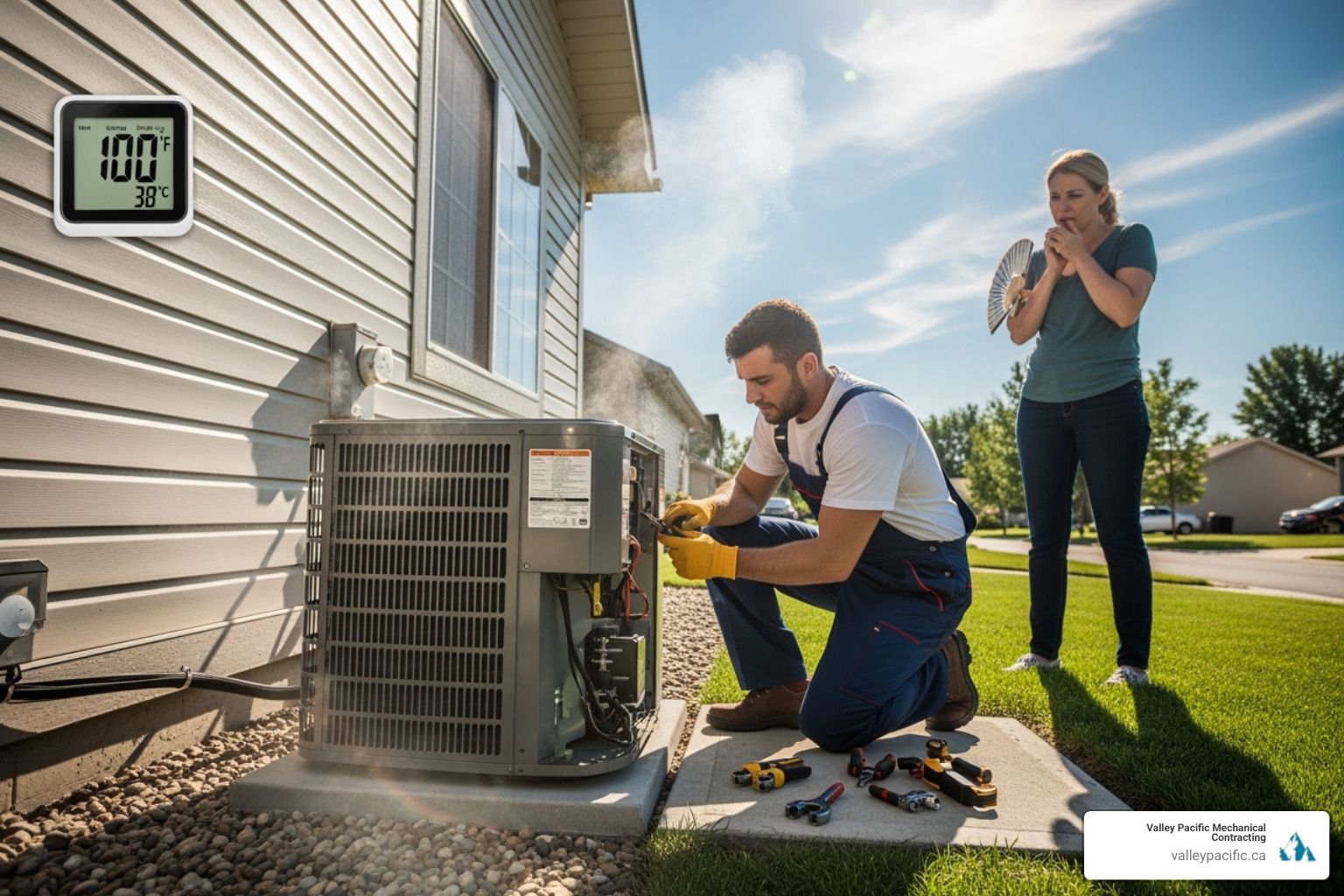


When Your AC Fails, Every Minute Counts
Emergency AC repair is critical when your cooling system fails during a heatwave. A broken air conditioner is more than an inconvenience; it's a health hazard, especially for children, the elderly, and those with respiratory conditions. According to the CDC's Heat & Health Tracker, a heat index over 90°F (32°C) significantly increases the risk of heat-related illnesses, making a functional AC essential.
If you need immediate help, here's what to do:
- Turn off your AC at the thermostat and circuit breaker to prevent further damage.
- Check the basics: thermostat settings, air filter, and tripped breakers.
- Call a professional if the system won't turn on, makes loud noises, smells like burning, or is leaking.
- Stay cool by closing blinds, using fans, drinking water, and moving to lower levels of your home.
- Never ignore electrical issues, strange smells, or visible smoke.
Most AC emergencies can be resolved quickly when you know how to respond. This guide will help you identify true emergencies, take immediate action, and prevent future breakdowns. For comprehensive HVAC solutions beyond emergency repairs, explore our full range of residential and commercial services, or contact us for immediate assistance.

Emergency AC repair helpful reading:
Is It a True AC Emergency? Key Warning Signs
When your AC fails on the hottest day of the year, you need to know: can it wait, or do you need help right now? We define an emergency AC repair as any situation that poses a health risk, safety risk, or threatens major property damage. A complete system failure during a heatwave is always an emergency, but other warning signs also demand immediate attention.
Your AC communicates problems through sounds, smells, and visible signs. Recognizing these signals can be the difference between a quick fix and a total system replacement. To learn more, check out our guide on How Do I Know If My AC Needs Immediate Repair or Just Maintenance.
Signs of Electrical Problems
Electrical issues are dangerous and can cause fires or damage your home's wiring. Act immediately if you notice these signs:
- Circuit breakers that keep tripping: This indicates your AC is drawing too much power due to a short circuit or failing component. Don't just reset it; this is a serious warning. Learn more about Why is my AC circuit breaker tripping.
- A burning smell from your vents: This likely means wiring or a motor is overheating. Turn off your AC at the thermostat and circuit breaker immediately.
- Lights that dim when the AC starts: This signals the unit is pulling excessive power, often due to a component that's about to fail.
Alarming Noises and Smells
Unusual sounds mean your system is in trouble. Turn it off and call a professional if you hear:
- Grinding or screeching: These are often the death rattle of failing motor bearings. Continuing to run the system will lead to a more expensive motor failure.
- Banging or clanking: This means a part has broken or come loose. Running the unit can cause a chain reaction of damage.
- Hissing or bubbling: This usually points to a refrigerant leak, which can destroy your compressor.
- Musty or moldy odors: This indicates mold growth in your system, which is a health concern. Read more about Strange Noises Coming From AC Unit and Addressing AC Foul Odours.
Visible Leaks or Freezing
Water or ice where it shouldn't be requires prompt attention to prevent serious damage.
- Water pooling around your indoor unit: This is often from a clogged condensate drain line and can lead to water damage and mold. Our guide on Troubleshooting AC Water Leaking can help.
- Ice buildup on coils or refrigerant lines: This is a common sign of restricted airflow (like a dirty filter) or low refrigerant. It blocks cooling and strains the system. Learn more in Why is my AC unit freezing up.
- Refrigerant leaks: Besides hissing sounds and ice, a refrigerant leak causes a noticeable drop in cooling power. Running an AC with low refrigerant will ruin the compressor.
Don't wait and see with these warning signs. A minor issue today can become a major emergency AC repair tomorrow.
Your Immediate Action Plan for Emergency AC Repair
When your AC gives up, a few calm, deliberate steps can protect your family, prevent further damage, and help you communicate clearly with a professional.

Your first priority is safety. If you smell something burning or see major leaks, turn the system off immediately. Once it's safe, some basic troubleshooting might reveal a simple fix. For a full walkthrough, see our guide on AC Suddenly Stops Working.
First-Step Troubleshooting
Before scheduling an emergency AC repair, try these simple checks:
- Check your thermostat: Ensure it's set to "cool" and the temperature is set below the current room temperature. Check the batteries if it's wireless. If the remote is the issue, see our article on AC Remote Not Working.
- Inspect your air filter: A clogged filter is a common culprit. If it's dirty, replace it.
- Check the circuit breaker: Find the breaker for your AC. If it's tripped, flip it completely off, then back on.
- Examine the outdoor unit: Turn off the power at the nearby disconnect box, then clear away any leaves, grass, or debris blocking airflow.
How to Stay Cool While You Wait
While our technicians are on their way, use these strategies to stay cool:
- Close blinds and curtains to block heat from the sun.
- Use fans to circulate air and create a cooling effect.
- Stay hydrated by drinking plenty of water.
- Avoid using heat-generating appliances like the oven, stove, or dryer.
- Move to the lowest level of your home, as basements and ground floors are naturally cooler.
The Risks of Running a Malfunctioning AC
It's tempting to keep a struggling AC running, but this can turn a minor repair into a major catastrophe. Forcing a system with grinding noises or leaks to operate can cause the initial problem to spread, potentially destroying the compressor—the most expensive part of your system.
The financial difference between acting early and ignoring a problem is substantial. A simple fix can escalate into a full system replacement. Learn the Signs Your HVAC System May Fail Soon to catch issues early. Most importantly, electrical issues are a fire hazard. If your breaker keeps tripping or you smell burning, turn the system off at the thermostat and breaker immediately.
Common Culprits: Why AC Units Fail During Peak Season
Your AC is most likely to fail during a heatwave because the relentless demand exposes every weak point. Components that limp along in mild weather can't keep up when they have to run constantly. Understanding these common failure points can help you avoid a full-blown emergency AC repair. For more on this, see our guide on AC Not Cooling During Heatwaves.

Airflow and Cooling Problems
Most peak-season breakdowns are caused by restricted airflow. Your AC cools by moving air over cold coils; if that air can't flow, the system breaks down.
- Dirty air filters are the #1 culprit. A clogged filter suffocates your system, leading to overheating and frozen coils. Check your filter frequently during summer.
- Blocked vents also restrict airflow, forcing your AC to overwork. Ensure furniture and curtains aren't covering registers.
- Frozen evaporator coils are a symptom of poor airflow. Ice builds up on the indoor coil, blocking air and creating a vicious cycle. Our article Why is my AC unit freezing up explains this in detail.
- Warm air blowing from vents is the frustrating result of these issues. If you're experiencing this, see AC Vents Warm Air Causes Solutions. For uneven cooling, check our guide to Uneven Cooling Issues With Your AC.
Component and System Failures
Summer heat puts immense stress on your AC's mechanical and electrical parts.
- Capacitor failure is extremely common in heatwaves. Capacitors give motors the boost they need to start and run. When they fail from overheating, your system won't start.
- Compressor issues are the most serious failures. The compressor is the heart of your AC. It can fail from continuous operation in extreme heat or from running with low refrigerant. A failing compressor is an expensive problem.
- Refrigerant leaks become obvious during peak season. Low refrigerant means poor cooling and can cause the compressor to overheat and fail.
- Thermostat malfunctions can mimic serious problems, causing the AC to run constantly or not at all. During a heatwave, this can be critical. Learn more about Fixing AC That's Constantly Running.
The Proactive Approach: Preventing Future Breakdowns
The best emergency AC repair is the one you never have to make. Like a car, your air conditioner needs regular maintenance to run reliably and efficiently, especially when you need it most.
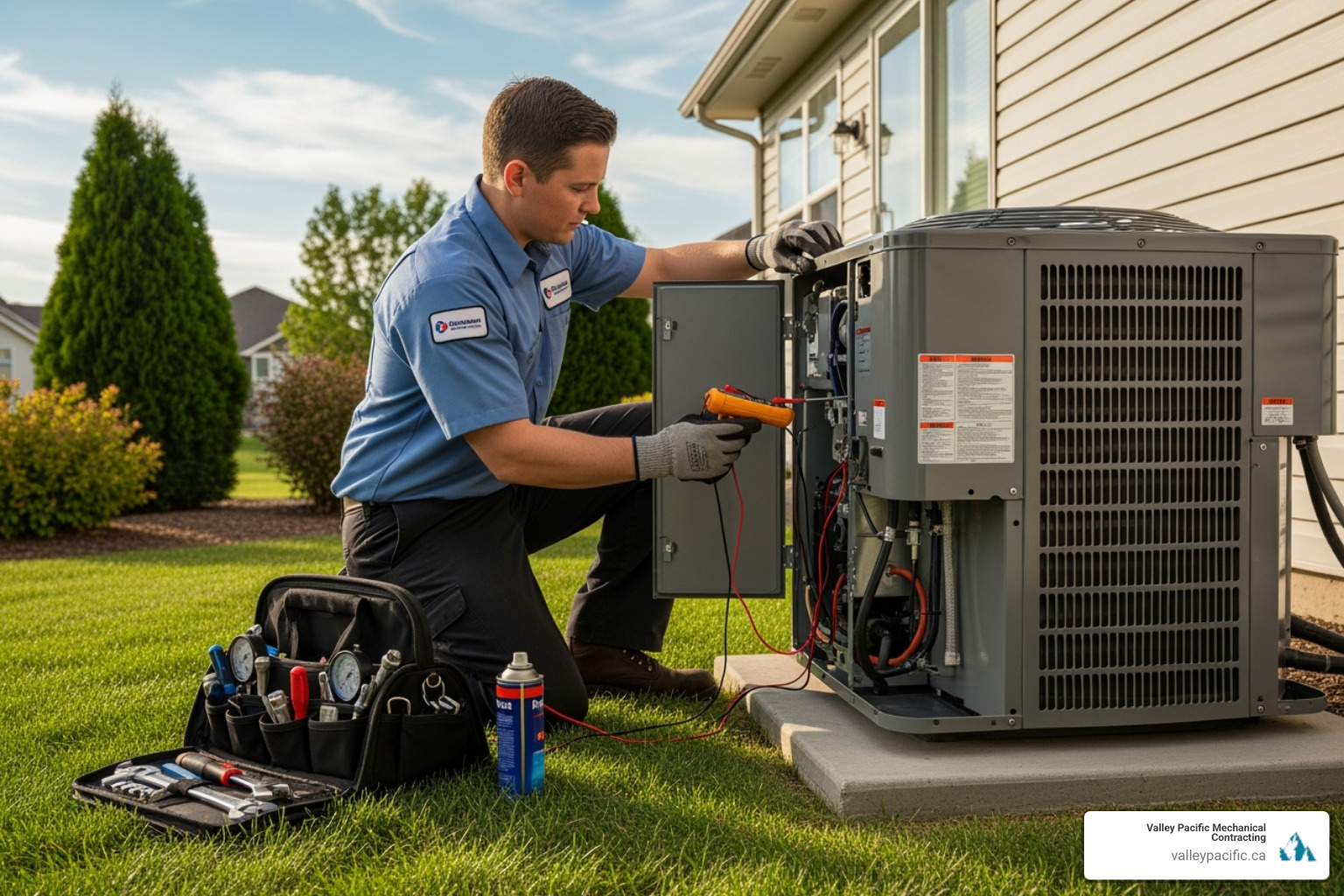
Preventative care saves you from stress and high costs in the long run by extending your system's life and lowering energy bills. For a complete overview, check out our HVAC Preventative Maintenance guide.
The Role of Regular AC Maintenance
Professional maintenance is a health checkup for your AC. Our technicians inspect all components, clean essential parts, and fine-tune your system for peak performance. We clean evaporator and condenser coils, clear the condensate drain line to prevent leaks, and verify refrigerant levels to protect your compressor. A comprehensive inspection is detailed on our HVAC System Check page.
The benefits are clear: your AC lasts longer, your energy bills are lower, your air quality improves, and you maintain your manufacturer's warranty. For local service options, see our HVAC Maintenance Langley page.
Preparing Your AC for Summer
A little preparation in the spring ensures a cool, worry-free summer.
- Schedule a professional spring tune-up before the first heatwave. This allows us to fix issues before our summer rush begins.
- Keep your outdoor unit clear of leaves, grass, and other debris that can block airflow.
- Test your system on a mild day. Turn it on to ensure it's blowing cool air and not making strange noises.
- Ensure proper airflow by replacing your air filter regularly and keeping all indoor vents open and unobstructed.
For homeowners in Maple Ridge, we offer comprehensive AC Service Maple Ridge BC to get your system summer-ready.
Repair vs. Replace: Making the Right Call for Your Old Unit
When facing an emergency AC repair on an older system, you have a tough choice: fix it or replace it? Understanding a few key factors will help you make the smartest decision for your home and budget. Our guide When to Install a New AC System offers more insight.
The table below outlines the main factors to consider:
| Factor | Repair Favored | Replace Favored |
|---|---|---|
| Age | Less than 10-12 years old | Over 15 years old |
| Repair Freq. | First or second minor repair | Frequent, recurring breakdowns |
| Efficiency | Unit still operates efficiently | High energy bills, poor cooling performance |
| Warranty | Repairs covered under warranty | Warranty expired, major component failure |
| Cost | Repair cost is less than 50% of new unit | Repair cost approaches or exceeds 50% of new unit |
When to Choose AC Repair
A repair is often the right move. Consider repairing if:
- Your AC unit is less than 10-12 years old. It likely has several years of life left.
- The fix is minor and inexpensive, like replacing a capacitor or clearing a drain line.
- The system is still under warranty. Many warranties cover parts, so you'll only pay for labor. We offer expert AC Repair Mission BC to get your unit running again.
Signs You Need a New AC Installation
Sometimes, continuing to repair an old unit is throwing good money after bad. It's time for a new system if:
- Your unit is over 15 years old. It's past its typical lifespan and will likely have more frequent breakdowns.
- You face frequent and costly breakdowns. If you're calling for emergency AC repair every summer, the costs add up. A major repair like a compressor replacement can cost 50% or more of a new unit.
- Your energy bills are rising. An old, inefficient unit works harder to do less.
- Your unit uses outdated R-22 refrigerant (Freon). This refrigerant is phased out, expensive, and hard to find.
For more details, see Signs You Need a New AC Installation. A new system is an investment in reliability, efficiency, and peace of mind. We provide expert AC Installation Langley BC to ensure you get the perfect system for your home.
Frequently Asked Questions about Emergency AC Repair
When your AC goes down in a heatwave, you need answers fast. Here are some of the most common questions we hear about emergency AC repair.
What constitutes a true emergency AC repair situation?
An emergency involves any scenario that poses a health risk (extreme heat), a safety hazard (electrical issues), or threatens property damage (major leaks). If your system fails completely during a heatwave, especially with vulnerable individuals at home, it's an emergency. Likewise, burning smells or frequent breaker trips are safety emergencies that require an immediate call.
What are the first things I should check myself?
Before calling, a few quick checks might solve the problem:
- Thermostat: Is it set to "cool" with the temperature set low enough?
- Air Filter: Is it clogged and in need of replacement?
- Circuit Breaker: Has the breaker for the AC unit tripped? Try resetting it once.
- Outdoor Unit: Is it blocked by leaves or debris?
Is it safe to keep my AC running if it's making strange noises?
No, turn it off immediately. Loud grinding, banging, or screeching noises indicate a serious internal problem. Continuing to run the unit can cause a minor issue to become a catastrophic failure, potentially destroying expensive components like the compressor. Turn the system off at both the thermostat and the circuit breaker, then call a professional.
At Valley Pacific Mechanical Contracting, we're available 24/7 for these exact situations. Your comfort and safety are our top priorities, and we're always just a phone call away when you need emergency AC repair.
Your Partner for Year-Round Home Comfort
When your AC quits during a heatwave, you need a partner who understands the urgency. Our mission is to restore comfort to your home quickly and efficiently. While we believe prevention through regular maintenance is the key to avoiding emergency AC repair, we know emergencies still happen.
That's why we offer 24/7 availability for unexpected breakdowns. Whether it's a strange noise in the night or a complete system failure on the hottest day of the year, we are ready to help.
At Valley Pacific Mechanical Contracting, we provide a headache-free experience. From routine maintenance to emergency repairs and new installations, our team brings over 30 years of expertise and reliability to homeowners throughout the Lower Mainland, including Mission, Maple Ridge, and Langley. We back our work with the Daikin Comfort Promise, ensuring your home remains a sanctuary year-round.
For more information about our comprehensive heat pump services, visit our dedicated page: More info about heat pump services.


