


Stop the Freeze Before It Starts



Why Knowing How to Prevent HVAC Emergencies with Maintenance Could Save Your Home This Season
How to prevent HVAC emergencies with maintenance comes down to a handful of consistent habits most homeowners overlook until something goes wrong. Here's a quick summary:
- Change your air filter every 1–3 months (monthly if you have pets)
- Schedule professional tune-ups twice a year — spring for your AC or heat pump, fall for your furnace or boiler
- Keep 2 feet of clearance around your outdoor unit at all times
- Flush your condensate drain line every three months to prevent water damage
- Check thermostat batteries and circuit breakers before assuming a motherboard or mechanical breakdown
- Listen for warning signs — grinding, screeching, or banging means call a pro now
Your HVAC system runs quietly in the background, keeping your home warm through a Maple Ridge winter and cool during those Lower Mainland heat waves. Most of the time, you don't think about it — until it stops working at the worst possible moment.
Here's the reality: the vast majority of HVAC breakdowns are not random. Dirt and neglect are the leading causes of heating and cooling system failure, and regular maintenance can cut the risk of a costly breakdown by up to 95%. Yet fewer than half of homeowners have had their system serviced in the past year.
In a climate like BC's Lower Mainland — where temperatures swing from damp, freezing winters to increasingly hot summers — an HVAC failure isn't just uncomfortable. For households with young children, elderly family members, or anyone with a health condition, it can be a genuine safety risk.
The good news? Most emergencies are entirely preventable. This guide walks you through exactly what to do, when to do it, and what to watch for so you're never caught off guard.
What Counts as an HVAC Emergency in the Lower Mainland?
Living in communities like Mission, Pitt Meadows, or Langley, we know that the weather can be unpredictable. But when is a system hiccup a true emergency? An HVAC emergency is any situation that poses a direct threat to your health, safety, or the structural integrity of your home.
In May 2026, as we look at modern home standards, we categorize emergencies into three main buckets:
- Extreme Temperatures: If your furnace fails during a freezing January night or your AC dies during a 30°C+ heatwave, it becomes a safety hazard for vulnerable family members. Infants and the elderly are less able to regulate body temperature, making a climate-controlled environment essential.
- Safety Hazards: This includes the "rotten egg" smell of a gas leak or a flickering orange/yellow pilot light on your furnace (which should always be a crisp blue). Carbon monoxide is a silent, odorless killer that can leak from a cracked heat exchanger.
- Water Damage: A clogged condensate drain can cause water to back up, leading to pooling around your indoor unit and potential mold growth or ceiling damage.
If you find yourself in the middle of a cooling crisis, our Emergency AC Repair Guide can help you navigate the immediate steps.
Common Emergency Signs
- Strange Noises: Loud banging, screeching, or grinding indicates mechanical failure.
- Electrical Odors: A "burning plastic" smell often means wires are melting or a motor is seizing.
- No Airflow: If the fan is spinning but nothing is coming out of the vents, your coils may be frozen or the blower motor may have failed.
Immediate Action: If you smell gas or see smoke, evacuate immediately. For mechanical issues, shut the system off at the thermostat and the circuit breaker to prevent further damage before calling for professional help.
How to Prevent HVAC Emergencies with Maintenance Year-Round
The best way to handle an emergency is to ensure it never happens in the first place. When we discuss how to prevent hvac emergencies with maintenance, we are talking about a strategic investment in your home's "heart."
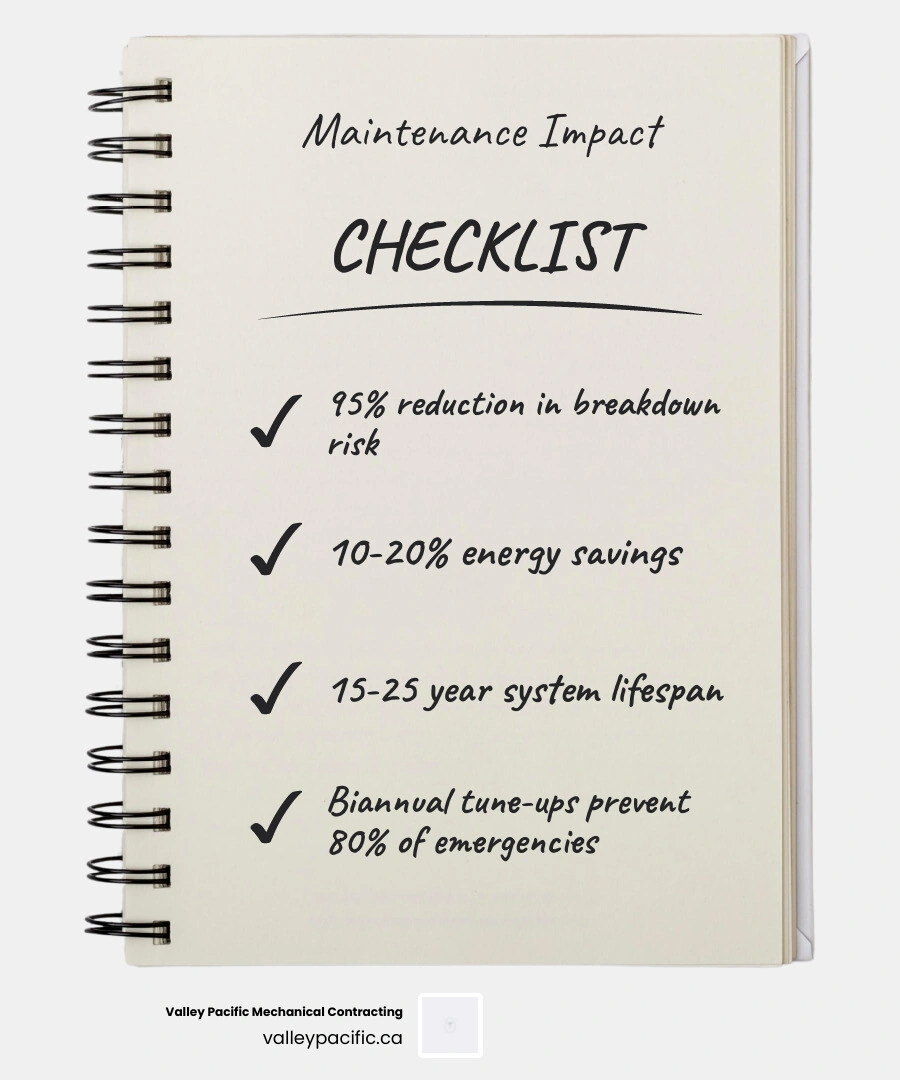
| Feature | Proactive Maintenance | Neglected System |
|---|---|---|
| Breakdown Risk | Reduced by up to 95% | High (especially during peak use) |
| Energy Bills | 10-20% lower consumption | 15% higher (due to dirty filters) |
| System Lifespan | 15–25 years | 8–10 years |
| Air Quality | High (filtered and clean) | Poor (dust and allergen buildup) |
| Warranty Status | Remains valid | Often voided |
By performing an HVAC System Check regularly, you aren't just avoiding a repair bill; you're extending the life of an asset that costs thousands of dollars to replace. In fact, well-maintained systems can last up to 25% longer than those left to gather dust.
For more detailed strategies, check out our guide on HVAC Preventative Maintenance to keep your home running smoothly through 2026 and beyond.
Proactive Steps: How to Prevent HVAC Emergencies with Maintenance in Spring and Fall
In the Lower Mainland, we recommend a biannual schedule. Think of it as a "wellness check" for your home.
- Spring (AC & Heat Pump Prep): Before the first heatwave hits, we focus on cleaning condenser coils and checking refrigerant levels. If you use a heat pump, we ensure the reversing valve and defrost cycles are functioning correctly. Learn more about Heat Pump Maintenance to stay efficient.
- Fall (Heating Readiness): Before the damp cold settles into Langley or Mission, your furnace or boiler needs an inspection. This includes checking the heat exchanger for cracks and testing safety controls. For those in Langley, our Furnace Maintenance Langley BC Complete Guide provides a deep dive into local heating needs.
- Boiler Reliability: Many older homes in our region rely on radiant heat. Regular Boiler System Maintenance ensures that pumps and valves don't seize up after months of inactivity.
Smart Technology: How to Prevent HVAC Emergencies with Maintenance and AI
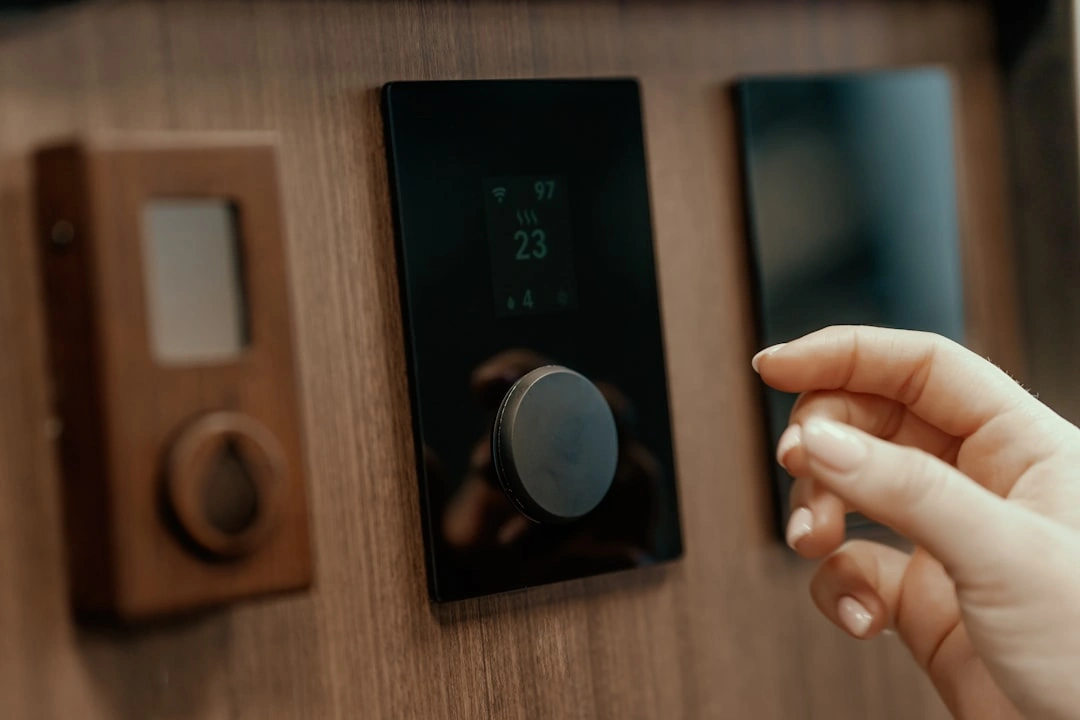
By 2026, technology has become a major ally in home comfort. Smart thermostats are no longer just about changing the temperature from your phone; they are diagnostic tools.
Modern systems can track runtime patterns. If your AC is running for six hours to drop the temperature by just two degrees, the system can send an alert to your phone indicating a likely refrigerant leak or a severely clogged filter. These predictive diagnostics allow us to catch a failing capacitor or a struggling motor before the system actually quits.
Integrating these Maple Ridge HVAC Tips 2025 with smart technology can reduce heating and cooling energy use by 8–15%, paying for the device itself in a matter of seasons.
Simple DIY Habits to Protect Your Home’s Comfort
While professional service is vital, there are several "low-tech" habits you can adopt to keep your system happy. These HVAC Preventative Maintenance Tips are the first line of defense against a total shutdown.
- The "Lungs" of the System: Change your air filters every 30 to 90 days. A dirty filter is the #1 cause of system failure. It restricts airflow, which can cause your evaporator coils to freeze into a block of ice or your furnace to overheat and crack the heat exchanger.
- Clear the Perimeter: Your outdoor unit needs to "breathe." Maintain at least a 2-foot clearance from shrubs, tall grass, or debris. In the Lower Mainland, keep an eye out for cottonwood seeds or fallen leaves that can blanket the coils and cause the compressor to overheat.
- The Vinegar Flush: Every three months, pour a cup of distilled vinegar down your condensate drain line. This kills algae and prevents the "sludge" that leads to backups and water damage.
- Battery & Breaker Check: If your system won't turn on, check the thermostat batteries and your electrical panel first. It’s a simple fix that could save you a service call!
- Vent Obstruction: Ensure that area rugs, furniture, or curtains aren't blocking your supply and return vents. Restricted airflow puts unnecessary strain on the blower motor.
Why Professional Inspections are Essential for Long-Term Reliability
There are some things a homeowner simply shouldn't do. Handling refrigerant, testing high-voltage electrical connections, and inspecting heat exchangers require specialized tools and licensing.
When we perform HVAC Maintenance Langley, we look for the "silent killers" of HVAC efficiency. For example, a loose electrical connection caused by years of system vibration can lead to a short circuit or a fire hazard. We also check for ductwork integrity. In a typical home, 20% to 30% of the air is lost through leaks or poor connections before it even reaches your rooms.
For commercial clients or those with complex heating, Annual Boiler System Maintenance Contracts are the gold standard for ensuring uptime and safety. Professionals use specialized "fin combs" to straighten bent aluminum fins on outdoor units and algaecide tablets to keep drains clear for the long term.
Frequently Asked Questions about HVAC Maintenance
What are the most common causes of HVAC emergencies?
Most emergencies stem from dirty filters, which cause the system to overwork and overheat. Other leading causes include clogged condensate drains (leading to water damage), electrical component wear (like failed capacitors), and refrigerant leaks, which eventually cause the compressor to seize.
How often should I change my air filters in BC?
In the Lower Mainland, we recommend checking your filter once a month. If you have pets (looking at you, Golden Retriever owners!) or live in a dusty area, you should change it every 30 days. During shoulder seasons when the system isn't running as much, you can often stretch this to 90 days. We recommend MERV 8 to 13 filters for the best balance of air quality and airflow.
What should I do immediately if my HVAC system fails?
First, don't panic. Check your thermostat to ensure it has power and is set to the correct mode (Heat/Cool). Next, check your circuit breaker to see if it has tripped. Inspect your air filter; if it’s pitch black, the system might have shut down to protect itself from overheating. If these simple checks don't work, turn the system off and call for 24/7 emergency service.
Conclusion
At Valley Pacific Mechanical Contracting, we’ve seen how a little bit of prevention goes a long way. As an Indigenous-owned business with over 30 years of expertise serving Maple Ridge, Langley, Mission, and Pitt Meadows, we pride ourselves on providing a "headache-free" experience.
Whether you need a routine tune-up to prevent HVAC emergencies with maintenance or you're facing an urgent repair in the middle of a cold snap, we are here to help. Our licensed technicians are committed to the Daikin Comfort Promise, ensuring your home remains a sanctuary of comfort regardless of the BC weather.
Ready to protect your home? Explore our full range of services and let’s make sure your HVAC system stays reliable for years to come.


