


How We Saved a Langley Customer from a Cracked Heat Exchanger Disaster


The Hidden Threat Inside Aging Heating Equipment
When local homeowners ask about how we saved a Langley customer from a cracked heat exchanger disaster, the truth is that this hidden threat happens more frequently than most people realize. At Valley Pacific Mechanical Contracting Ltd., we know you expect your heating equipment to keep your home warm and comfortable, but behind the metal panels, a complex process of combustion and heat transfer takes place. If that process becomes compromised, the results go far beyond a simple loss of efficiency. The heat exchanger is the physical barrier keeping toxic combustion gases separate from the breathable air circulating through your vents. When that barrier fails, your home is instantly at risk.
Most homeowners never notice the early warning signs of a failing heat exchanger. There are rarely loud clanking noises, sudden breakdowns, or obvious smells in the initial stages. The unit might continue to produce warm air, masking the structural failure developing deep inside the chassis. This is exactly why our team stresses that routine maintenance for furnace systems is not just a performance tune-up—it is a critical safety intervention. For homes across Langley and Maple Ridge, a standard fall service appointment is often the exact moment our trained professionals identify a hidden hazard, shifting the focus entirely from energy efficiency to immediate family safety.
Understanding how this vital component works is the first step in protecting your home. The heat exchanger is essentially a series of metal tubes or clamshell-shaped chambers. The burners ignite gas inside these chambers, heating the metal. Your blower fan then pushes cold indoor air over the outside of these hot metal chambers, warming the air before distributing it throughout your house. The toxic exhaust gases remaining inside the chambers are safely vented completely out of your home through the flue pipe. If a crack develops in that metal, the separation is broken, and the consequences can be life-threatening.
What Causes a Heat Exchanger to Crack?
Heating equipment is built to withstand extreme conditions, but no mechanical component lasts forever. The continuous cycle of heating up and cooling down takes a severe toll on the internal materials. Understanding the root causes of this failure helps explain why regular professional oversight from our technicians is so necessary, especially as your equipment ages.
The Mechanics of Metal Fatigue
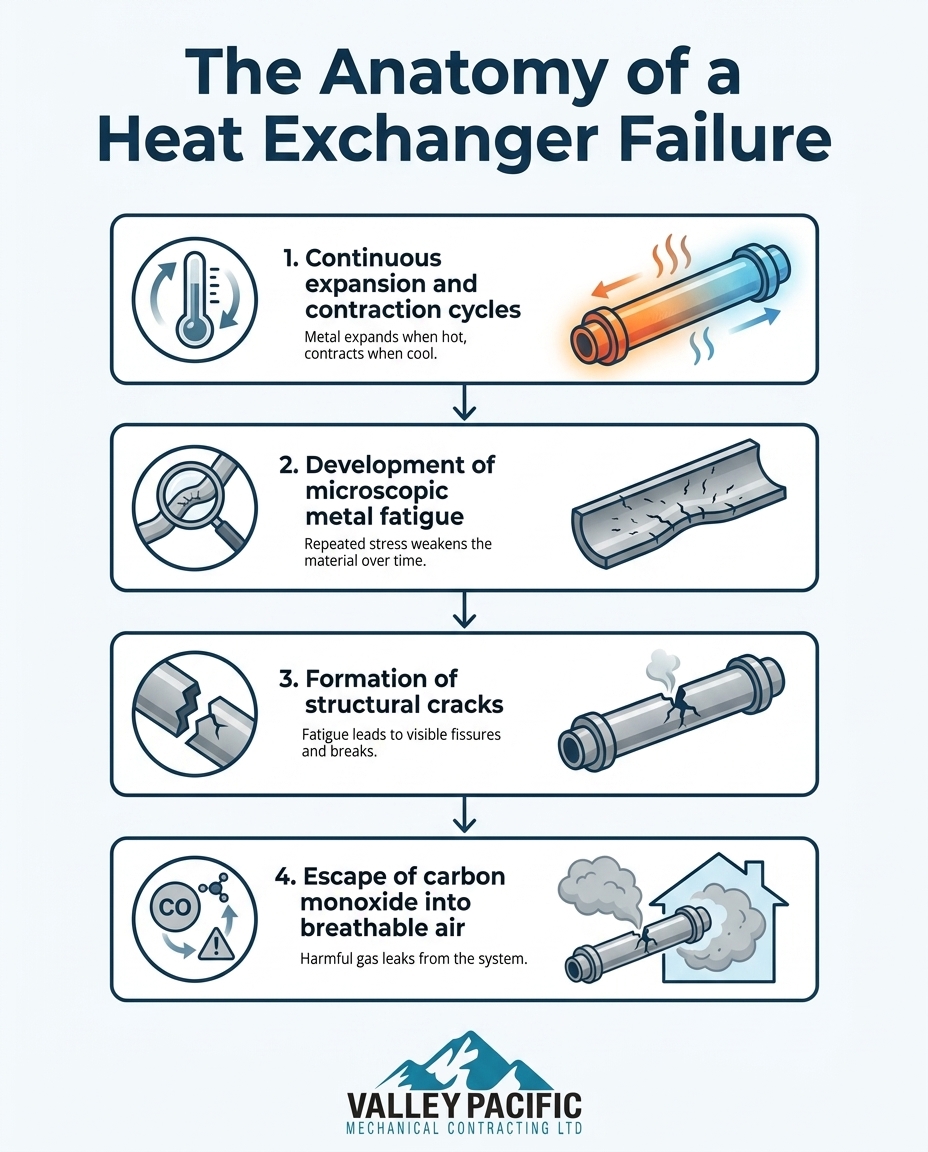
Every time your thermostat calls for heat, the burners ignite, and the temperature inside the heat exchanger skyrockets. As the metal absorbs this intense heat, it physically expands. Once the heating cycle finishes and the burners shut off, the metal cools and contracts back to its original shape. Over a typical fall/winter heating season in BC, this expansion and contraction cycle happens thousands of times.
Think of it like bending a metal paperclip back and forth. For the first few bends, the metal holds its shape perfectly. But eventually, the constant stress causes the structural integrity to weaken, and the metal snaps. The same principle applies to your heat exchanger. Years of temperature extremes create microscopic stress fractures in the metal. Over time, these invisible fractures widen into dangerous cracks. While high-quality manufacturing delays this process, our technicians see firsthand that the laws of thermodynamics guarantee metal fatigue will eventually occur.
The Role of Airflow and Maintenance
While age is a primary factor, restricted airflow is the most common catalyst for premature heat exchanger failure that we encounter in the field. Your heating system is carefully calibrated to move a specific volume of air over the heat exchanger to keep the metal from overheating. When something restricts that airflow, the metal absorbs far more heat than it was designed to handle.
Common causes of restricted airflow we see include:
• Clogged air filters: A dirty filter chokes the blower fan, severely reducing the amount of cooling air passing over the heat exchanger.
• Blocked return vents: Furniture or rugs placed over vents disrupt the intake of air.
• Closed supply registers: Shutting vents in unused rooms increases static pressure and traps heat inside the main system.
• Dirty blower wheels: Dust buildup on the fan blades reduces the motor's ability to push sufficient air.
When the system runs hotter than its design limits, the metal expands beyond its normal tolerances. This drastically accelerates metal fatigue. In our years of service, we've noticed a direct correlation between neglected equipment and premature structural failure, which perfectly illustrates what happens if you skip HVAC maintenance. Regular filter changes and professional cleanings by our crew ensure the system breathes properly, keeping operating temperatures within safe limits.
• Clean filter, open vents — Airflow Status: Optimal — Heat Exchanger Impact: Metal cools properly during cycles — Risk of Cracking: Low (Normal wear and tear)
• Slightly dirty filter — Airflow Status: Reduced — Heat Exchanger Impact: Metal runs warmer than designed — Risk of Cracking: Moderate (Accelerated wear)
• Severely clogged filter — Airflow Status: Restricted — Heat Exchanger Impact: Metal overheats rapidly — Risk of Cracking: High (Severe thermal stress)
• Closed vents / blocked returns — Airflow Status: Choked — Heat Exchanger Impact: Extreme heat trapped in chassis — Risk of Cracking: Critical (Imminent failure risk)
The Silent Danger of Carbon Monoxide Leaks
A cracked heat exchanger is not just a mechanical inconvenience; it is a severe health hazard. The primary byproduct of burning natural gas or propane is carbon monoxide (CO). In a healthy system, this toxic gas is safely contained within the heat exchanger and vented outside. When a crack forms, the positive pressure from the blower fan can alter the burner flame, and combustion gases can easily leak into the air stream that blows directly into your living spaces.
Carbon monoxide is incredibly dangerous because it is completely invisible. It is a colorless, odorless, and tasteless gas. You cannot see it filling a room, and you cannot smell it, which is why we frequently refer to it as the silent killer. When inhaled, carbon monoxide displaces oxygen in the bloodstream, leading to tissue damage and severe health complications.
We always warn our customers that this risk is drastically amplified during the chilly, damp Lower Mainland winters. To keep the cold out, residents naturally keep their windows tightly sealed and rely on weather-stripping to prevent drafts. While this is great for energy efficiency, it means that any carbon monoxide leaking into the home has nowhere to escape. The gas becomes trapped, slowly building up in enclosed spaces over hours or days.
Many homeowners assume their standard ceiling-mounted smoke and CO detectors will immediately alert them to a problem. However, standard residential CO detectors are typically designed to sound an alarm only when carbon monoxide reaches high, acute levels to prevent immediate fatalities. They often do not detect low-level, chronic leaks. A small crack in a heat exchanger might release low levels of CO every time the heating system runs. Over weeks of continuous winter operation, this low-level exposure can cause persistent headaches, dizziness, nausea, and fatigue—symptoms we often hear homeowners mistakenly attribute to a common winter flu.
How Our Technicians Catch What the Untrained Eye Misses
Because the early signs of a cracked heat exchanger are virtually undetectable to homeowners, professional intervention is the only reliable defense. Our comprehensive diagnostic evaluation goes far beyond simply turning the unit on and verifying that warm air comes out of the vents. It requires a specific methodology and extensive training to interpret subtle diagnostic readings that prevent disasters.
Beyond the Basic Visual Check
A simple visual inspection with a flashlight is never enough for our team to declare a heating system safe. Heat exchangers are complex, winding components, and the vast majority of the metal surface is completely hidden from view. Furthermore, a crack can be microscopic—tightly closed when the metal is cold, only opening up when the metal heats and expands during operation.
While our technicians do look for visible clues like soot buildup, rust, or corrosion around the burner assemblies, the absence of these visual signs does not guarantee a healthy system. To truly verify the integrity of the equipment, we rely on specialized diagnostic equipment that measures the exact chemical composition of the exhaust gases and the behavioral characteristics of the burner flames.
Reading the Signs of Failure
One of the most critical steps in our rigorous, multi-point inspection process is conducting a combustion analysis. Our technicians use a highly sensitive digital combustion analyzer to measure the exact levels of oxygen, carbon monoxide, and flue gas temperatures. If a heat exchanger is cracked, the blower fan will often push excess oxygen into the combustion chamber, altering the chemical readings. An abnormal combustion analysis is frequently the very first indicator of a hidden crack.
Another definitive diagnostic reading is the observation of flame rollout. When the blower fan turns on and pushes air through a crack into the heat exchanger, the sudden change in pressure disrupts the burner flames. Instead of burning smoothly into the metal tubes, the flames dance, flicker, or even spill backward out of the burner compartment. This is known as flame rollout. Modern systems are equipped with safety switches designed to detect this dangerous condition and trigger an immediate safety shutdown, but older systems may lack these sensitive controls. Identifying abnormal combustion analysis and flame rollout requires a sharp, trained eye, making a professional preventative maintenance plan with Valley Pacific Mechanical Contracting Ltd. an essential part of home safety.
Real-World Interventions: Turning Disaster into Safety
Routine service appointments frequently uncover hidden, critical issues before they cause harm. Our protocol for handling a cracked heat exchanger is strict, prioritizing the immediate safety of your household above all else. When a severe hazard is found, the equipment cannot simply be left running.
Our standard safety protocol includes:
1. Immediate Shutdown: The system is immediately powered down and the gas supply to the unit is shut off to prevent any further combustion or carbon monoxide leakage.
2. Safety Tagging: The equipment is officially "red-tagged," meaning it is legally deemed unsafe to operate until the critical failure is resolved.
3. Clear Communication: Our technician walks the homeowner through the exact findings, explaining the diagnostic readings and showing any visible evidence of the failure.
4. Resolution Planning: The homeowner is provided with clear, safe, and cost-effective options for restoring heat to the home.
This exact scenario unfolds regularly during our routine visits. For instance, during a standard spring service appointment, one of our technicians discovered a cracked heat exchanger that was posing a highly dangerous situation for the household. Because our team caught the issue during routine maintenance rather than a midnight emergency, the homeowner had the time to review their options calmly. Ultimately, the decision was made to replace the entire aging system. The dangerous situation was completely resolved, and the home was outfitted with brand-new, safe equipment without the stress of an unexpected winter breakdown. Whether it is routine maintenance or urgent HVAC repair, our goal is always to provide long-term peace of mind.
When to Repair and When to Replace Your Heating System
Once our technicians diagnose a cracked heat exchanger, homeowners face a critical decision regarding their next steps. The short answer is that a cracked heat exchanger almost always necessitates a full component replacement or a complete system upgrade rather than a patch repair.
You cannot simply weld or patch a cracked heat exchanger. The extreme thermal stress the metal endures would quickly break any weld, and altering the structural integrity of the combustion chamber violates safety regulations. The only repair option is replacing the entire heat exchanger component. However, this is a highly labor-intensive process that requires dismantling the majority of the system.
We generally advise that the age of the unit heavily influences the decision to upgrade rather than invest in an expensive part replacement. If the system is nearing 15 to 20 years old, putting a brand-new heat exchanger into an aging chassis is generally not recommended. The blower motor, control boards, and gas valves are all nearing the end of their functional lifespans. Investing heavily in one part only to have another fail a few months later is frustrating and inefficient.
This reality plays out frequently when older systems finally give out. In one instance, a customer's 20-year-old forced air system broke down unexpectedly during the coldest days of winter. After a thorough consultation and quotation with our team, the aging, compromised unit was removed, and a new, highly efficient system was installed within days. Heating was restored quickly, and we provided the necessary paperwork for generic energy rebates to help offset the investment.
When facing a replacement, many of our Maple Ridge clients choose to explore modern, high-efficiency alternatives that eliminate combustion risks entirely. Transitioning to heat pump installations removes the reliance on burning fossil fuels indoors, completely eliminating the risk of carbon monoxide leaks. Furthermore, generic energy rebates and federal tax credits may be available to help offset the cost of upgrading to these newer, greener technologies. We always advise you to verify current incentive programs with your local utility provider or tax professional to maximize your savings.
Prioritize Your Family's Safety This Heating Season
As we tell all our clients, routine maintenance is far more than a simple efficiency check; it is primarily a life-saving safety measure. The internal components of your heating equipment endure tremendous stress, and the resulting wear and tear can create invisible hazards that put your entire household at risk.
Do not wait for strange smells, poor heating performance, or alarming sounds to prompt a service call. As we enter the demanding fall/winter heating season, ensuring your system is structurally sound is the most important step you can take for your home. By scheduling a comprehensive diagnostic evaluation with Valley Pacific Mechanical Contracting Ltd., you ensure that trained professionals can catch microscopic cracks, evaluate combustion safety, and secure your family's comfort long before a hidden threat becomes a real-world disaster.
Frequently Asked Questions
Is a cracked heat exchanger an emergency?
Yes, our team considers a cracked heat exchanger a severe safety emergency. It allows toxic combustion gases, including carbon monoxide, to leak directly into the breathable air circulating through your home. Because of the immediate health risks, a system with a cracked heat exchanger must be shut down and red-tagged until the component or the entire unit is replaced.
What are the hidden signs of a cracked heat exchanger?
While many signs are invisible to the naked eye, our professionals can detect them using specialized tools. The most common hidden signs we look for include abnormal combustion analysis readings, excess oxygen in the flue gas, and flame rollout where the burner flames flicker or spill backward. Homeowners might occasionally notice soot buildup around the burners or a strong, unpleasant odor similar to formaldehyde, but professional diagnostic testing is required for confirmation.
Can a furnace run safely with a cracked heat exchanger?
No, we never recommend operating heating equipment with a compromised heat exchanger. Even a microscopic crack will expand as the metal heats up during operation, allowing dangerous gases to escape the combustion chamber. Operating the system under these conditions puts everyone in the home at high risk for carbon monoxide poisoning.
Will a standard carbon monoxide detector catch a cracked heat exchanger?
Standard ceiling-mounted carbon monoxide detectors are generally designed to sound an alarm only when CO reaches high, life-threatening levels. They frequently fail to detect low-level, chronic leaks that can occur during the early stages of a heat exchanger failure. While standard detectors are crucial for acute emergencies, we advise that they should never replace annual professional safety inspections and specialized low-level CO monitors.
How often should heating equipment be inspected for safety in BC?
Heating equipment should be comprehensively inspected by a licensed professional at least once a year, ideally before the start of the heavy winter heating season. Annual inspections by our technicians ensure that all safety controls are functioning, the heat exchanger is structurally sound, and the system is operating within safe temperature limits. Consistent yearly checks are the best defense against premature metal fatigue and carbon monoxide risks.


