


How to Tell if Your Shower Valve Cartridge is Beyond Repair


Is Your Shower Leak a Simple Fix or a Major Failure?
Figuring out how to tell if your shower valve cartridge is beyond repair usually starts with one frustrating question: are you dealing with a stubborn shower drip that will not stop, no matter how hard you crank the handle? Identifying the root cause of a leaking shower is a common challenge for homeowners, especially in neighborhoods like Silver Valley where homes built in the early 2000s are now showing their age. The core diagnostic hurdle is distinguishing between a minor issue, like a worn rubber seal, and a catastrophic failure, such as a completely cracked plastic housing inside the wall.
Physical symptoms can reveal the extent of the internal damage long before any tools are used or faceplates are removed. Observing how the water flows, where the leak originates, and how the handle feels will provide clear indicators of the system's health. At Valley Pacific Mechanical Contracting Ltd., our team typically sees that when these symptoms point to structural failure rather than standard wear and tear, securing professional plumbing services in Maple Ridge becomes the necessary next step to prevent significant water damage. Understanding these external signs helps homeowners make informed decisions about when a complete shower valve replacement is mandatory.
Understanding the Mechanics of Single-Handle Shower Valves
To accurately diagnose a plumbing issue, it helps to understand what is happening behind the shower wall. Common single-handle plastic shower valve cartridges—such as the widely used Moen 1222 or Delta Monitor series—are complex mechanisms designed to perform multiple jobs simultaneously. They control the volume of water flowing to the showerhead while precisely mixing hot and cold water to achieve the desired temperature. When these components begin to fail, the entire system's performance degrades.
Disassembling these internal components requires licensed expertise. Attempting to extract a valve without the proper knowledge or specialized tools frequently results in broken pipes and behind-the-wall flooding. However, our plumbers always explain to clients that understanding the two main materials involved—rubber and plastic—explains why certain symptoms occur.
The Role of Rubber O-Rings
Rubber O-rings act as the primary watertight seal within the valve assembly. These small, flexible rings wrap around the cartridge, preventing water from seeping out of the brass valve body when the shower is turned off.
• Pressure resistance: O-rings hold back 50 to 75 PSI of constant municipal water pressure day and night.
• Natural degradation: Over time, the rubber naturally loses its elasticity, flattens out, or becomes brittle.
• Replaceability: Because they are designed to wear out, degraded O-rings can often be replaced, provided the rest of the cartridge is entirely intact.
The Function of the Plastic Housing
The plastic housing encases the delicate internal mechanics that dictate water flow and temperature mixing. Unlike the rubber seals, this rigid structure is meant to endure for the lifespan of the fixture.
• Structural integrity: The housing keeps the internal ceramic discs or balancing spools perfectly aligned within millimeters of tolerance.
• Vulnerability to stress: Years of use, extreme temperature changes, and aggressive handle turning can introduce micro-fractures into the plastic.
• Irreversible damage: Once the plastic housing warps or cracks, the internal alignment is permanently compromised, rendering the entire cartridge useless.
Symptom 1: Diagnosing Continuous Drips vs. Water Cross-Flow
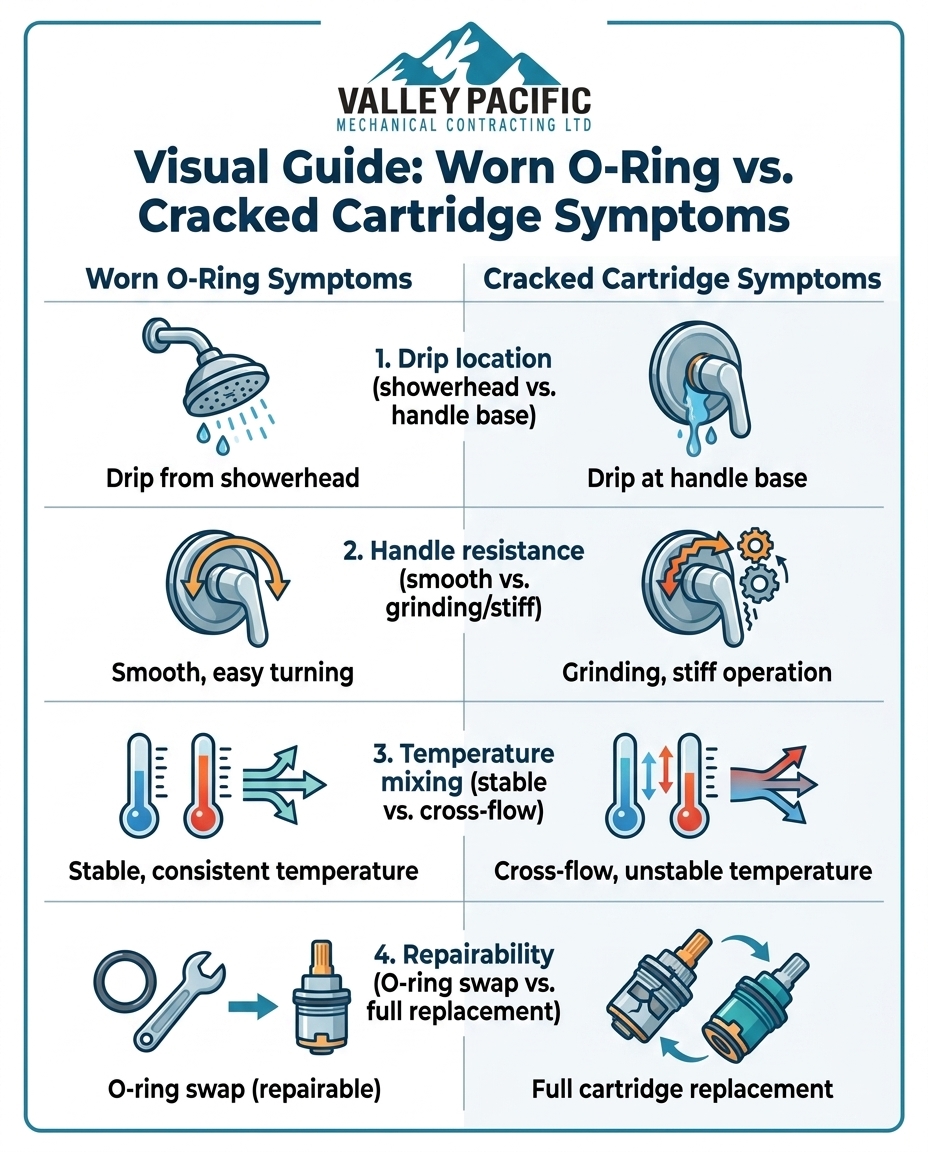
The first major external symptom that differentiates a minor seal issue from a structural cartridge failure is the behavior of the water itself. A slow, steady drip from the showerhead—especially one that persists long after the shower is turned off—often points directly to a degraded O-ring. When the rubber loses its shape, it can no longer hold back the water pressure, allowing a small amount of moisture to bypass the seal and travel up to the showerhead.
The cross-flow warning sign:
Conversely, experiencing "cross-flow" strongly indicates a cracked internal housing. Cross-flow occurs when hot water mixes into the cold water line, or vice versa, before it even reaches the showerhead. In our years working on local plumbing systems, we've found that if the water temperature fluctuates wildly during a shower, suddenly turning scalding hot or freezing cold without anyone touching the handle, the internal plastic barriers separating the hot and cold chambers have likely failed.
Observing the leak location and temperature behavior is a safe, hands-off diagnostic method. If water is leaking from the base of the handle rather than the showerhead, or if the temperature refuses to stabilize, the issue has progressed past a simple rubber seal. These symptoms suggest the plastic cartridge has failed structurally and is allowing water to travel where it shouldn't.
Symptom 2: What Handle Stiffness Tells You About Internal Damage
The physical feel of the shower handle serves as a highly accurate diagnostic tool for assessing internal cartridge health. Because common single-handle plastic shower valve cartridges rely on precise internal alignment, any deviation in how the handle turns provides immediate feedback on the condition of the housing.
The Feel of a Healthy Valve
A properly functioning single-handle valve operates with smooth, fluid motion. Whether tilting upward to increase water volume or sweeping left and right to adjust the temperature, the movement should require minimal effort. The internal ceramic discs or balancing spools are designed to glide past one another seamlessly, supported by the rigid structure of the surrounding plastic housing.
Why Grinding and Binding Occur
Extreme stiffness, a grinding sensation, or a binding feeling when turning the handle is a major red flag. While a slightly stiff handle can occasionally result from mineral buildup or a dry O-ring, severe resistance usually means the plastic housing has warped, swollen, or cracked. When the housing loses its shape, the internal components are forced out of alignment. They begin to scrape against the plastic walls or each other, creating that distinct grinding sensation. This physical friction is a clear indicator that the structural integrity of the cartridge is compromised.
The Danger of Forcing a Stuck Handle
One of the most common mistakes our service team sees homeowners make is attempting to force a stuck or stiff shower handle to turn. If the plastic housing is already weakened or fractured, applying more than a few pounds of extra torque can shatter the cartridge entirely. When this happens, the valve loses all ability to hold back municipal water pressure, resulting in an immediate, uncontrollable leak behind the wall. If the handle resists normal turning pressure, it is always safer to turn off the main water supply and seek professional diagnostics rather than risking a catastrophic break.
The Hidden Culprit: How Temperature Fluctuations Stress Plastic Housings
Plumbing materials are constantly subjected to environmental and operational stress, and shower valves are no exception. The concept of thermal expansion and contraction plays a massive role in the lifespan of these components. When materials heat up, they expand slightly; when they cool down, they contract. Over thousands of shower cycles, this microscopic movement takes a toll on both rubber and plastic.
Regional conditions heavily influence this wear. In Maple Ridge BC and across the Lower Mainland, municipal water temperatures can drop significantly during the colder winter months (typically December through February). When a shower is turned on, the near-freezing winter pipe temperatures suddenly clash with 49°C (120°F) hot water from the water heater. The plastic housing of the cartridge is forced to expand rapidly to accommodate the heat, then contract just as quickly once the water is turned off.
This constant, daily shifting stresses the polymer chains within the plastic structure. Over 10 to 15 years of use, this thermal fatigue leads to micro-fractures. Eventually, these tiny weaknesses develop into full structural cracks. Because this environmental stress is unavoidable, the degradation of rubber O-rings and plastic housings is a matter of "when," not "if," for aging fixtures. We regularly remind our clients that understanding this thermal dynamic helps clarify why a valve that has worked perfectly for a decade might suddenly seize up or begin leaking profusely.
The Verdict: Why a Cracked Housing Mandates Full Replacement
When physical symptoms confirm that a shower valve cartridge has suffered structural damage, homeowners often wonder if a patch or repair is possible. The definitive answer is no. While degraded O-rings can sometimes be swapped out on a healthy cartridge, a hairline fracture in the plastic housing compromises the entire unit beyond repair.
Municipal water systems operate under significant pressure, often resting between 50 and 75 PSI. Epoxies, silicone sealants, or temporary patches are entirely ineffective against this constant force. Even if a sealant appears to hold initially, the daily thermal expansion and contraction detailed above will quickly break the bond, leading to a hidden leak behind the bathroom wall. Water damage inside a wall cavity can rot framing, destroy drywall, and encourage mold growth long before it becomes visible on the outside.
A trustworthy professional approach prioritizes long-term safety over temporary fixes. At Valley Pacific Mechanical, diagnostic transparency is a core standard. When our technicians arrive on-site, we will always walk the homeowner through exactly why the housing failed, explaining the physical signs of material fatigue. Ensuring the customer understands the necessity of a full replacement builds trust and prevents future emergencies. For those curious about why attempting to patch or pull these components without experience is risky, reading the truth about DIY shower valve replacement provides valuable perspective on the dangers of improper repairs.
The Professional Approach to Shower Valve Diagnostics
Transitioning from recognizing the symptoms to taking the right action is the most important step in protecting a home from water damage. When a licensed professional from Valley Pacific Mechanical arrives to diagnose a stiff or leaking shower handle, they follow a strict, safe protocol. They do not immediately start pulling at the hardware. Instead, they isolate the water supply, carefully remove the trim, and inspect the brass valve body for signs of corrosion or mineral locking.
Professionals utilize specialized puller tools—such as dedicated Moen or Delta cartridge pullers—specifically designed to safely extract a seized or cracked cartridge. Because common single-handle plastic shower valve cartridges can become fused to the brass piping over 10 or more years, attempting to pull them out with standard pliers often tears the plastic in half, leaving the lower portion permanently stuck inside the pipe. A specialized puller applies even, steady pressure, extracting the broken unit without damaging the permanent plumbing infrastructure.
When a homeowner reaches out for general plumbing and heating service needs, providing prompt and excellent service starts with this level of accurate, careful diagnostics. Recently, a local customer experienced firsthand how this professional approach prevents unnecessary property damage. By using the right extraction tools and assessing the failure accurately, the technician resolved a severe plumbing issue quickly, leaving the customer highly satisfied with the overall service and their bathroom walls completely intact.
Modern plumbing techniques often allow for complex replacements without destroying surrounding tile or drywall. Homeowners facing a seized cartridge can explore replacing a shower valve without tearing down your bathroom wall to learn how professionals execute these precise, non-destructive extractions.
Frequently Asked Questions About Shower Valve Cartridge Failures
How do I know if my shower cartridge is bad?
Look for continuous dripping from the showerhead, extreme stiffness or a grinding sensation when turning the handle, or hot and cold water mixing unexpectedly during use. These physical symptoms indicate that the internal seals or the plastic housing of the cartridge have failed and can no longer control water flow properly.
Can a shower cartridge be repaired or does it need replacement?
Worn O-rings can sometimes be replaced if the rest of the unit is perfectly intact. However, any crack, warping, or structural fatigue in the plastic housing requires a full cartridge replacement. Patches and sealants cannot withstand municipal water pressure and will inevitably fail.
What happens when a shower valve cartridge goes bad?
It loses its ability to hold back water pressure and separate temperature lines. This results in persistent leaks, poor temperature control, cross-flow between hot and cold pipes, and potential behind-the-wall water damage if the housing fractures completely.
Can you just replace the O-rings on a shower cartridge?
Yes, if the plastic housing is perfectly intact and the handle turns smoothly. However, if the housing is stressed, warped, or the handle feels stiff and grinding, new O-rings will not solve the underlying failure. The entire cartridge must be swapped out to restore function.
How does thermal expansion affect shower valves?
Constant shifts between near-freezing cold water and scalding hot water cause the plastic and rubber components to expand and contract repeatedly. Over thousands of cycles, this thermal stress leads to material fatigue, causing the rubber to flatten and the plastic housing to develop micro-fractures.
Get Expert Help for Your Plumbing Diagnostics
Identifying the physical symptoms of a failing shower valve early can prevent major water damage and costly renovations. By observing handle stiffness, temperature fluctuations, and the location of a leak, homeowners can confidently determine when a fixture has moved past a simple repair. Remember that removing a seized or cracked cartridge to check for internal damage is a delicate job that requires specialized tools and licensed expertise. If your shower in Maple Ridge BC is exhibiting signs of a cracked housing, schedule an inspection with our local professionals at Valley Pacific Mechanical to diagnose the issue accurately and resolve it safely before the damage spreads behind the wall.


