


Ultimate Checklist for HVAC Maintenance Benefits in the Pacific Northwest



Why the Benefits of Regular HVAC Maintenance in Pacific Northwest Coastal Homes Are Hard to Ignore
The benefits of regular HVAC maintenance in Pacific Northwest coastal climates go far beyond a simple tune-up — they directly protect your comfort, your air quality, and your equipment investment year after year. If you live anywhere in the Lower Mainland — Maple Ridge, Langley, Surrey, Vancouver, or Pitt Meadows — your HVAC system faces a unique combination of challenges that inland or dry-climate homeowners simply don't deal with.
Here's a quick summary of the key benefits:
- Lower energy bills - Well-maintained systems can cut heating and cooling costs by up to 30%
- Longer equipment life - Regular service can extend system lifespan by 5–10 years or more
- Fewer emergency breakdowns - Proactive maintenance prevents up to 85% of peak-season failures
- Better indoor air quality - Reduces mold, allergens, and wildfire smoke particles indoors
- Warranty protection - Most manufacturers require annual professional service to keep warranties valid
- Corrosion control - Coastal salt air accelerates wear on coils and components without regular care
- Improved efficiency - Heat pumps receiving biannual service run 20–25% more efficiently than neglected units
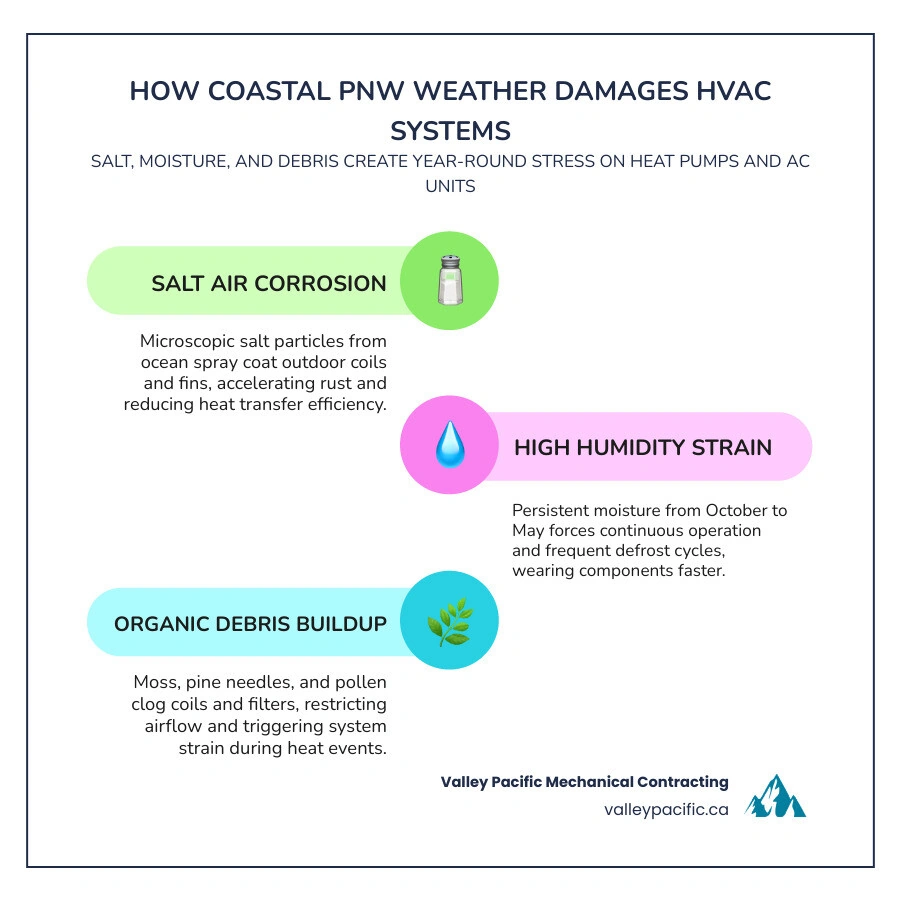
Salt-laden air, persistent humidity from October through May, organic debris like moss and pine needles, and increasingly intense summer heat events all work against your HVAC system every single day. In this coastal marine climate, a system that goes without regular attention doesn't just run less efficiently — it can deteriorate significantly faster than the same equipment would in a drier region.
At Valley Pacific Mechanical Contracting, our licensed technicians have spent 30+ years keeping Lower Mainland homes comfortable through every season the BC coast throws at them. This guide walks you through everything you need to know to protect your system, reduce your bills, and breathe cleaner air at home.
Why Coastal PNW Weather Demands Specialized HVAC Care
Living close to the Fraser River or the Pacific coastline brings stunning views and refreshing breezes, but it also creates a harsh environment for mechanical systems. Unlike dry inland regions, our coastal climate features a high-moisture atmosphere combined with microscopic salt particles.
When you mix constant moisture with salt, you get a recipe for accelerated rust and corrosion. Furthermore, our mild, damp winters and shoulder seasons create the perfect breeding ground for organic debris. Moss, algae, and mold spores thrive on wet surfaces, and they love nothing more than settling into the dark, damp crevices of an outdoor HVAC unit. If left unchecked, this organic growth acts like a wet blanket, trapping moisture against metal parts and accelerating the decay of your system. To keep these environmental stressors from taking a toll on your home comfort, learning How to Maintain Your Heating and Cooling System is an essential first step.

The Impact of Salt Spray and Moisture on Condenser Coils
The outdoor condenser unit is the unsung hero of your cooling and heat pump system. It relies on thin, delicate aluminum fins wrapped around copper tubing to release or absorb heat. Because aluminum is highly reactive to salt, coastal salt-laden air causes these fins to oxidize rapidly. This process, often called "pitting," weakens the metal and eventually causes the fins to disintegrate.
Once the condenser coils are corroded, your system loses its ability to transfer heat effectively. It has to work twice as hard to achieve the same indoor temperature, driving up your energy bills and wearing out the compressor. To prevent this, manufacturers often recommend factory-applied anti-corrosive coil coatings. Additionally, a regular, gentle freshwater rinse of the outdoor unit can wash away salt deposits before they bond to the metal. For more ways to protect your system, check out our HVAC Preventative Maintenance Tips to shield your equipment from coastal wear.
Year-Round Strain on Heat Pumps in Mild Wet Climates
In places like Langley, Pitt Meadows, and Maple Ridge, heat pumps are incredibly popular because they handle both heating and cooling. However, this means they never get a true "off-season."
During our long, damp winters, outdoor temperatures hover just above freezing. This high humidity combined with cool air causes frost to build up rapidly on the outdoor coils. To keep running, the heat pump must regularly enter a "defrost cycle," temporarily reversing itself to melt the ice. This constant switching and continuous year-round operation place immense strain on the reversing valve, compressor, and fan motor. Without routine professional checks, these hardworking parts can fail when you need them most. Following structured Seasonal Heat Pump Maintenance Tips ensures your system transitions smoothly between damp winters and humid summers.
Benefits of Regular HVAC Maintenance in Pacific Northwest Coastal
Investing in routine care is the single best way to maximize the performance of your heating and cooling systems. When a system is neglected, its efficiency can drop by 5% to 15% annually as dust, salt, and grime accumulate.
The financial and operational differences between a well-maintained system and a neglected one are stark:
| Feature | Well-Maintained HVAC System | Neglected HVAC System |
|---|---|---|
| Average Lifespan | 15 to 20+ years | 10 to 12 years (or fewer in coastal areas) |
| Energy Consumption | Up to 30% lower monthly bills | Higher bills due to restricted airflow |
| Risk of Sudden Breakdown | Extremely low (85% of issues caught early) | High, especially during peak summer/winter |
| Indoor Air Quality | Clean, filtered air (up to 50% fewer allergens) | Musty odors, circulating mold and dust |
| Manufacturer Warranty | Fully valid with documented service | Often voided due to lack of professional care |
Taking a proactive approach to HVAC Preventative Maintenance keeps your system running like new, saving you money and stress.
Lowering Monthly Energy Consumption and Utility Bills
When your HVAC system is clean and properly calibrated, air flows freely through the ducts, and heat transfers seamlessly across clean coils. However, when salt crusts over the outdoor unit, or a thick layer of dust cakes the indoor air filter, the system must run longer and work harder to keep your home comfortable.
A system with low refrigerant or dirty coils can experience a 20% drop in operating efficiency. By scheduling a professional tune-up, you ensure that electrical connections are tight, moving parts are lubricated, and the refrigerant charge is perfectly balanced. This translates directly into lower monthly utility bills, keeping your hard-earned money in your wallet. Read our Summer Efficiency Tips for Pacific Northwest Coastal Homes for more ideas on keeping bills low when the summer sun heats up the Lower Mainland.
Long-Term Benefits of Regular HVAC Maintenance in Pacific Northwest Coastal Areas
Your HVAC system is one of the most expensive investments in your home. Extending its lifespan is key to getting the most value out of it. Routine maintenance acts as a "fountain of youth" for your equipment, preventing minor issues from snowballing into catastrophic component failures. For example, a clogged air filter restricts airflow, which can cause the compressor to overheat and fail prematurely. Replacing a minor electrical part is easy; replacing a compressor is a major, costly headache.
Furthermore, keeping meticulous service records is vital for warranty compliance. Major manufacturers require annual professional maintenance to honor their parts warranties. If a major component fails and you cannot provide proof of regular service, you could be left paying for the replacement out of pocket. Regular Heat Pump Maintenance ensures you stay compliant and protected.
Essential Spring and Summer Maintenance Checklist for Coastal Homes
As we transition from wet, cool spring days into warmer summer afternoons, your system needs to be prepared for the sudden shift in workload. A pre-season check ensures that you aren't left waiting for service during the first major heatwave of the year.
Preventative care is your best defense against summer breakdowns. Reviewing How to Prevent HVAC Emergencies with Maintenance can help you keep your cool all summer long.
Homeowner DIY Tasks for Coastal HVAC Systems
While complex diagnostics require a certified technician, there are several simple tasks you can handle to keep your system happy:
- Replace Air Filters Regularly: Check your filters every 30 to 90 days. If you have pets or suffer from allergies, check them monthly.
- Maintain Outdoor Clearance: Keep at least two feet of clear space around your outdoor unit. Trim back any shrubs, weeds, or encroaching moss.
- Perform a Gentle Freshwater Rinse: Every 2 to 4 weeks during the dry summer months, use a standard garden hose (never a pressure washer, which can bend the delicate fins) to gently rinse salt, sand, and pollen off the outdoor coils.
- Inspect Indoor Vents: Ensure that supply and return registers are not blocked by furniture, rugs, or drapes, allowing air to circulate freely.
What to Expect During a Professional Spring Inspection
When our licensed technicians visit your home for a seasonal inspection, we perform a comprehensive multi-point check that goes far beyond simple cleaning. We carry out precision electrical testing, checking capacitors and contactors for wear, and tightening all wire connections to prevent electrical shorts. We also measure and calibrate the refrigerant charge to ensure peak thermodynamic efficiency, and we flush the condensate drain line to prevent water backups and mold growth.
Finally, we test and calibrate your thermostat to ensure it is communicating accurately with your system. Setting up the Best Smart Thermostat Schedule for Pacific Northwest Coastal Weather can help automate your comfort and maximize your energy savings year-round.
Protecting Indoor Air Quality During Wildfire and Allergy Seasons
In the Pacific Northwest, spring brings beautiful blooms but also a massive wave of alder, maple, and grass pollen. In late summer, we frequently face wildfire smoke drifting across the region. Because we spend so much time indoors, our HVAC systems play a critical role in filtering out these airborne hazards.
Combating Mold and Mildew in High-Humidity Environments
Our coastal climate is notoriously humid, with outdoor humidity levels often exceeding 75% for months on end. When warm, humid indoor air hits the cold evaporator coils of your air conditioner or heat pump, moisture condenses rapidly.
If your condensate drain line is clogged with dust or algae, this water will pool inside the unit, creating a perfect dark, wet environment for mold and mildew to grow. This mold can then be blown directly into your home's living spaces, causing musty odors and respiratory issues. Professional drain flushing and coil cleaning keep this moisture moving safely out of your home.
Health Benefits of Regular HVAC Maintenance in Pacific Northwest Coastal Environments
During wildfire season, fine particulate matter (PM2.5) can penetrate deep into your lungs, posing serious health risks. A well-maintained HVAC system equipped with high-efficiency filters acts as a barrier, trapping these microscopic particles before they circulate through your rooms.
By running your system's fan continuously on a low setting, you can achieve constant filtration. Clean, high-MERV filters and properly maintained air purification systems can reduce indoor mold and allergen levels by up to 50%, allowing you and your family to breathe easy even when the outdoor air quality is poor.
Recognizing the Warning Signs Your Coastal System Needs Immediate Service
Your HVAC system will usually let you know when it is struggling. Learning to recognize these early warning signs can save you from a complete system breakdown during a heatwave or winter cold snap.
- Weak Airflow: If you feel very little air coming out of your vents, it could point to a clogged filter, a failing blower motor, or duct blockages.
- Unusual Noises: Squealing, grinding, rattling, or banging noises are clear indicators of loose components, worn-out bearings, or belt issues.
- Short Cycling: If your system turns on and off rapidly without completing a full cycle, it is likely overheating or experiencing sensor failures.
- Musty Odors: A damp, stale smell when the system turns on suggests mold accumulation on the coils or in the drain pan.
- Sudden Energy Spikes: A sudden, unexplained jump in your monthly utility bill means your system is working far harder than it should to maintain basic comfort.
Addressing Performance Drops and Strange Noises Early
Ignoring small issues is the easiest way to cause a major breakdown. A slight hissing sound might indicate a minor refrigerant leak, which reduces efficiency and can eventually destroy the compressor if left unaddressed. A worn capacitor can cause the fan motor to burn out, turning a simple electrical fix into an expensive motor replacement. Paying attention to these subtle shifts in performance keeps your home safe and comfortable.
Avoiding the Risks of Skipping Maintenance in the Pacific Northwest
The risks of skipping annual care are clear: higher energy waste, poor indoor air quality, and the high likelihood of an emergency breakdown at the worst possible moment. When extreme weather hits the Lower Mainland, HVAC service providers are flooded with emergency calls, meaning you could face long wait times in an uncomfortable home. Proactive care ensures your system is ready to perform reliably when you need it most.
Frequently Asked Questions about PNW Coastal HVAC Care
How often should homeowners in PNW coastal areas schedule professional HVAC tune-ups?
For standard heating and cooling systems, we recommend professional service at least once a year. If you have a heat pump that provides both heating and cooling year-round, you should schedule bi-annual maintenance — once in the spring to prepare for cooling, and once in the fall to prepare for winter heating.
How does salt air affect my outdoor heat pump or AC unit?
Salt air accelerates the corrosion of metal components, particularly the delicate aluminum fins on the outdoor condenser coil. This corrosion restricts heat transfer, lowers system efficiency, and can shorten the system's lifespan by several years. Regular freshwater rinses and professional anti-corrosion treatments help mitigate this damage.
Will skipping annual maintenance void my HVAC manufacturer warranty?
Yes, in many cases, it will. Major brands like Daikin, Trane, and Carrier require documented proof of annual professional maintenance to honor their parts warranties. Skipping regular service can leave you fully responsible for the cost of major replacement parts.
Conclusion
The benefits of regular HVAC maintenance in Pacific Northwest coastal areas are clear: lower monthly bills, cleaner indoor air, a longer system lifespan, and complete peace of mind through every season. Protecting your home comfort investment doesn't have to be a hassle.
At Valley Pacific Mechanical Contracting, we are dedicated to providing a "headache-free" experience for homeowners across the Lower Mainland, including Maple Ridge, Pitt Meadows, Langley, and Mission. With our 30+ years of expertise, licensed technicians, and commitment to the Daikin Comfort Promise, we are here to keep your home running smoothly year-round.
Don't wait for the next heatwave or winter storm to find out if your system is ready. Contact us today to learn more about our comprehensive Maintenance Plan and secure your home's comfort for years to come.


