


HVAC Maintenance Tips: Keeping the Lower Mainland Comfortable



Why Knowing How to Maintain Your Heating and Cooling System Saves You Money and Headaches
Knowing how to maintain your heating and cooling system is one of the most valuable things you can do as a homeowner in the Lower Mainland. BC's shifting seasons put real demands on your HVAC equipment — from damp, cool winters in Maple Ridge and Langley to warm, humid summers across the Fraser Valley. When your system isn't well cared for, you feel it in your comfort and your energy bill.
Here's the quick answer for homeowners who want the essentials right away:
How to maintain your heating and cooling system — key steps:
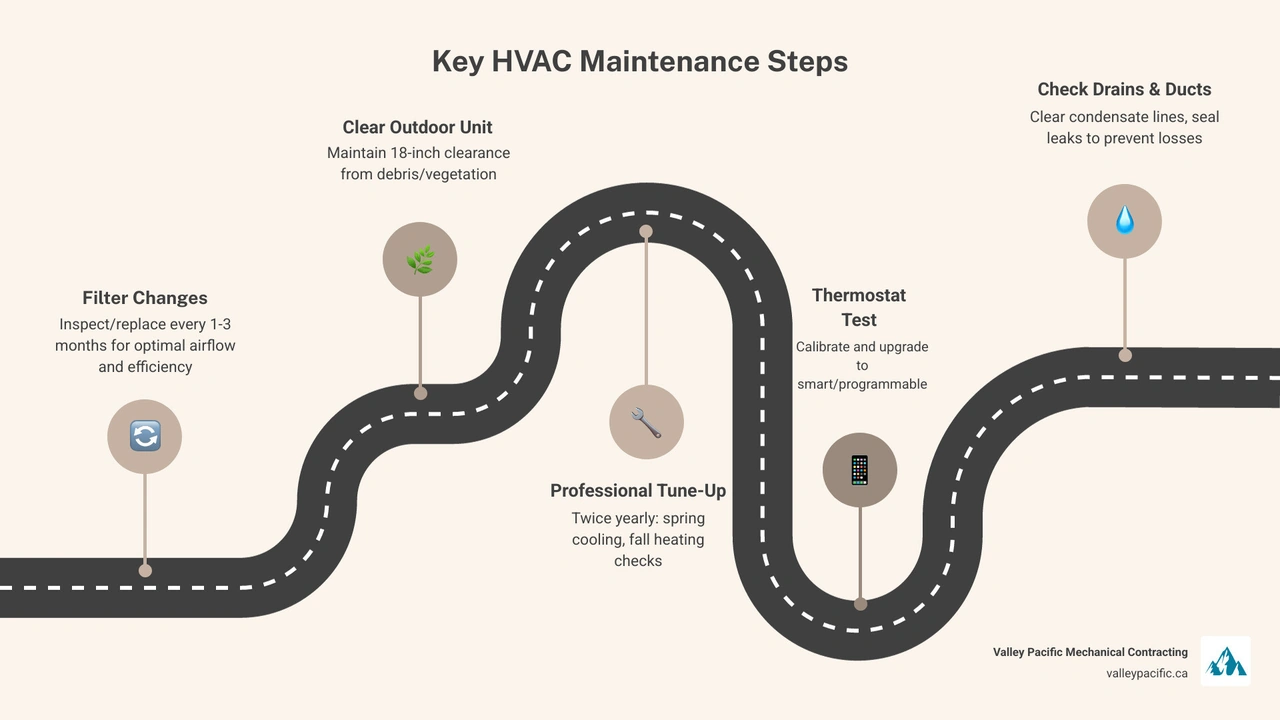
- Change or inspect air filters every 1–3 months (monthly during peak seasons)
- Clear the area around your outdoor unit — keep at least 18 inches of clearance from vegetation and debris
- Schedule a professional tune-up twice a year — spring for cooling, fall for heating
- Test your thermostat and consider upgrading to a programmable or smart model
- Check and clear condensate drains every few months to prevent clogs and water damage
- Inspect visible ductwork for leaks or gaps and seal with mastic sealant or foil-backed tape
- Test carbon monoxide detectors monthly and replace batteries annually
- Listen and look for warning signs — strange noises, unusual smells, rising energy bills, or uneven temperatures
The average home spends close to $1,900 per year on energy, and nearly half of that goes straight to heating and cooling. Routine maintenance can improve your system's seasonal efficiency by 10–20%, and consistent upkeep can extend your equipment's lifespan by 25% or more. In a climate like ours — where your furnace and heat pump work hard for much of the year — that's not small change.
In this guide, Valley Pacific Mechanical Contracting walks you through everything: DIY tasks you can handle yourself, seasonal checklists built for BC homeowners, and the moments when it's time to call in a licensed technician.
Essential Steps on How to Maintain Your Heating and Cooling System in the Lower Mainland

Living in the Lower Mainland means dealing with a unique mix of coastal dampness and seasonal temperature swings. Whether you are in Mission or Langley, your HVAC system is the "unsung hero" of your home. However, neglect is the leading cause of system failure and inefficiency. By following a few HVAC preventative maintenance tips, you can avoid the 42% of homeowners who experience system issues during peak heat waves or cold snaps.
A regular HVAC system check ensures that your home remains a sanctuary. Beyond just comfort, proper maintenance is about reliability. You don't want your furnace quitting on a snowy January night in Pitt Meadows because of a simple, avoidable issue like a clogged filter or a loose electrical connection.
How to maintain your heating and cooling system through filter management
The single most important DIY task is managing your air filters. A dirty filter restricts airflow, forcing your system to work harder and potentially reducing efficiency by up to 15%. This extra strain doesn't just raise your bills; it can actually damage your equipment over time.
For those using our furnace filter replacement service, we often discuss MERV (Minimum Efficiency Reporting Value) ratings. For most homes, a MERV rating between 8 and 13 is the "sweet spot." It’s high enough to capture dust, pollen, and pet dander, but not so restrictive that it chokes your blower motor.
- Standard Cycle: Inspect your filter every 30 days. Replace it every 90 days at a minimum.
- High-Use Cycle: If you have pets, allergies, or live in a dusty area of the Fraser Valley, aim for a 30-60 day replacement cycle.
- Pro Tip: Always note the arrow on the filter frame. It should point toward the furnace or air handler (the direction of the airflow).
Professional inspections: How to maintain your heating and cooling system for the long term
While there is plenty you can do yourself, certain technical tasks require a pro. When we perform HVAC maintenance in Langley, our technicians dive deep into the components you can't see.
A professional tune-up typically includes:
- Electrical Connections: Tightening terminals and measuring voltage/current on motors to prevent unsafe operation.
- Lubrication: Oiling moving parts to reduce friction, which lowers electricity usage.
- Refrigerant Levels: Ensuring your AC or heat pump has the exact charge needed. Too much or too little refrigerant can kill a compressor.
- Safety Checks: Inspecting the heat exchanger for cracks and testing for carbon monoxide leaks—essential for your family's safety.
DIY Maintenance Tasks for Year-Round Efficiency
Maintaining your system isn't just about what happens inside the house. Your outdoor unit (the condenser) needs love too. Because our region is so lush, it’s easy for plants to take over.
Follow the 18-inch rule: keep all vegetation, shrubs, and weeds at least 18 to 24 inches away from the unit. This allows the system to "breathe" and release heat efficiently. If the fins are blocked by leaves or dirt, the system runs longer and hotter, shortening its life.
Another critical task is HVAC preventative maintenance for your condensate drain. This line whisks away the moisture your system pulls from the air. Over time, algae or sludge can clog the pipe, leading to water damage or even a system shutdown. A simple flush with a bit of vinegar every few months can keep things flowing. If you have a boiler, boiler system maintenance includes checking for leaks and ensuring the pressure relief valve is functional.
Thermostat optimization and smart upgrades
Your thermostat is the "brain" of your HVAC system. If it’s outdated, your system might be cycling on and off more than necessary. Upgrading to an ENERGY STAR certified smart thermostat is a game-changer. These devices can reduce heating and cooling costs by 8–15% by learning your habits and adjusting temperatures when you're away or asleep.
Modern thermostats also provide energy usage reports, helping you spot trends. For instance, if you notice your system running 20% longer this month than last month despite similar weather, it might be a sign that a filter is clogged or a component is failing.
Maintaining airflow and duct integrity
Even the most efficient furnace won't help if the air can't get to your rooms. Ensure that furniture, drapes, and rugs aren't blocking your supply or return vents. Closing interior doors might seem like a way to save energy, but it actually disrupts the airflow balance and puts extra pressure on the system. Keep those doors open!
Ductwork is another area where energy "leaks" away. In a typical house, 20% to 30% of the air moving through the ducts is lost due to leaks and poor connections. Check our furnace maintenance Langley BC complete guide for tips on spotting these issues. You can seal accessible gaps using mastic sealant or metal-backed tape—just avoid standard "duct tape," which ironically isn't great for ducts as it dries out and peels off over time.
Seasonal Checklists for BC Homeowners
To keep things simple, we’ve broken down the year into two main "prep" phases. Use this table as your guide for the changing BC seasons.
| Task | Spring/Summer (Cooling Prep) | Fall/Winter (Heating Prep) |
|---|---|---|
| Professional Tune-up | Schedule in March/April | Schedule in September/October |
| Outdoor Unit | Clean debris, wash coils | Clear snow/ice (for heat pumps) |
| Indoor Unit | Clean evaporator coils | Inspect burner & heat exchanger |
| Safety | Check electrical connections | Test CO & Smoke detectors |
| Thermostat | Switch to 'Cool' mode | Switch to 'Heat' mode |
For those with modern systems, seasonal heat pump maintenance tips are vital because these units work year-round. Unlike a dedicated AC, a heat pump shouldn't be covered in the winter, as it needs to move air to heat your home. General heat pump maintenance ensures the reversing valve and defrost cycle are working correctly before the frost hits.
Spring and summer cooling readiness
Before the first July heatwave hits Maple Ridge, take these steps:
- Clean the Condenser: Use a garden hose to gently wash away dust and pollen from the outdoor coils.
- Straighten Fins: If you see bent aluminum fins on the outdoor unit, use a "fin comb" to straighten them and restore airflow.
- Check Window Seals: For room ACs, ensure the seals are tight so you aren't cooling the neighborhood.
- Test the Run: Turn the AC on for 15 minutes on a mild day to ensure it’s actually blowing cold air before you need it.
Fall and winter heating preparation
When the leaves start falling in Pitt Meadows, it’s time to pivot:
- Burner Inspection: Look at the furnace flame (if visible). It should be a crisp, steady blue. A yellow or orange flame is a sign of incomplete combustion and needs immediate professional attention.
- Pilot Light & Flue: Ensure the pilot light is lit (on older models) and the flue vent is clear of bird nests or debris.
- Emergency Shutoffs: Know where your gas and electrical shutoffs are located.
- Clear the Vents: Ensure the exterior intake and exhaust pipes aren't blocked by drifting snow or autumn leaves.
Frequently Asked Questions about HVAC Care
What are the signs that my HVAC system needs immediate repair?
Don't ignore the warning signs! If you notice any of the following, it’s time to call us:
- Strange Noises: Screeching, clanking, or banging usually points to a loose belt or a failing motor.
- Unusual Odors: A "burning" smell or a sulfur/rotten egg odor (which indicates a gas leak) requires immediate action.
- Short Cycling: If the system turns on and off every few minutes, it’s likely overheating or has a sensor issue.
- Rising Bills: A sudden spike in your utility bill without a change in weather often means the system is struggling due to a mechanical fault.
How often should I change my air filters in the Lower Mainland?
In our region, we recommend checking your filter once a month. While some "high-capacity" filters claim to last six months, the damp air in BC can sometimes lead to filters becoming heavy or clogged faster than expected. If you have a high-occupancy home or pets that shed, monthly changes during the peak of winter and summer are the safest bet for your system's health.
Is it necessary to have a professional tune-up every year?
Yes, for three main reasons:
- Warranty: Many manufacturers, including Daikin, require proof of annual professional maintenance to keep your warranty valid.
- Safety: We check for gas leaks and carbon monoxide—things a homeowner cannot easily detect without specialized tools.
- Efficiency: A professional cleaning of the internal evaporator coils (which are hard to reach) can save you significantly on monthly energy costs.
Conclusion
Taking the time to learn how to maintain your heating and cooling system pays dividends in comfort, safety, and savings. From the simple act of swapping a filter to scheduling your annual professional tune-up, every bit of effort extends the life of your investment.
At Valley Pacific Mechanical Contracting, we bring over 30 years of expertise to every home in Maple Ridge, Langley, Mission, and across the Lower Mainland. We believe in a "headache-free" experience, backed by the Daikin Comfort Promise and our commitment to 24/7 emergency service.
Don't wait for your system to fail during a heatwave or a cold snap. Be proactive and give your HVAC the care it deserves. If you want the peace of mind that comes with regular expert care, consider joining our maintenance plan. We’ll handle the reminders and the technical work, so you can get back to enjoying your home. Stay comfortable, BC!


