


How Does a Heat Pump Work? Simple Guide



How a Heat Pump Heats and Cools Your Home — And Why It Matters in the Lower Mainland
How does a heat pump work? Here's the short answer:
- It moves heat — it doesn't create it. A heat pump uses electricity to transfer heat from one place to another, rather than burning fuel to generate it.
- In summer, it pulls heat from inside your home and releases it outdoors — just like an air conditioner.
- In winter, it extracts heat energy from the outdoor air (even cold air contains usable heat) and moves it inside to warm your home.
- The refrigerant cycle makes this possible — refrigerant absorbs heat at low pressure, gets compressed to raise its temperature, releases that heat where needed, then expands and repeats.
- The result is a single system that handles both heating and cooling, using far less energy than traditional furnaces or electric baseboards.
For homeowners across the Lower Mainland — from Maple Ridge to Surrey — this technology is becoming the go-to choice for year-round comfort. BC's mild, wet climate is nearly ideal for heat pumps, and with rising energy costs and growing interest in reducing household emissions, more families are asking whether it's time to make the switch.
In this guide, Valley Pacific Mechanical Contracting — an Indigenous-owned mechanical services company with over 30 years of experience serving Lower Mainland homeowners — breaks down exactly how heat pumps work, what's inside them, and what you need to know before choosing one for your home.

Similar topics to how does a heat pump work:
What is a Heat Pump and How Does a Heat Pump Work?
To understand how a heat pump functions, it helps to throw out the idea that heating requires "creating" heat. Traditional systems like natural gas furnaces or electric baseboards generate heat through combustion or electrical resistance. A heat pump, however, is a heat transfer machine.
At its core, a heat pump operates on a simple law of physics: heat naturally moves from a warmer place to a cooler place. By using a small amount of electricity to drive a thermodynamic refrigeration cycle, a heat pump forces heat to move in the opposite direction—from a cold space (the heat source) to a warm space (the heat sink).
Think of it like a refrigerator. A fridge doesn't actually "cool" your milk; instead, it extracts the heat from inside the food compartment and dumps it out into your kitchen through the coils on the back. A Residential Heat Pump does the exact same thing, but on a whole-house scale, and with one major twist: it can reverse the direction of that heat transfer at the press of a button.
In the winter, the outdoor air acts as the heat source, and your indoor living space is the heat sink. In the summer, the roles reverse: your indoor air becomes the heat source, and the great outdoors becomes the heat sink. This dual-action capability makes a heat pump one of the most versatile and efficient HVAC systems available, prompting many local families to ask: Is a Heat Pump Worth It in the Lower Mainland? In our mild coastal climate, the answer is almost always a resounding yes.
The Core Components of a Heat Pump System
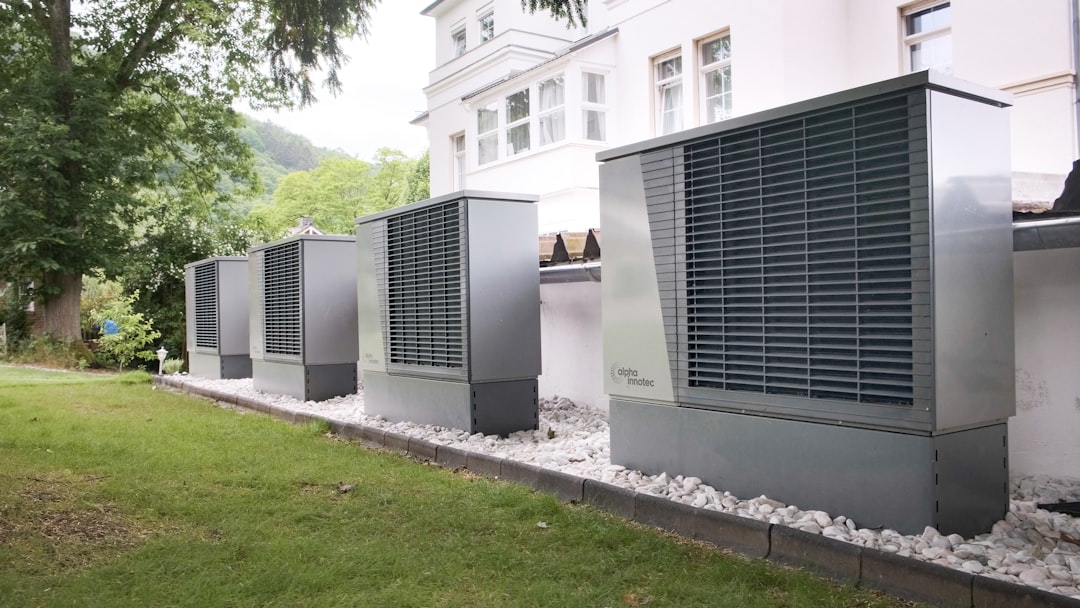
To understand how does a heat pump work on a technical level, we need to look under the hood. A typical air-source heat pump consists of an outdoor unit (which looks similar to a standard central air conditioner) and an indoor unit (often an air handler connected to your ductwork, or a wall-mounted head).
Connecting these two units is a closed loop of copper tubing filled with a specialized chemical compound called refrigerant. This refrigerant acts as the thermal courier, carrying heat back and forth.
The entire process relies on five critical mechanical components:
- The Compressor: Often called the "heart" of the heat pump. The compressor is located in the outdoor unit and uses electricity to squeeze the refrigerant gas. Compressing the gas packs its molecules tightly together, which dramatically increases both its pressure and its temperature.
- The Evaporator Coil: This is where the refrigerant absorbs heat from its surroundings. When low-pressure, cold liquid refrigerant enters the evaporator coil, it absorbs heat from the passing air, causing the refrigerant to boil and turn into a low-temperature vapor.
- The Condenser Coil: This is where the refrigerant rejects (releases) heat. High-pressure, hot gas enters the condenser coil, where cooler air passes over the coil. The heat is transferred to the air, causing the refrigerant to cool down, condense, and return to a liquid state.
- The Reversing Valve: This ingenious component is what separates a Heat Pump AC system from a standard air conditioner. Controlled by your thermostat, the reversing valve physically changes the direction of the refrigerant flow. This simple switch is what allows the system to transition seamlessly from cooling your home to heating it.
- The Expansion Valve: Located between the condenser and evaporator coils, the expansion valve acts as a metering device. It restricts the flow of high-pressure liquid refrigerant, letting it expand into a low-pressure, low-temperature liquid-vapor mixture before it enters the evaporator coil to start the cycle again.
How Does a Heat Pump Work in Summer and Winter?
The beauty of the thermodynamic cycle is its reversibility. Because a heat pump can change which coil acts as the evaporator and which acts as the condenser, it provides year-round comfort with a single piece of machinery. This is one of the primary Heat Pump Advantages Over Traditional Heating systems, which require you to maintain both a furnace for winter and an air conditioner for summer.
Let’s look at how the refrigerant behaves in each mode.
Cooling Mode: How Does a Heat Pump Work to Cool Your Home?
In the hot summer months, a heat pump functions exactly like a standard air conditioner.
- Indoor Heat Absorption: Warm air from inside your home is pulled across the indoor coil (which acts as the evaporator in cooling mode). The cold, low-pressure liquid refrigerant flowing through the coil absorbs the heat from your indoor air.
- Phase Change: As the refrigerant absorbs this heat, it boils and evaporates into a low-temperature vapor. The now-cooled indoor air is blown back into your living spaces through your ducts or wall units.
- Compression: The low-pressure vapor travels through the copper lines to the outdoor unit, where the compressor squeezes it. This turns it into a highly pressurized, extremely hot gas.
- Outdoor Heat Rejection: This hot gas enters the outdoor coil (acting as the condenser). A fan blows outdoor air across the coil, transferring the heat from the refrigerant to the outdoor air.
- Expansion: Having shed its heat, the refrigerant condenses back into a high-pressure liquid. It passes through the expansion valve, which drops its pressure and temperature, turning it back into a cold, low-pressure liquid ready to absorb more indoor heat.
Heating Mode: How Does a Heat Pump Work in Cold Weather?
When the weather turns cold in Maple Ridge or Mission, the reversing valve slides into its heating position, reversing the entire process.
- Outdoor Heat Extraction: The cold, low-pressure liquid refrigerant flows to the outdoor coil (which now acts as the evaporator). Even when it feels freezing outside, the outdoor air still contains a massive amount of ambient heat energy (physically, heat energy is present in any air warmer than absolute zero, or -273.15°C!). Because the refrigerant is engineered to have an incredibly low boiling point, it easily absorbs this outdoor heat, evaporating into a low-pressure vapor.
- Compression Heating: The compressor squeezes this vapor, raising its pressure and boosting its temperature significantly.
- Indoor Heat Release: The hot, high-pressure gas is sent indoors to the indoor coil (acting as the condenser). Your home's air handler blows cold return air across this hot coil. The refrigerant releases its heat directly into this air stream, which is then distributed throughout your home to keep you warm.
- Return to Liquid: Having delivered its heat indoors, the refrigerant condenses back into a liquid and travels back outside through the expansion valve to repeat the cycle.
- The Defrost Cycle: During cold, damp Lower Mainland winters, frost can sometimes accumulate on the outdoor coil. When this happens, the heat pump temporarily reverses itself into cooling mode for a few minutes. This sends hot refrigerant gas to the outdoor coil to melt the frost, while auxiliary heat strips or your furnace kick on indoors so you don't feel a draft.
Types of Heat Pumps for Lower Mainland Homes
No two homes in our region are identical. A historic home in Mission might rely on hot-water radiators, while a modern townhouse in Langley might have a fully ducted central heating system. Fortunately, there are several configurations of heat pumps designed to fit different home layouts.
Air-Source Heat Pumps
This is the most common type of heat pump installed worldwide. Air-source systems extract heat from the ambient outdoor air and transfer it indoors (or vice versa). They typically consist of an outdoor condenser unit paired with an indoor air handler connected to a central duct system. If you already have ductwork from an old furnace, upgrading is straightforward with professional Heat Pump Installation Langley BC or Heat Pump Installation Maple Ridge BC.
Ground-Source (Geothermal) Heat Pumps
Instead of using the air, geothermal heat pumps transfer heat between your home and the ground. These systems utilize a series of underground pipes (called ground loops) filled with water or refrigerant. Because the earth's temperature remains highly constant (around 8°C to 12°C) just a few meters below the surface regardless of the season, geothermal systems offer incredibly high efficiency and a long lifespan, though they require significant yard space for installation.
Ductless Mini-Split Heat Pumps
If your home does not have existing ductwork—or if you have hydronic heating and want to add zoned cooling—ductless mini-split systems are the perfect solution. These systems connect an outdoor compressor to one or more compact indoor wall-mounted, floor-mounted, or ceiling-recessed heads. Each indoor unit can be controlled independently, allowing you to heat or cool individual zones of your home to different temperatures, maximizing comfort and reducing wasted energy.
Why Heat Pumps Are Highly Energy Efficient
The primary reason heat pumps are taking over the HVAC industry is their mind-blowing efficiency. Because they move heat rather than generating it, they can deliver far more thermal energy than the electrical energy they consume to run the compressor and fans.
| Heating System Type | Typical Efficiency Rating | Source of Heat |
|---|---|---|
| Air-Source Heat Pump | 300% to 500% (COP of 3.0 to 5.0) | Ambient Outdoor Air |
| Geothermal Heat Pump | 300% to 600% (COP of 3.0 to 6.0) | Ground / Earth Temperature |
| Standard Electric Baseboards | 100% | Electrical Resistance |
| High-Efficiency Gas Boiler | 90% to 98% | Fossil Fuel Combustion |
As the table shows, even the most advanced gas boilers max out at under 100% efficiency because some energy is always lost in the combustion and exhaust processes. Meanwhile, a well-designed heat pump can transfer 3 to 5 kWh of thermal energy into a building for every 1 kWh of electricity it consumes. That represents a massive reduction in energy use, helping homeowners lower their utility bills while significantly shrinking their carbon footprint.
With space and water heating in buildings accounting for a significant portion of global emissions, adopting heat pumps is a critical step toward meeting local and national net-zero goals. To support this transition, local governments and utility providers offer substantial financial assistance. You can learn more about how to offset your installation costs by checking out Heat Pump Rebates Available in BC and reading our comprehensive guide on BC and Federal Energy Rebates for HVAC Upgrades.
Frequently Asked Questions About Heat Pumps
As local heating and cooling experts, we hear many of the same questions from homeowners in Pitt Meadows, Langley, and Maple Ridge. Here are the answers to some of the most common inquiries.
What is the Coefficient of Performance (COP)?
The Coefficient of Performance (COP) is a metric used to measure a heat pump's heating efficiency. It is the ratio of useful heat output to the electrical energy input. For example, if a heat pump has a COP of 4, it means that for every 1 kW of electricity used to run the system, it delivers 4 kW of heat into your home. A higher COP translates directly to lower operating costs and greater electricity savings.
Do heat pumps work efficiently in freezing temperatures?
Yes, modern heat pumps are highly effective in cold weather. While older models from decades ago struggled when temperatures dipped below freezing, technological advancements have changed the game. Today’s cold-climate heat pumps feature variable-speed inverter compressors and larger heat exchangers, allowing them to extract heat from outdoor air at temperatures as low as -20°C (or even -25°C).
For peace of mind during those rare, extreme Lower Mainland cold snaps, we can install a hybrid (dual-fuel) system that pairs your heat pump with a gas furnace backup, or include auxiliary electric heat strips within your indoor air handler.
How do heat pumps compare to traditional furnaces and ACs?
Unlike traditional furnaces that rely on burning fossil fuels (natural gas, propane, or oil), heat pumps run entirely on electricity. This eliminates carbon monoxide risks and reduces on-site emissions.
Furthermore, while a furnace only provides heating and requires a completely separate central air conditioner for summer, a heat pump delivers both heating and cooling in a single, streamlined system. This dual functionality means fewer mechanical systems to maintain, more consistent indoor airflow, and lower overall seasonal operating costs.
Conclusion
Understanding how does a heat pump work is the first step toward upgrading your home's comfort, lowering your energy consumption, and preparing your property for the shifting seasons of the Lower Mainland. Whether you are looking to replace an aging gas furnace, add cooling to a home without ductwork, or maximize your energy savings through local utility rebates, a heat pump is a smart, forward-looking investment.
At Valley Pacific Mechanical Contracting, we take the headache out of HVAC upgrades. With over 30 years of mechanical expertise, our licensed technicians provide seamless, professional installations, maintenance, and emergency services throughout Maple Ridge, Pitt Meadows, Langley, Mission, and the surrounding communities. As a proud Daikin Comfort Pro dealer, we back our work with industry-leading warranties and a commitment to absolute customer satisfaction.
Ready to experience a more comfortable, energy-efficient home? Schedule your consultation with Valley Pacific Mechanical Contracting today, and let our team help you find the perfect heat pump system for your lifestyle and budget.


