


Is Annual HVAC Maintenance Worth It?


Is Annual HVAC Maintenance Worth It for Lower Mainland Homeowners?
Annual HVAC maintenance is it worth it for most homeowners — and the short answer is yes. Here is a quick breakdown before we dig into the details:
Quick Answer: When Annual HVAC Maintenance Pays Off
- Older systems (5+ years): High value — catches wear before it becomes a costly breakdown
- Heat pumps: Essential — they run year-round and need twice-yearly attention
- Active manufacturer warranty: Required — most warranties need documented professional service to stay valid
- High energy bills: Very worthwhile — dirty coils and clogged filters can raise bills by up to 30%
- Brand-new systems (under 3 years): Still recommended — protects warranty and catches early installation issues
Think of it the way you think about oil changes or annual check-ups. Skipping one visit rarely causes an immediate disaster. But skip a few in a row and you set off a slow chain reaction — reduced efficiency, accelerating wear, and eventually a breakdown at the worst possible moment.
Here in the Lower Mainland, that moment often comes on the hottest day of summer or the coldest night of the year. British Columbia's damp, cool winters and warm summers mean your heating and cooling system works hard across every season. A heat pump in Maple Ridge, for example, runs almost continuously through the year — which makes regular professional servicing far more than a nice-to-have.
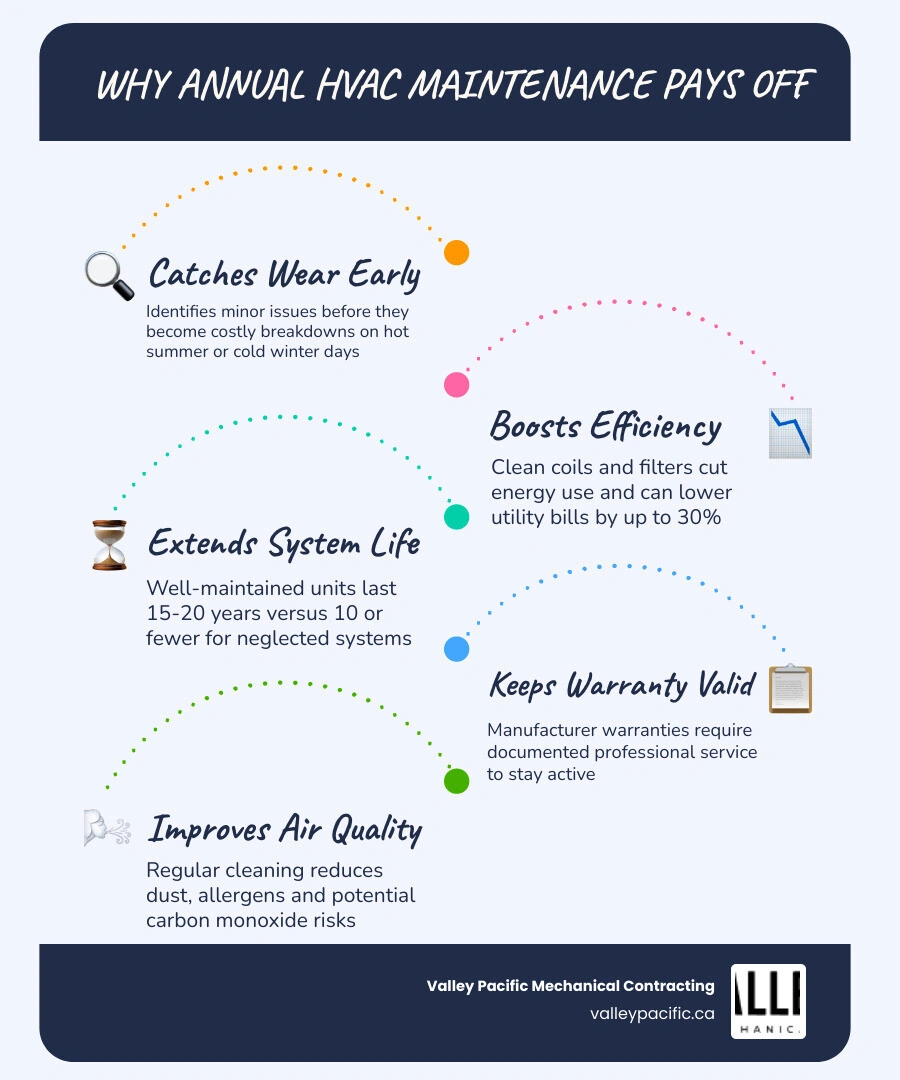
Research consistently shows that well-maintained HVAC systems last 15 to 20 years, while neglected ones can fail in 10 years or less. Homeowners who skip annual maintenance are also significantly more likely to face emergency repairs that cost far more than years of routine tune-ups combined.
The sections below walk you through exactly what maintenance includes, what it costs you to skip it, and how to decide whether a service plan is the right fit for your home.
What is an HVAC Maintenance Plan and What Does It Include?
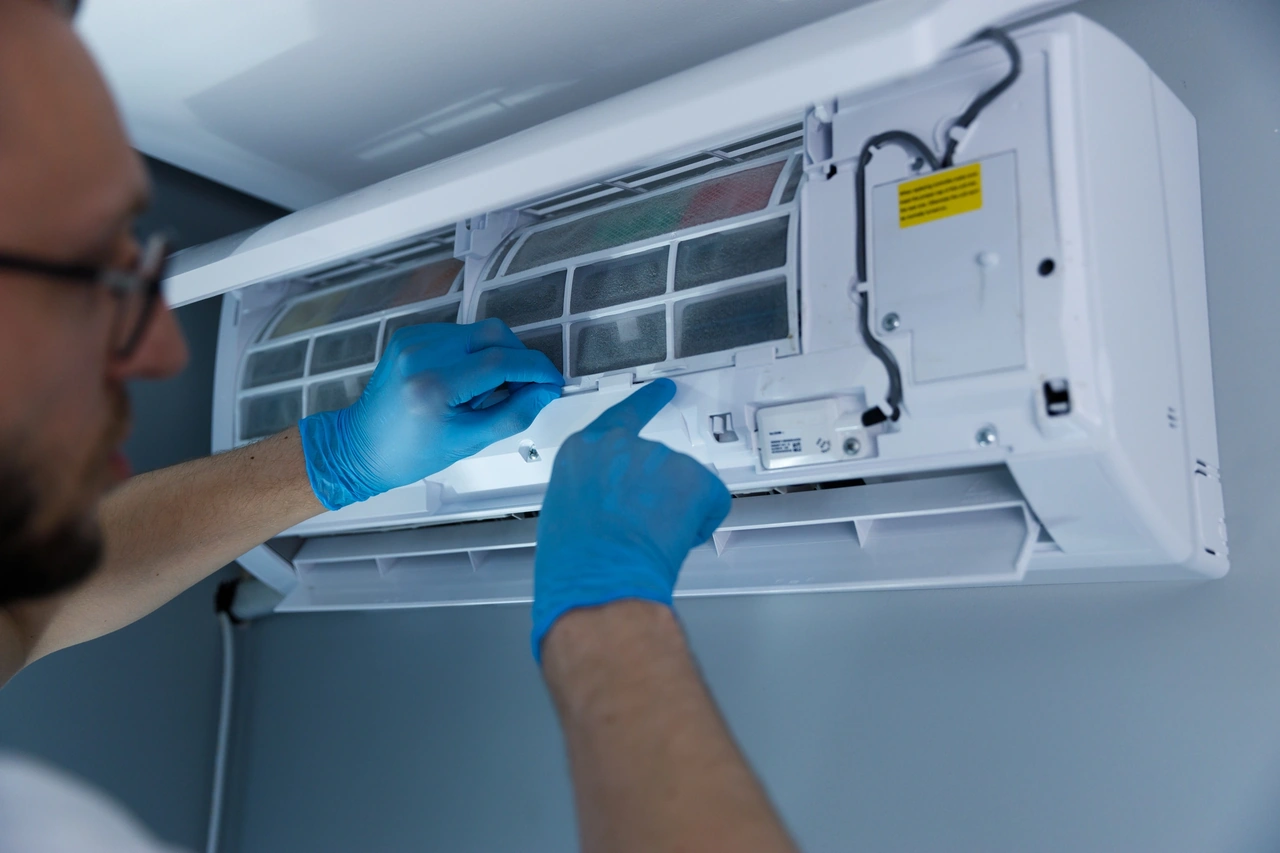
An HVAC maintenance plan is a structured service agreement between you and a professional mechanical contractor. Instead of waiting for your furnace or air conditioner to break down, a maintenance plan schedules proactive, recurring service visits to keep your system running optimally.
A thorough, professional tune-up is much more than a quick visual check or a simple filter swap. When our licensed technicians perform a preventative service, they follow a rigorous multi-point checklist designed to optimize performance and ensure safety.
To help you understand what happens behind the scenes, here is what a comprehensive What Does an HVAC Maintenance Plan Include checklist typically covers:
- Thermostat Calibration: We test your thermostat to ensure it communicates accurately with your heating and cooling units, preventing unnecessary system cycles.
- Electrical Connection Tightening: Loose connections are a common cause of system failure and can pose safety hazards. We inspect and tighten all wiring, measuring voltage and current on motors.
- Moving Part Lubrication: Lack of lubrication causes friction in motors, which increases energy consumption and accelerates mechanical wear.
- Condensate Drain Cleaning: Air conditioners and high-efficiency furnaces produce moisture. We flush and clear the condensate drain lines to prevent clogs, which can otherwise back up and cause water damage to your ceilings or floors.
- Coil Cleaning: We inspect and clean the indoor evaporator coil and outdoor condenser coil. Dirt on these coils reduces heat transfer, forcing your system to run longer and work harder.
- Safety Control Testing: We verify that all limit controls, safety switches, and ignition systems function correctly. This is especially vital for gas furnaces to prevent hazards like carbon monoxide leaks.
Investing in structured HVAC Preventative Maintenance ensures that every component of your home's heating and cooling system is clean, safe, and ready for the upcoming season.
How often should you service your hvac system?
As a general rule, your HVAC system should be professionally serviced at least once a year. However, the ideal schedule depends on the specific type of equipment keeping your home comfortable:
- Heating-Only or Cooling-Only Systems: If you have a standalone gas furnace and a separate air conditioning unit, you should schedule a furnace tune-up in the fall (before the heating season) and an AC tune-up in the spring (before the summer heat).
- Heat Pumps: Because heat pumps handle both heating and cooling, they run almost year-round without a seasonal break. For these systems, a bi-annual schedule (twice a year) is highly recommended to keep up with the continuous workload.
The Core Benefits: Why Annual HVAC Maintenance Is It Worth It
When evaluating whether to sign up for a service agreement, you have to weigh the immediate cost of the plan against the long-term savings. When you look at the math, investing in a structured program is one of the most practical financial decisions you can make for your home.
So, is an Is an HVAC Maintenance Plan Worth It for your household? Let's break down the core benefits that directly impact your wallet, safety, and comfort.
Energy savings and lower utility bills
One of the most immediate benefits of regular service is a drop in your monthly utility bills. Over time, dust, pet hair, and outdoor debris accumulate on your system's critical components. This accumulation acts like an insulating blanket on your coils, forcing your system to work significantly harder to heat or cool your home.
In fact, dirty coils and clogged filters can restrict airflow so severely that they increase your monthly energy consumption by up to 30%. Without regular professional care, an HVAC system loses roughly 5% of its operating efficiency every single year.
By applying some basic HVAC Preventative Maintenance Tips—such as regular filter swaps combined with annual professional coil cleanings—you can keep your system operating at peak efficiency, keeping your utility bills as low as possible.
Extending system lifespan and protecting your warranty
An HVAC system is one of the most expensive appliances in your home. Naturally, you want it to last as long as possible. A well-maintained heating and cooling system can easily last 15 to 20 years. Conversely, a neglected system often experiences catastrophic mechanical failure in 10 years or less.
Regular maintenance extends equipment longevity by catching minor mechanical issues before they snowball. For example, discovering a slightly bulging capacitor during a routine fall visit is a quick, simple fix. Left unaddressed, that failing capacitor will eventually stop the outdoor fan motor or damage the compressor, leading to a sudden system failure and a much more complicated repair.
Furthermore, skipping professional service can void your manufacturer's warranty. Major brands require documented proof of annual professional maintenance to honor parts warranties. If a major component like a compressor or heat exchanger fails, and you cannot provide service records, the manufacturer may deny your warranty claim, leaving you to cover the entire cost of the replacement. Knowing How to Maintain Your Heating and Cooling System through professional partnerships is the best way to safeguard these valuable warranties.
Evaluating the Risks and Downsides of Service Contracts
While the physical benefits of maintaining your equipment are undeniable, not all service contracts are created equal. It is important to approach maintenance agreements with a critical eye, as some plans in the industry may not align with your best interests.
Here are a few potential risks and downsides to watch out for:
- Overpriced Repair Coverage: Some companies bundle routine maintenance with comprehensive repair insurance. These contracts are often highly expensive and come with extensive lists of exclusions. You are generally much better off choosing a maintenance-only plan and paying for repairs individually if they ever arise.
- Aggressive Upsell Tactics: Unfortunately, some technicians use maintenance visits as an opportunity to find non-existent problems or push unnecessary equipment replacements. It is crucial to work with a reputable, customer-first contractor who focuses on honest evaluations rather than high-pressure sales.
- Priority Service Failures: Many plans promise "priority service" during peak seasons, but some companies overbook their schedules, leaving contract members waiting days or weeks for an emergency appointment during extreme weather.
For many homeowners, a pay-as-you-go approach—where you simply call to book individual spring and fall tune-ups—can be an excellent alternative to a formal contract, provided you remember to schedule the appointments yourself.
When is a maintenance plan not worth it?
While regular maintenance is always necessary, a recurring service contract might not make sense in every scenario:
- Brand-New Systems: If your system was installed within the last year or two, it is highly reliable and covered by robust installation and parts warranties. While you still need professional maintenance to keep the manufacturer's warranty valid, a high-tier, comprehensive contract may be overkill. A basic, entry-level plan or individual annual tune-ups are usually sufficient.
- Short-Term Residency: If you plan on selling your home and moving within the next six to twelve months, you will not be around to reap the long-term efficiency and longevity benefits of a multi-year service plan.
- Extensive DIY Capabilities: If you are comfortable cleaning your own outdoor condenser coils, flushing your own drain lines, and testing your own electrical components safely, you may not need a full commercial contract—though certain safety checks should still be left to the pros.
DIY Maintenance vs. Professional Service
Many proactive homeowners like to take a hands-on approach to home maintenance. There are several straightforward tasks you can safely perform yourself to keep your heating and cooling system running smoothly between professional visits:
- Filter Replacements: Check your air filters every 30 to 90 days and replace them when they look gray or dusty.
- Vent and Return Clearance: Ensure that furniture, curtains, and rugs are not blocking your supply registers or return air grilles.
- Outdoor Unit Clearance: Keep shrubs, plants, and weeds trimmed back at least two feet from your outdoor condenser unit, and clear away any fallen leaves or twigs.
- Visual Inspections: Regularly check the area around your furnace or indoor heat pump coil for any obvious signs of water leaks or unusual rust.
However, any task that requires opening up the system cabinet, handling electrical wiring, or working with specialized tools must be left to a licensed professional.
Deciding if a professional annual hvac maintenance is it worth it
While DIY care is excellent for day-to-day upkeep, it cannot replace a professional tune-up. Attempting complex maintenance tasks yourself can lead to severe safety hazards and void your warranties.
For example, handling refrigerant requires specialized EPA certification, as improper handling is hazardous to both your health and the environment. Additionally, working around high-voltage electrical panels carries a significant risk of electrical shock.
Perhaps most importantly, a licensed technician has the training and specialized tools to perform critical safety checks, such as testing for carbon monoxide leaks or inspecting a gas furnace's heat exchanger for microscopic cracks. These cracks can allow toxic combustion gases to enter your home's airflow, posing a serious safety risk to your family. The peace of mind that comes from knowing your system is operating safely is why professional service is always worth the investment.
Signs Your Heating and Cooling System Needs Immediate Attention
Between your scheduled maintenance visits, it is important to monitor how your system performs. Knowing the difference between normal operation and warning signs can help you catch issues before they turn into complete system failures.
| Normal System Operation | Warning Signs (Call a Professional) |
|---|---|
| Quiet, consistent operation | Loud grinding, squealing, or rattling noises |
| Even temperatures throughout the home | Hot or cold spots in different rooms |
| Steady, predictable energy bills | Sudden, unexplained spikes in utility costs |
| Clean, odorless airflow | Musty, dusty, or burning smells from vents |
| System cycles on and off a few times an hour | Constant short-cycling (turning on and off rapidly) |
| Strong, steady airflow from registers | Weak or barely noticeable airflow |
How to tell if your annual hvac maintenance is it worth it based on system performance
If you notice uneven temperatures across your rooms, persistent dust buildup despite regular cleaning, or a system that short-cycles constantly, your HVAC system is likely overdue for a professional tune-up.
As systems age, their components naturally wear down, making them less capable of maintaining consistent comfort. If your heating or cooling system is more than a decade old, regular professional maintenance becomes even more critical to keep it running reliably and prevent a premature, costly replacement.
Frequently Asked Questions about HVAC Maintenance
Does skipping annual maintenance void my manufacturer warranty?
Yes, in many cases it does. Most major HVAC manufacturers (such as Daikin, Carrier, Lennox, and Trane) state in their warranty terms that the equipment must be serviced annually by a licensed professional. If you make a warranty claim for a failed part, you may be required to provide documented service records showing regular maintenance. Without this proof, the manufacturer can deny your claim, leaving you responsible for the cost of the replacement parts.
How often should I change my HVAC filters in the Lower Mainland?
For standard one-inch pleated filters, we recommend checking them monthly and replacing them at least every 90 days. However, if you have pets, smokers, or family members with asthma or severe allergies, you should change them every 30 to 60 days. During our dusty summer months or high-pollen spring seasons in the Lower Mainland, filters can clog much faster than they do in the winter.
What is the difference between an HVAC inspection and a full tune-up?
An HVAC inspection is primarily a visual assessment to check the overall condition of the system and identify any immediate safety concerns or code violations. A full tune-up, on the other hand, is an active service. It includes deep cleaning (such as washing the coils and flushing drain lines), testing electrical components, calibrating the thermostat, lubricating moving parts, and adjusting the system to ensure it operates at peak efficiency.
Conclusion
Living in the BC Lower Mainland means navigating a unique climate, from damp, chilly winters to increasingly warm summers. To keep your home comfortable year-round, your heating and cooling systems need consistent, professional care.
At Valley Pacific Mechanical Contracting, we are dedicated to providing a truly "headache-free" experience for our neighbors in Maple Ridge, Pitt Meadows, Langley, Mission, and across the surrounding communities. With over 30 years of local expertise, our licensed technicians are ready to keep your home's systems running safely and efficiently.
We stand behind our work with outstanding service, rapid response times, and the trusted Daikin Comfort Promise. Whether you want to book a single seasonal tune-up or secure year-round peace of mind with a comprehensive Maintenance Plan, we are here to help. Reach out to our friendly team today to schedule your service and keep your home comfortable in every season!


