


The Ultimate Guide to Best Air Filter for Your Home



Why Finding the Best Air Filter for Your Home Matters More Than You Think
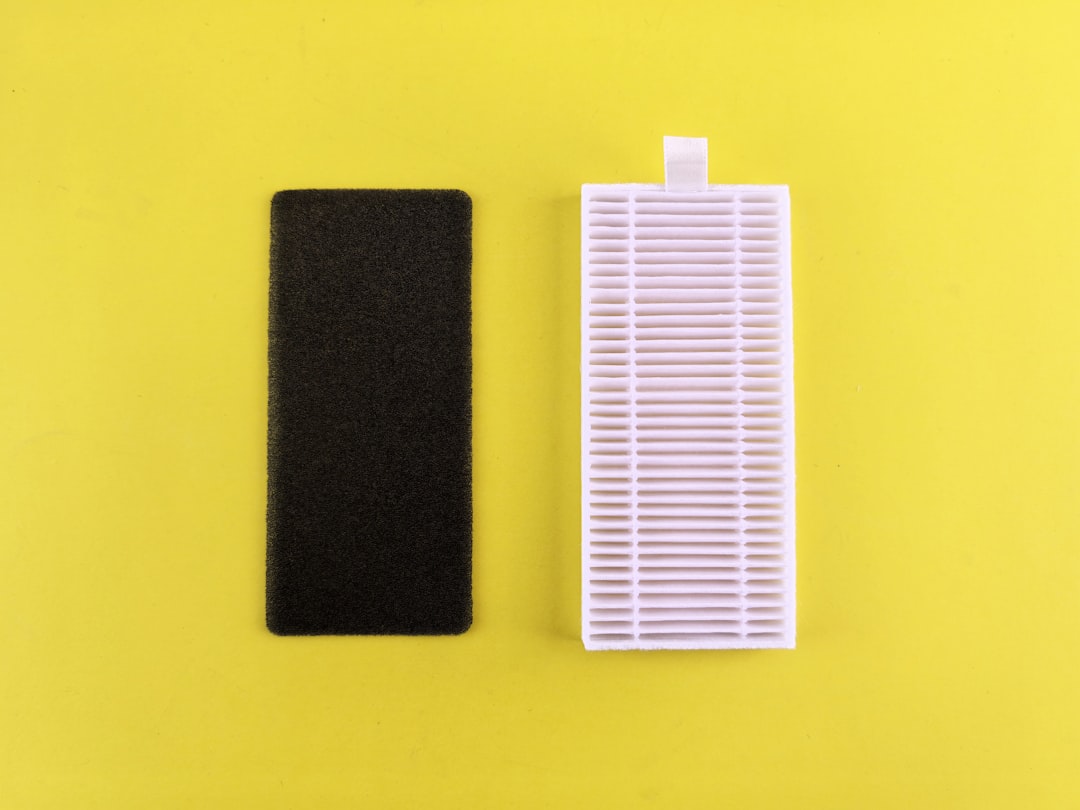
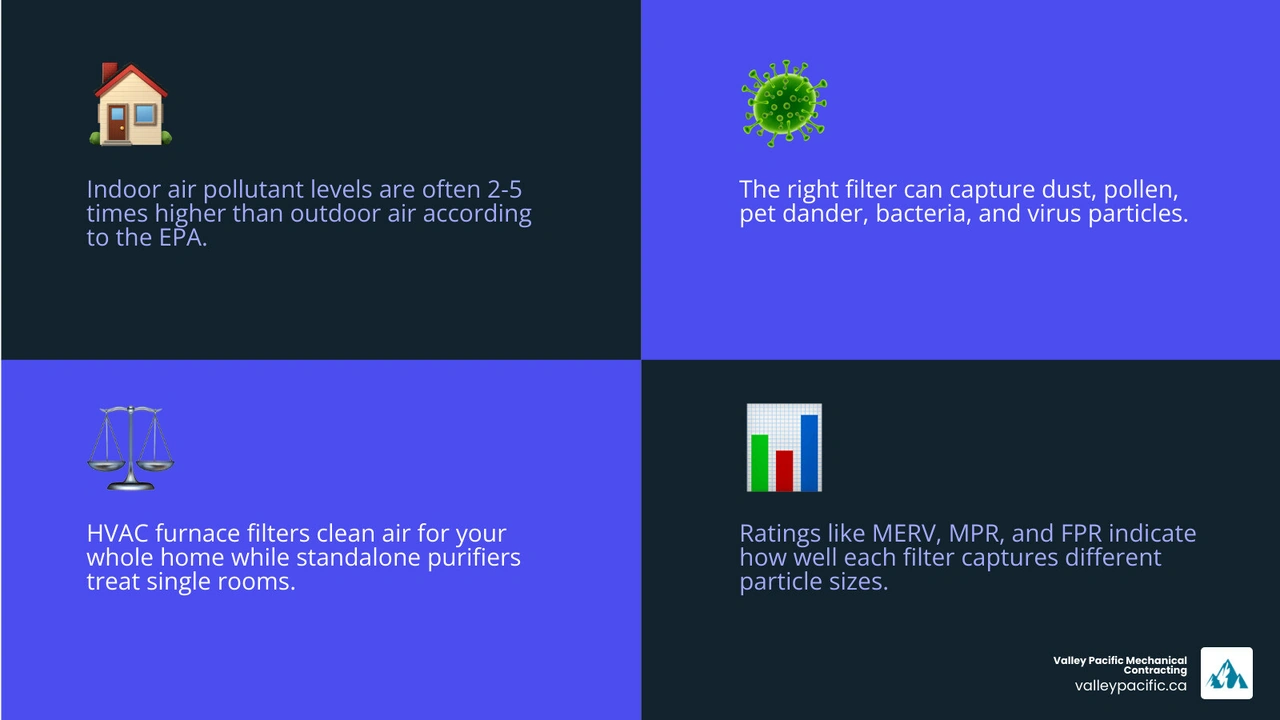
Choosing the best air filter for your home is one of the simplest ways to protect your family's health — yet most homeowners don't give it a second thought until something goes wrong. According to the EPA, indoor air pollutant concentrations can run two to five times higher than what you'd find outside. That means the air inside your home in Maple Ridge, Langley, or anywhere across the Lower Mainland could be silently working against you every single day.
The right filter catches dust, pollen, pet dander, bacteria, and even virus particles before they cycle through your living space. The wrong one — or a neglected one — lets those particles pass right through.
Here's a quick look at the top filter options for most homes:
Best Air Filters for Your Home at a Glance:
- Best overall (1-inch HVAC filter): Filtrete MPR 1900 / MERV 13 — balances particle capture and airflow for most homes
- Best for allergies and asthma: MERV 13 pleated filter — captures 98% of particles down to 0.3 microns, including dust mites and mold spores
- Best for viruses and bacteria: Filtrete MPR 2500 / MERV 14 — captures up to 90% of airborne virus particles
- Best thick filter (4–5 inch): Deep-pleated MERV 11–13 — filters more effectively and lasts longer between changes
- Best standalone room purifier: Levoit Vital 200S — strong performance for rooms up to 360 sq. ft., with smart controls
- Best premium room purifier: IQAir HealthPro Plus XE — removes 99.5% of particles down to 0.003 microns, covers up to 1,125 sq. ft.
This guide walks you through everything — ratings, sizes, replacement schedules, and the top-performing options — so you can make a confident choice for your home and HVAC system.
HVAC Filters vs. Standalone Air Purifiers
When looking for the best air filter for your home, it is easy to get confused by the sheer variety of options on the market. The most common point of confusion is the difference between built-in HVAC/furnace filters and standalone room air purifiers. While both serve to clean your indoor air, they do so in fundamentally different ways.
| Feature | HVAC / Furnace Filter | Standalone Purifier |
|---|---|---|
| Coverage | Whole-Home | Single Room / Zone |
| Primary Purpose | Protects HVAC & Cleans | Direct Air Cleaning |
| Installation Location | Return Air Duct | Floor / Tabletop |
| Air Movement Source | Central HVAC Blower | Internal Small Fan |
Furnace Filters: Whole-Home Protection
Your central furnace or heat pump filter is installed directly inside your system's return air duct. Every single cubic foot of air that your heating or cooling system conditions must pass through this filter first.
- The Primary Job: Historically, furnace filters were designed to protect the sensitive internal components of your HVAC system — such as the blower motor and evaporator coils — from getting coated in thick layers of dust.
- The Modern Benefit: Today’s high-efficiency pleated filters do dual duty. They protect your system while acting as a whole-home air cleaner, capturing microparticles from every room connected to your ductwork. Because it relies on your central system, its effectiveness is deeply tied to your overall HVAC System Design.
Standalone Air Purifiers: Targeted Room Relief
A standalone room air purifier is a portable appliance that plugs into a wall outlet. It contains its own internal fan and a series of filters (typically a pre-filter, an activated carbon filter, and a HEPA filter) to clean the air in a single, localized space.
- The Primary Job: These units are designed for high-efficiency, targeted air purification. They are incredible at cleaning the air in high-traffic rooms, bedrooms, or offices where you spend the majority of your time.
- The Modern Benefit: Portable units can run continuously without needing your central heating or cooling system to be active. For example, high-performing models like the Levoit Vital 200S can complete a full room particle removal cycle in just 24 minutes and deliver up to five air changes per hour in spaces up to 360 square feet. For extra-large spaces, premium medical-grade units like the IQAir HealthPro Plus XE cover up to 1,125 square feet and utilize advanced HyperHEPA filtration to remove 99.5% or more of all airborne particles down to an astonishing 0.003 microns.
For the ultimate indoor air quality strategy, we recommend a hybrid approach: a high-quality whole-home HVAC filter to keep the baseline air clean and protect your system, paired with portable purifiers in bedrooms or home offices for medical-grade localized filtration.
Understanding MERV, MPR, and FPR Ratings
If you have ever stood in the home improvement aisle trying to buy a replacement filter, you have likely noticed a confusing array of acronyms and numbers. Manufacturers use three primary rating scales to grade filter efficiency: MERV, MPR, and FPR. Understanding how these systems translate is key to choosing the best air filter for your home.
- MERV (Minimum Efficiency Reporting Value): This is the industry-standard scale developed by ASHRAE (American Society of Heating, Refrigerating and Air-Conditioning Engineers). It is the only universally recognized, independent rating system. The scale ranges from 1 to 20, with higher numbers indicating a tighter weave capable of trapping smaller particles.
- MPR (Microparticle Performance Rating): This is a proprietary rating system developed by 3M (the makers of Filtrete). It specifically measures a filter's ability to capture microparticles between 0.3 and 1.0 microns in size.
- FPR (Filter Performance Rating): This is a proprietary rating system used by Home Depot for products sold in their stores. It uses a 1-to-10 scale based on a combination of particle capture efficiency and the weight gain of the filter over its operational lifetime.
When planning your indoor air quality strategy, upgrading to a higher-rated filter is a highly effective step. To learn more about how system upgrades impact your home, read our HVAC System Upgrades Complete Guide.
Finding the Best Air Filter for Your Home by Rating
For the vast majority of residential homes in Maple Ridge, Pitt Meadows, and Langley, MERV 13 is the sweet spot.
A MERV 13 filter is highly efficient, capturing up to 98% of airborne particles, including bacteria, dust mites, mold spores, and common allergens as small as 0.3 microns. It strikes the perfect balance between high-level air cleaning and maintaining adequate airflow so your system doesn't struggle to breathe.
To help you decode the packaging on your next shopping trip, here is a direct comparison of how these three rating systems align:
| MERV Rating (ASHRAE Standard) | MPR Rating (3M Filtrete) | FPR Rating (Home Depot) | Primary Target Particles Captured | Best Suited For |
|---|---|---|---|---|
| MERV 1–4 | N/A | N/A | Large dust, lint, carpet fibers, insects | Basic system protection only; poor air cleaning |
| MERV 5–8 | 300–600 | 4–5 (Good) | Pollen, mold spores, pet dander, dust mite debris | Standard homes with no pets or allergies |
| MERV 9–12 | 1000–1200 | 6–7 (Better) | Fine dust, lead dust, coal dust, auto emissions | Homes wanting better air quality; mild allergy sufferers |
| MERV 13–16 | 1500–2500 | 8–10 (Premium) | Bacteria, virus particles, microscopic smoke, sneeze droplets | Highly Recommended: Heavy allergies, pets, asthma, wildfire smoke |
| MERV 17–20 | N/A | N/A | Radon progeny, ultrafine virus particles, carbon dust | Cleanrooms, hospitals; requires specialized HVAC blowers |
Choosing the Best Air Filter for Your Home: Size, Thickness, and Lifespan
Finding the best air filter for your home is not just about choosing the highest rating; it is also about ensuring system compatibility. If a filter is too restrictive or does not fit snugly, it can cause severe damage to your heating and cooling equipment.
To keep your system running safely, regular maintenance is essential. Learn more about protecting your system with our guide on HVAC Preventative Maintenance.
Standard 1-Inch vs. Deep-Pleated 4-to-5-Inch Filters
The physical thickness of your filter plays a massive role in both air filtration quality and how hard your HVAC blower motor has to work.

- 1-Inch Filters: These are the most common filters found in older homes across the Lower Mainland. Because they have a relatively small surface area, they can clog quickly. If you choose a high-MERV 1-inch filter, it can create high airflow resistance, forcing your system to work harder, consume more energy, and potentially overheat.
- 4-to-5-Inch Deep-Pleated Filters: These filters are the gold standard for modern HVAC systems. Because the pleats are incredibly deep, they have up to ten times the surface area of a standard 1-inch filter. This massive surface area allows them to filter out particles exceptionally well without restricting airflow.
Even better, because they can hold far more dust and debris before clogging, they require replacement much less frequently. If your current ductwork is designed for a 1-inch filter, a licensed technician can often retrofit your system with a media cabinet to accommodate a thicker, high-efficiency filter.
How Often to Replace the Best Air Filter for Your Home
How often you should swap out your filter depends heavily on its thickness and your specific household environment:
- 1-to-2-Inch Filters: Replace every 3 months under normal conditions.
- 4-Inch Filters: Replace every 6 months.
- 5-Inch Filters: Replace every 12 months.
However, these are baseline recommendations. Several real-world factors can dramatically accelerate how quickly your filter fills up with household dust, pet dander, and other debris:
- Pets: If you have dogs or cats, their hair and dander will clog a filter much faster. Households with multiple pets may need to change 1-inch filters every 4 to 6 weeks.
- Allergies and Asthma: If anyone in your home suffers from chronic respiratory conditions, changing the filter slightly ahead of schedule ensures your indoor air remains as clean as possible.
- Local Climate and Construction: During the dry summer months in British Columbia, or during active wildfire seasons, outdoor particulate levels spike. This dust and smoke make their way indoors, requiring more frequent filter inspections.
If you live in Langley or surrounding areas and want to make sure your system is operating at peak efficiency, you can check out our localized tips on HVAC Maintenance Langley.
Top-Performing Air Filters for Specific Household Needs
Every home is unique, and the best air filter for your home depends entirely on what you are trying to filter out of your air.
| If Your Main Concern Is... | Recommended Filter Type |
|---|---|
| Pet Hair & Heavy Dust | MERV 11 Pleated (High Airflow) |
| Allergies & Asthma | MERV 13 Pleated (Filtrete MPR 1900) |
| Viruses & Bacteria | MERV 14 Pleated (Filtrete MPR 2500) |
| Wildfire Smoke & Odours | Activated Carbon / Charcoal Infused Filter |
For Allergy and Asthma Relief
If you are battling seasonal pollen, mold spores, or dust mites, you need a filter that excels at trapping small particles without choking your system. The Filtrete MPR 1900 (MERV 13) is widely recognized as an outstanding choice. It delivers a 62% capture rate for microparticles between 0.3 and 1.0 microns. Independent testing has shown that the Filtrete MPR 1900 delivers superior airflow compared to other 1-inch retail MERV 13 filters, protecting your furnace from unnecessary strain.
For Homes with Pets
Pets shed skin cells (dander) and hair continuously. Human beings also contribute to this, shedding roughly 500 million skin cells daily! To tackle this heavy organic load, look for a pleated filter with a sturdy wire-backed design. A MERV 11 or MERV 13 filter is ideal here. The pleats trap the hair and dander, while the wire backing prevents the filter from bowing or collapsing under the weight of the debris.
For Viruses, Bacteria, and Smoke
If you want to maximize your defense against airborne illnesses, you need a high-efficiency premium option like the Filtrete MPR 2500 (MERV 14). This filter features a 77% small particle capture rate and helps capture up to 90% of airborne virus particles.
Additionally, if you are concerned about chemical smells, cooking odors, or seasonal wildfire smoke, look for filters that incorporate activated charcoal or carbon. Brands like PUREFLOW offer advanced multi-layer furnace filters engineered with activated charcoal and antimicrobial technology to neutralize odors and gases while trapping microscopic physical particles.
For a deeper dive into maintaining healthy indoor air throughout the changing seasons in the Lower Mainland, read our comprehensive HVAC Services Coquitlam Guide.
Frequently Asked Questions about Home Air Filtration
Are smart or app-connected air filters worth the extra cost?
Smart air filters feature built-in sensors or Bluetooth-enabled pressure sensors that monitor actual airflow restrictions and track the precise lifespan of your filter, sending alerts directly to your smartphone when it is time for a change.
While these devices are highly convenient, they also come with a premium price tag and higher annual replacement costs. For most homeowners, simply setting a recurring calendar reminder on your phone or signing up for a filter subscription service is a highly cost-effective alternative that works just as well.
How do I know if my current air filter is working effectively?
The easiest way to check is to pull the filter out of its slot and hold it up to a bright light source:
- If you cannot see any light passing through the pleats, the filter is completely saturated and must be replaced immediately.
- Other warning signs include a noticeable buildup of dust on your furniture shortly after cleaning, strange musty smells coming from your vents, or a heating system that seems to run constantly without reaching your desired temperature.
To ensure your entire system is running safely and efficiently, we recommend scheduling a professional HVAC System Check.
What are common mistakes to avoid when buying or installing air filters?
The most common mistake is installing the filter backward. Air filters have a directional arrow printed on the outer frame. This arrow must point in the direction of the airflow — which is always toward the furnace blower motor, not away from it. Installing a filter backward reduces its structural integrity and can cause it to collapse into your system.
Other frequent mistakes include:
- Buying the wrong physical size and forcing it to fit (which allows unfiltered air to bypass the filter entirely).
- Choosing an ultra-restrictive filter that your specific HVAC system's blower motor cannot handle.
- Forgetting to perform routine maintenance on your system.
To prevent costly breakdowns, read our guide on How to Prevent HVAC Emergencies with Maintenance.
Conclusion
Finding the best air filter for your home is a simple yet powerful step toward creating a healthier, cleaner, and more comfortable living environment. Whether you are upgrading your 1-inch central furnace filter to a premium MERV 13, retrofitting your ductwork for a deep-pleated 5-inch media filter, or pairing your system with a high-performance portable room air purifier, keeping your air clean protects both your family and your mechanical systems.
At Valley Pacific Mechanical Contracting, we have spent over 30 years delivering a "headache-free" experience to homeowners across Maple Ridge, Pitt Meadows, Langley, and the wider Lower Mainland. As an Indigenous-owned business, we pride ourselves on transparent service, expert advice, and our Daikin Comfort Promise.
If you are ready to upgrade your home’s indoor air quality or need professional help choosing the perfect filtration setup for your system, we are here for you. Consider enrolling in our comprehensive HVAC Maintenance Plan to ensure your heating, cooling, and filtration systems are always operating at peak efficiency. Contact us today to get started!


