


Cheat Sheet to Best HVAC Setup for Lower Mainland Weather



Is Your Home Ready for Lower Mainland Weather? Here's the Best HVAC Setup
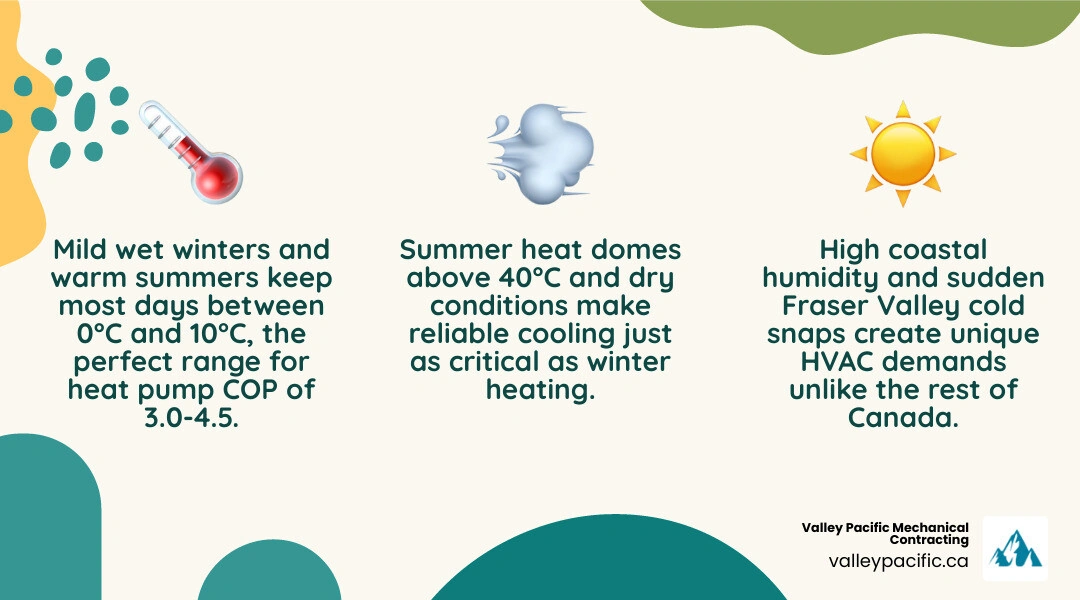
Finding the best HVAC setup for Lower Mainland weather starts with understanding what this region actually throws at your home. Mild, wet winters. Warm, dry summers. Sudden cold snaps in the Fraser Valley. Salt-laden coastal air in Delta and Richmond. And the occasional heat dome that pushes temperatures past 40°C.
That combination is genuinely unique — and it means the right system for a home in Maple Ridge or Langley may look very different from what works in other parts of Canada.
Here's a quick answer for most Lower Mainland homeowners:
The best HVAC setup for most Lower Mainland homes in 2026:
| Priority | Recommended Setup |
|---|---|
| Best overall | Cold-climate heat pump (ducted or ductless mini-split) |
| Best for older homes without ducts | Ductless mini-split heat pump |
| Best for colder inland areas (Maple Ridge, Chilliwack) | Hybrid dual-fuel system (heat pump + gas furnace backup) |
| Best for whole-home comfort with existing ducts | Ducted variable-speed heat pump |
| Add-on for all setups | Smart thermostat + HRV for indoor air quality |
Heat pumps are the standout choice here because the Lower Mainland's climate sits right in their sweet spot. When outdoor temperatures hover between 0°C and 10°C — which covers the vast majority of the heating season — heat pumps operate at a COP (coefficient of performance) of 3.0 to 4.5. That means you get three to four and a half dollars of heat for every dollar of electricity you spend.
No other system comes close to that kind of efficiency at those temperatures.
Of course, the right setup still depends on your home's size, insulation, ductwork, and location within the Lower Mainland. The sections below walk you through every factor — so you can make a confident, informed decision.
Understanding the Lower Mainland Climate and Its HVAC Impact

To design the ultimate heating and cooling setup, we first have to look at the unique climate of the Pacific Northwest. The Lower Mainland features a distinct marine climate characterized by high relative humidity and relatively moderate temperature swings. However, "moderate" doesn't mean simple.
Our winters are notoriously damp. This dampness makes a 3°C day feel bone-chillingly cold, forcing heating systems to work harder to maintain indoor comfort. Furthermore, our winter temperatures frequently hover around the freezing mark, resulting in relentless freeze-thaw cycles. For outdoor HVAC equipment, this means constant frost buildup, requiring smart defrost cycles to prevent ice-ups and mechanical strain.
Then there are our microclimates. A home right on the water in Richmond or Delta deals with salt-laden coastal air that can corrode standard aluminum coils within just a few years. Meanwhile, inland communities like Maple Ridge, Mission, and Langley experience much sharper temperature drops in the winter and higher heat in the summer. If you live closer to the mountains, you might experience deep winter cold snaps that require a different approach to heating backup.
Because of these variations, a copy-paste HVAC design simply won't cut it. For a deeper dive into managing these local microclimates, check out our Maple Ridge HVAC Tips 2025 to see how we tailor systems to specific neighborhood demands.
The Best HVAC Setup for Lower Mainland Weather: Heat Pumps vs. Furnaces
When planning your system upgrade, the primary decision usually comes down to a matchup between a modern heat pump and a traditional natural gas furnace. Let's look at how they compare across the key performance indicators that matter to BC homeowners:
| Feature | Modern Heat Pump | Traditional Gas Furnace |
|---|---|---|
| Primary Function | Heating and cooling in one system | Heating only (requires separate AC for summer) |
| Typical Efficiency (COP) | 3.0 to 4.5 (300% to 450% efficient) | 0.92 to 0.98 (92% to 98% efficient) |
| Energy Source | Electricity | Natural Gas |
| Carbon Footprint | Extremely low (runs on BC's clean hydro grid) | Moderate to high (fossil fuel combustion) |
| Dehumidification | Excellent (removes moisture during summer cooling) | None (can dry out air too much in winter) |
While a gas furnace burns fuel to generate heat, a heat pump uses electricity and advanced refrigerant technology to move heat from one place to another. This is why heat pumps can easily achieve efficiencies of over 300%, making them a highly compelling choice as the core of the best HVAC setup for Lower Mainland weather.
To learn more about the financial and environmental benefits of making this switch, explore the Heat Pump Benefits for British Columbia Homeowners.
Why Heat Pumps Are the Best HVAC Setup for Lower Mainland Weather
Modern variable-speed heat pumps are uniquely qualified for the Lower Mainland. Unlike older on/off systems that blast hot air and then shut down entirely, variable-speed compressors run continuously at a lower, incredibly quiet speed. They constantly adjust their output to match your home's heat loss, maintaining a perfectly steady indoor temperature.
This constant, low-level operation is also phenomenal for moisture control. By keeping air moving steadily through your filtration system, a heat pump prevents the damp, heavy feeling common in coastal winter homes. In the summer, the reversing valve switches the system into cooling mode, acting as a highly efficient central air conditioner that extracts indoor heat and humidity, dumping it outside.
If you are trying to decide whether a central system or zoned approach is right for your layout, check out our comparison on Central Air vs Mini Split for the Lower Mainland Homes.
When to Consider a Hybrid Dual-Fuel System
Despite the incredible performance of modern heat pumps, there are scenarios where a hybrid (dual-fuel) system makes perfect sense. A hybrid system pairs an electric heat pump with a high-efficiency gas furnace.
During the mild spring, autumn, and typical winter days, the heat pump handles 100% of the heating workload. However, if a major Arctic outflow strikes and temperatures plummet below -10°C, the system automatically switches over to the gas furnace. This ensures you have an incredibly reliable, high-temperature backup heat source during the coldest days of the year, while still enjoying the massive electrical savings of a heat pump for the other 90% of the heating season.
Ducted vs. Ductless Systems for BC Homes
Choosing the best mechanical equipment is only half the battle; how that air travels through your home matters just as much.
If your home already has a well-designed ductwork system in good condition, a ducted heat pump is a clean, straightforward swap for your old furnace. However, older ductwork can occasionally experience a 10% to 15% efficiency loss due to leaks, poor insulation, or improper sizing.
For homes without existing ductwork—such as those heated by electric baseboards or hot water radiators—installing central ductwork can be incredibly invasive and costly. This is where ductless mini-split systems shine. They deliver conditioned air directly into individual rooms, completely avoiding the energy losses associated with ductwork.
To see how these systems breathe new life into character homes, take a look at the Ductless Mini Split Benefits for Older BC Homes.
Ductless Mini-Splits for Zoned Comfort
Ductless mini-splits consist of a sleek outdoor condenser connected to one or more indoor wall, floor, or ceiling heads. This design allows for true multi-zone setups, meaning you can keep your bedrooms cool and comfortable for sleeping while keeping the main living areas warmer.
Beyond saving energy by only conditioning occupied spaces, this zoning capability is perfect for addressing the dramatic humidity swings of our coastal climate. You can read more about how these configurations handle local moisture in How Ductless Mini Splits Provide Zone Control and discover their dehumidification advantages in How Ductless Systems Handle Humid Coastal Weather.
Sizing, Efficiency Ratings, and BC Step Code Compliance
When choosing your new HVAC system, sizing is everything. A system that is too small will run constantly and struggle to keep up on cold days. However, an oversized system is actually worse: it will "short-cycle" (turn on and off rapidly), which wears out the compressor prematurely, creates uncomfortable temperature swings, and fails to run long enough to remove humidity from the air in the summer.
To prevent this, we always perform a detailed Manual J load calculation. This scientific method looks at your home's exact square footage, local climate data, wall insulation values, window orientations, and air leakage rates to determine the precise BTU capacity your home requires.
When comparing equipment, keep an eye on these three critical ratings:
- SEER2 (Seasonal Energy Efficiency Ratio): Measures cooling efficiency. Look for a SEER2 of 16 or higher for excellent summer performance.
- HSPF2 (Heating Seasonal Performance Factor): Measures heating efficiency over a typical season. Aim for an HSPF2 of 8.5 or higher.
- COP (Coefficient of Performance): Represents real-time efficiency. A COP of 3.0 means the system is 300% efficient at that specific temperature.
These ratings are also central to the BC Energy Step Code, which sets progressive performance targets for new construction and major renovations. At Step 4 and Step 5, traditional gas systems struggle to meet the strict thermal energy demand intensity (TEDI) limits, making high-efficiency electric heat pumps practically mandatory.
The good news is that choosing high-performance, qualifying equipment opens the door to significant financial support. You can read about available provincial programs in our guide on BC and Federal Energy Rebates for HVAC Upgrades and learn how to navigate the paperwork smoothly in How to Apply for Energy Rebates in British Columbia.
Maximizing Comfort with Smart Controls and Seasonal Maintenance
To get the absolute most out of the best HVAC setup for Lower Mainland weather, you need a control system that can keep up. Pairing variable-speed air handlers with a smart thermostat allows your system to make micro-adjustments on the fly, maximizing your energy savings.
Furthermore, local air quality has become a major priority for BC families. Wildfire smoke has essentially become a "fifth season" in the Pacific Northwest. Integrating high-MERV media filters, HEPA filtration, or Heat Recovery Ventilators (HRVs) into your HVAC system ensures that even when the air outside is compromised, your indoor air remains fresh, clean, and healthy.
To set up your system for year-round success, check out the Best Smart Thermostat Schedule for Pacific Northwest Coastal Weather and optimize your summer settings with our Summer Efficiency Tips for Pacific Northwest Coastal Homes.
Maintaining the Best HVAC Setup for Lower Mainland Weather
Even the most advanced HVAC system will lose efficiency and suffer a shortened lifespan without regular care. To keep your system running beautifully for its full 12-to-15-year life expectancy, we recommend the following routine:
- Filter Replacements: Check your air filters every 1 to 3 months, especially during high-use winter months and summer wildfire season.
- Annual Professional Tune-Ups: Schedule a professional inspection once a year (ideally in the spring for cooling or fall for heating) to clean coils, check refrigerant levels, and inspect electrical connections.
- Outdoor Unit Clearance: Keep the area around your outdoor condenser clear of leaves, snow, and garden debris to ensure unrestricted airflow.
- Coastal Coil Protection: If you live near salt water, ensure your system features specialized marine-grade epoxy coatings to shield the delicate aluminum coils from corrosive salt air.
Frequently Asked Questions About Lower Mainland HVAC Systems
Which HVAC system is most energy-efficient for Metro Vancouver?
An electric, variable-speed heat pump is by far the most energy-efficient option. Because our winters are mild, heat pumps operate at peak efficiency for over 90% of the heating season, delivering COPs of 3.0 to 4.5. This allows them to significantly lower your annual heating costs compared to traditional electric baseboards or gas furnaces.
Do I need a backup furnace for cold winter snaps in BC?
Generally, no. Modern cold-climate heat pumps are designed to maintain 100% of their heating capacity down to -20°C and continue operating efficiently well below that. However, if you live in a colder inland area like Mission or outer Maple Ridge, or if your home has older, less-effective insulation, a hybrid dual-fuel system with a gas furnace backup can provide peace of mind during extreme winter storms.
How do BC energy rebates affect my HVAC installation choices in 2026?
In 2026, government and utility rebate programs strongly incentivize the transition to electric heat pumps. Homeowners can receive substantial rebates for installing qualifying cold-climate heat pumps and completing necessary electrical panel upgrades. Central air conditioners do not qualify for these rebates, making heat pumps the most financially sensible choice for both upfront savings and long-term operating costs.
Conclusion
Building the best HVAC setup for Lower Mainland weather is all about matching the right technology to your home's unique layout, insulation, and microclimate. Whether you are upgrading a classic home in Langley, installing a zoned ductless system in Pitt Meadows, or designing a high-performance hybrid setup in Maple Ridge or Mission, making the right choice now ensures fifteen years of reliable comfort and lower utility bills.
At Valley Pacific Mechanical Contracting, we bring over 30 years of expertise, fully licensed technicians, and a dedication to providing a completely "headache-free" experience. As a proud Daikin Comfort Pro, we back our installations with the Daikin Comfort Promise, ensuring your home's system is installed to the highest industry standards.
Ready to design a comfortable, energy-efficient home? Contact us today to explore your options, and check out our Valley Pacific Service Areas to see how we help homeowners right in your neighborhood.


