


The Definitive Guide to HVAC Maintenance Checklist for Pacific Northwest Coastal



Why an HVAC Maintenance Checklist for Pacific Northwest Coastal Homes Is Non-Negotiable
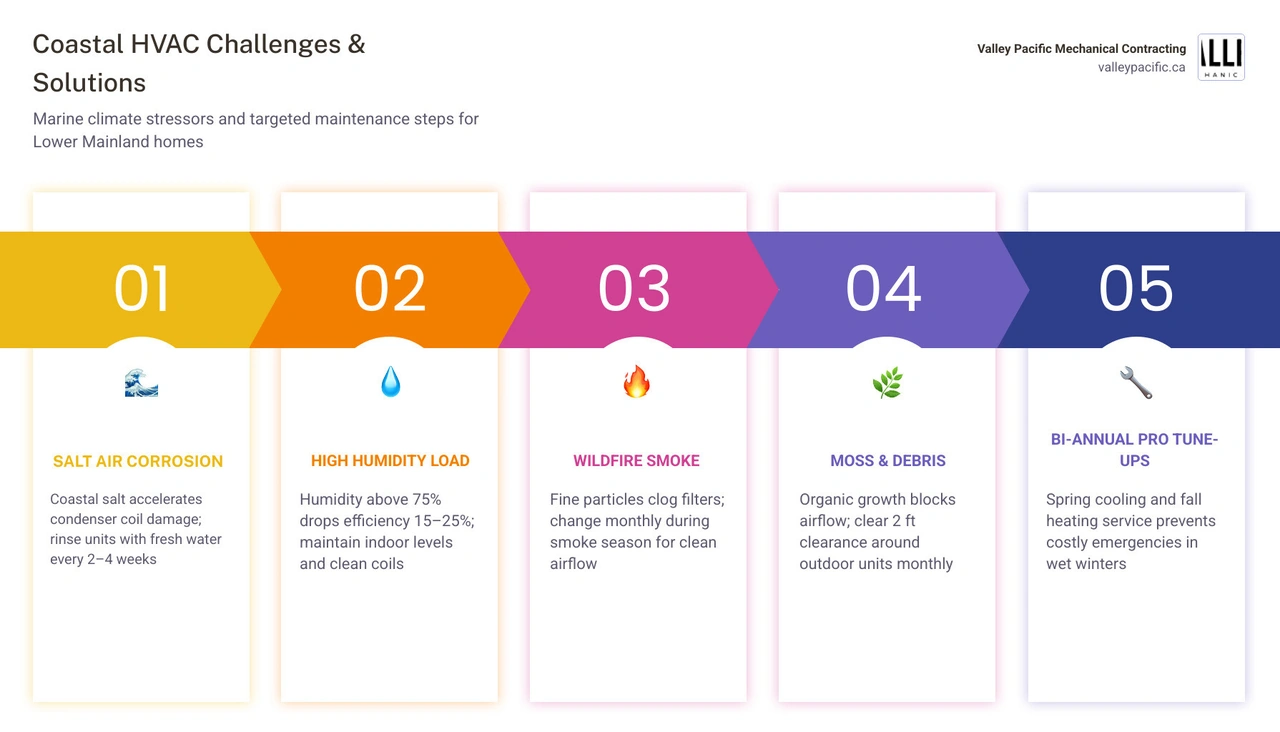
Following a proper HVAC maintenance checklist for Pacific Northwest coastal homes is one of the most important things you can do to protect your heating and cooling investment in the BC Lower Mainland. The marine climate here — with its relentless rain, high humidity, salt-laden air, and seasonal wildfire smoke — puts stress on HVAC systems that homeowners in drier inland regions simply never face. Seattle alone sees an average of 164 rainy days per year, and when indoor humidity climbs above 75%, system efficiency can drop by 15 to 25%. In Maple Ridge, Langley, Surrey, and across the Lower Mainland, those conditions are the norm, not the exception.
Here is a quick-reference checklist to get you started:
Pacific Northwest Coastal HVAC Maintenance Checklist — Quick Reference
| Task | Frequency | DIY or Pro? |
|---|---|---|
| Replace or inspect air filter | Every 1–3 months (monthly in wildfire season) | DIY |
| Clear debris around outdoor unit (2 ft clearance) | Monthly / after storms | DIY |
| Rinse outdoor unit with fresh water | Every 2–4 weeks in summer | DIY |
| Flush condensate drain with white vinegar | Every spring and fall | DIY |
| Test thermostat in heating and cooling modes | Each season change | DIY |
| Professional spring tune-up (coils, refrigerant, electrical) | Once per year — late March to mid-April | Pro |
| Professional fall tune-up (heating system, defrost cycle, reversing valve) | Once per year — September | Pro |
| Inspect ductwork for leaks and moisture damage | Annually | Pro |
| Check electrical connections and capacitors | Annually | Pro |
| Inspect heat exchanger and refrigerant levels | Annually | Pro |
Neglecting even the basics can shorten a well-built system's lifespan from 15–20 years down to just 10. And with emergency repairs costing three to four times more than a routine tune-up, proactive maintenance is far and away the smarter path.
How the Lower Mainland Marine Climate Stresses Your Heating and Cooling
Our beautiful coastal environment is wonderful to live in, but it is notoriously tough on mechanical systems. When you live in places like Maple Ridge, Pitt Meadows, or Langley, your outdoor heat pump or air conditioner is in a constant battle with the elements.
To understand why your heating and cooling equipment requires specialized care, it helps to look at how lower mainland climate affects your hvac system. The combination of high humidity, heavy rainfall, and coastal winds creates a perfect storm for premature wear and tear.
Unlike inland regions where winters are dry and freezing, our damp coastal winters mean your heat pump must work extra hard to pull heat from moisture-laden air. This constant exposure to moisture, combined with salt-tinged breezes blowing off the water, accelerates the natural aging process of metal components, electrical connections, and outdoor coils.
Why You Need a Dedicated HVAC Maintenance Checklist for Pacific Northwest Coastal Weather
Using a generic, one-size-fits-all maintenance schedule simply won't cut it when you live near the coast. A specialized hvac maintenance checklist for pacific northwest coastal homes is designed to combat regional threats before they turn into expensive system failures.
Proactive care directly influences your system's lifespan and monthly energy bills. In fact, HVAC systems receiving regular maintenance can operate up to 25% more efficiently than neglected units. When you commit to consistent upkeep, you ensure that your system can handle sudden summer heatwaves without breaking a sweat.
If you are wondering whether a structured service plan is the right move for your household, reviewing the benefits of hvac preventative maintenance and asking yourself is an hvac maintenance plan worth it can help clarify how much hassle and money you will save over the long run.
Salt Air, Moss, and Wildfire Smoke Impacts
Three major environmental factors unique to our region require special attention:
- Salt Air Corrosion: If you live close to the water, salt-laden air acts as a corrosive agent. It settles on the delicate aluminum fins of your outdoor condenser unit, leading to rapid pitting and corrosion. This restricts heat transfer, forces your system to run longer, and eventually leads to refrigerant leaks.
- Moss and Organic Buildup: The Pacific Northwest is famous for green moss, pine needles, and damp leaves. When these pile up around or inside your outdoor unit, they trap moisture against the metal casing, encouraging rust and restricting critical airflow.
- Wildfire Smoke: In recent summers, wildfire smoke has become an unfortunate seasonal reality in BC. Heavy smoke is packed with fine particulate matter that quickly chokes your indoor air filters. This forces your blower motor to work twice as hard to circulate air, which can lead to overheating and premature motor failure.

The Complete HVAC Maintenance Checklist for Pacific Northwest Coastal Homes
To keep your home comfortable through every seasonal transition, we recommend dividing your maintenance tasks into manageable spring and fall routines. Taking a proactive approach ensures that your heating and cooling system is always prepared for the upcoming weather shift.
For a deeper dive into protecting your investment, check out our guide on how to maintain your heating and cooling system.
| Feature | Spring Maintenance Focus | Fall Maintenance Focus |
|---|---|---|
| Primary Goal | Prepare for summer cooling & high humidity | Prepare for winter heating & heavy rain |
| Outdoor Unit | Rinse salt/pollen, clear moss, trim vegetation | Clear leaves, inspect level settling, check defrost |
| Indoor Unit | Inspect evaporator coil, flush condensate line | Test ignition/heating elements, inspect heat exchanger |
| Air Quality | Upgrade filters for pollen & summer smoke | Replace filters, test carbon monoxide detectors |
| Thermostat | Calibrate for cooling, check smart schedules | Calibrate for heating, program setbacks |
Spring Tasks on Your HVAC Maintenance Checklist for Pacific Northwest Coastal Properties
As winter fades, it is time to transition your system from heating to cooling mode. Spring is the absolute best time to book your professional tune-up. Scheduling your service between late March and mid-April ensures your system is ready before the summer rush and sudden heatwaves hit the Lower Mainland.
Your spring checklist should focus heavily on restoring airflow and removing winter buildup. Start by gently rinsing your outdoor coils with a garden hose to wash away salt deposits, dirt, and pollen. Always turn off the power to the unit before doing this, and never use a pressure washer, as the high pressure will bend the delicate aluminum fins.
Next, replace your indoor air filters. If you want to keep your energy bills low during the warmer months, consider adopting these summer efficiency tips for pacific northwest coastal homes. For those living in Langley and surrounding areas, scheduling a professional hvac maintenance langley service will ensure your system is calibrated to peak performance standards.
Fall and Winter Preparation for Wet Weather
When September arrives, the focus shifts back to keeping your home warm, dry, and safe. Fall maintenance is all about freeze protection and ensuring your heating elements are operating safely.
During a professional fall service, a technician will inspect your heat exchanger for dangerous cracks, test the ignition system, and check the reversing valve on your heat pump. The reversing valve is what allows your heat pump to switch from cooling to heating, and it undergoes immense stress during our damp winters as the system cycles through defrost modes to melt outdoor ice.
It is also the perfect time to optimize your thermostat. Using a smart thermostat can save you up to $180 per year in energy costs when programmed correctly. To get the most out of your setup, take a look at the best smart thermostat schedule for pacific northwest coastal weather to keep your home cozy without wasting electricity.
DIY Maintenance Tasks vs. When to Call a Professional
While we always recommend professional seasonal tune-ups, there are several simple, safe tasks that homeowners can perform to keep their systems running smoothly. Knowing what you can handle yourself—and when to call in a licensed technician—will save you money and protect your equipment.
If you want to maximize your system's efficiency between professional visits, these hvac preventative maintenance tips offer excellent guidance.
Safe Homeowner Maintenance Steps
Here are the tasks you can safely perform yourself:
- Filter Inspections: Check your air filters every 30 days. Replace them every 1 to 3 months, or monthly if you have pets, allergies, or during wildfire season. Replacing a dirty filter can cut your energy consumption by 5% to 15%.
- Clear Outdoor Debris: Maintain a clear 2-foot perimeter around your outdoor unit. Trim back shrubs, sweep away fallen leaves, and remove any climbing vines or moss.
- Keep Vents Clear: Walk through your home and ensure that furniture, rugs, or drapes are not blocking your supply and return registers.
- Flush the Condensate Line: Pouring a cup of distilled white vinegar down your HVAC condensate drain line in the spring and fall helps prevent algae and mold from clogging the pipe, which can cause water damage in your home.
Critical Tasks That Require a Licensed Technician
While DIY care is helpful, complex mechanical and electrical components require professional diagnostic tools and training. Attempting to service these yourself can void your manufacturer warranty, damage your system, or pose serious safety risks.
A professional technician should handle:
- Electrical Connections: Loose electrical connections are responsible for roughly 30% of AC failures. Technicians test voltage, tighten connections, and measure capacitor strength to prevent sudden system burnouts.
- Refrigerant Calibration: Measuring superheat and subcooling with digital gauges ensures your system has the exact refrigerant charge needed to run efficiently.
- Heat Exchanger Inspections: Checking for microscopic cracks in your furnace's heat exchanger is critical to prevent life-threatening carbon monoxide leaks.
- Ductwork Audits: The average home loses 20% to 30% of its conditioned air through leaky or poorly insulated ducts. A professional can identify and seal these leaks using specialized materials.
To understand the full scope of what a professional visit covers, read about how to prevent hvac emergencies with maintenance and explore what does an hvac maintenance plan include to see how comprehensive checks keep your home safe.
Special Considerations for Ductless Mini-Splits and Heat Pumps
Ductless mini-split systems and heat pumps are incredibly popular across the Lower Mainland because they provide highly efficient, zoned heating and cooling. However, because they run year-round, they experience twice the wear of a traditional heating-only furnace.
During a coastal winter, a heat pump must regularly run a "defrost cycle" to melt frost that accumulates on the outdoor coils. This process places mechanical stress on the reversing valve. If your heat pump is running constantly in the winter but your home isn't reaching the set temperature, it is a clear warning sign that your defrost controls or reversing valve need professional attention.
Additionally, because mini-split indoor heads pull air directly from the room they are in, their built-in filters and indoor evaporator coils are highly susceptible to trapping local humidity. In our damp climate, this can lead to mold growth inside the unit, often causing a musty "dirty sock" smell. Regularly cleaning the reusable plastic filters and scheduling professional deep-cleans of the indoor blower wheels will keep your air smelling fresh and your system running quietly.
Frequently Asked Questions About Coastal HVAC Care
How often should I rinse my outdoor AC or heat pump unit if I live near the ocean?
If you live close to the shoreline where salt spray and coastal fog are common, we recommend gently rinsing your outdoor unit with fresh water from a garden hose every 2 to 4 weeks during the summer, and immediately after any major coastal windstorm. This simple step washes away corrosive salt deposits and abrasive sand before they can damage the aluminum fins and copper tubing.
How does high humidity affect my system's energy efficiency?
When outdoor and indoor humidity levels stay above 75%, your HVAC system has to work much harder to remove "latent heat" (the heat trapped in water vapor) before it can lower the actual air temperature. This extra workload can drop your system's operating efficiency by 15% to 25%. Keeping your indoor humidity controlled between 30% and 50% helps your system cool your home much more efficiently.
Can I skip spring maintenance if my system was serviced in the fall?
We do not recommend skipping spring maintenance, especially for heat pumps that run year-round. A system that worked hard all winter has endured thousands of defrost cycles and constant moisture exposure. Skipping a spring check-up forces a fatigued system to run at maximum capacity during sudden summer heatwaves, which is why 87% of residential emergency AC calls occur on systems that skipped their basic spring tune-up.
Conclusion
Living on the beautiful Pacific Northwest coast means accepting that our unique climate requires unique home care. By keeping up with a dedicated hvac maintenance checklist for pacific northwest coastal homes, you can protect your equipment from salt air, humidity, and debris while enjoying lower energy bills and absolute peace of mind.
At Valley Pacific Mechanical Contracting Ltd., we have spent over 30 years helping homeowners across the Lower Mainland — including Maple Ridge, Pitt Meadows, Langley, and Mission — stay comfortable in every season. As an Indigenous-owned business, we pride ourselves on delivering a "headache-free" experience backed by licensed technicians, fast response times, and the Daikin Comfort Promise.
Don't wait for the next seasonal shift to test your system's limits. Sign up for a comprehensive maintenance plan with us today, and let our experienced team keep your home comfortable, efficient, and safe all year round.


