


Cheat Sheet to HVAC Emergency Situations



Is Your HVAC Failure a True Emergency? Here's How to Tell Fast
When an HVAC failure is a true emergency comes down to one straightforward question: does the problem put your health, your home, or your family at immediate risk?
Here is a quick way to know if your situation qualifies:
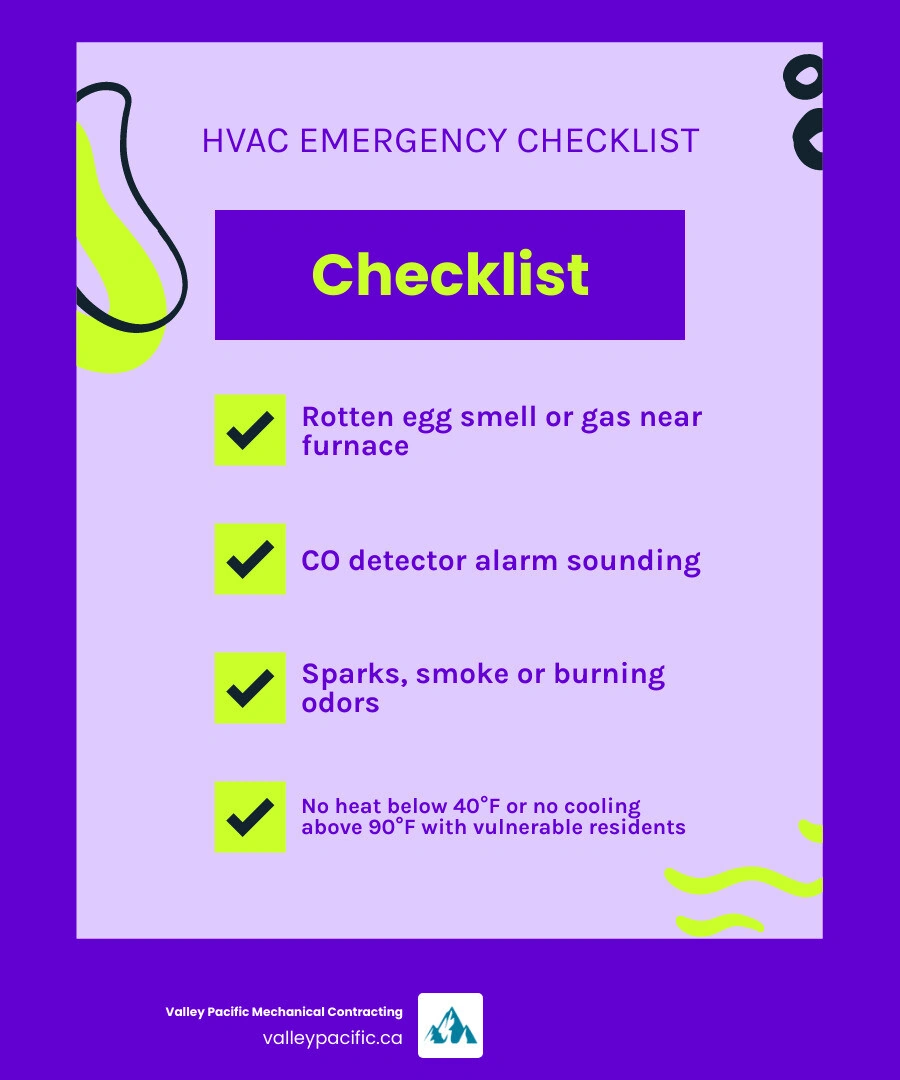
Your HVAC failure is a true emergency if any of these apply:
- You smell rotten eggs or gas near your furnace or heating system
- Your carbon monoxide detector is going off
- You see sparks, smoke, or smell burning plastic or metal
- Outdoor temperatures are below 40°F and you have lost heat
- Outdoor temperatures are above 90°F and you have lost cooling — especially with infants, elderly, or pets in the home
- Water is actively leaking from your system and causing property damage
It can likely wait for regular business hours if:
- Temperatures are mild (between 60°F and 75°F)
- Everyone in the home is healthy with no vulnerable residents
- There are no strange smells, sparks, or water damage
- The issue is minor, like slightly uneven temperatures or reduced airflow
If you are a homeowner in the Lower Mainland — whether in Maple Ridge, Surrey, Langley, or anywhere in between — knowing the difference between a true HVAC emergency and a routine repair can protect your family, your property, and your peace of mind.
It is 10 PM on a Friday. Your heating system just stopped working. Outside, temperatures are dropping fast. That is the exact moment most people freeze up — unsure whether to call for emergency service or wait until Monday morning. The wrong call in that situation can mean frozen pipes, a hospital visit, or thousands of dollars in water damage by sunrise.
According to health data, unintentional carbon monoxide poisoning sends over 100,000 Americans to emergency departments every year — and faulty HVAC systems are a leading cause. Closer to home, a heating failure during a Lower Mainland cold snap can put pipes at risk within hours. These are not scare tactics. They are the real stakes when an HVAC problem goes unaddressed.
The good news? Most emergencies follow a predictable pattern. Once you know the red flags, you can act fast and confidently — every time.
The Simple Test: When an HVAC Failure Is a True Emergency
To strip away the confusion when your heating or cooling system stops working, we use a simple four-pillar test. Before you panic or spend hours worrying, ask yourself if the malfunction threatens any of the following:
- Safety Risks: Is there an immediate hazard to human life? This includes potential fires, electrical sparks, exposure to deadly gases, or fuel leaks.
- Health Hazards: Does the loss of climate control directly threaten the physical well-being of the people (or pets) inside? Extreme temperatures can quickly lead to hypothermia in winter or heat stroke during summer heatwaves.
- Property Damage: Will leaving the system broken for 12 to 24 hours cause structural damage to your home? The most common threats are burst water pipes during a freeze or severe ceiling and drywall damage from a major water leak.
- Legal Habitability: For landlords or commercial property managers, a complete lack of heat during the cold season can violate local tenancy laws and habitability standards.
If your situation ticks any of those four boxes, you are dealing with a genuine crisis. If it does not, you can safely perform a basic HVAC System Check to see if a simple oversight is at play.
Oftentimes, what feels like a catastrophic failure is actually a minor glitch. About 40% of HVAC emergencies actually begin with simple thermostat malfunctions, dead batteries, or a tripped breaker. Before calling for 24/7 service, checking the basics can save you time. However, if the system is exhibiting major warning signs, you should review our guide on HVAC System May Fail Soon Signs to determine if your equipment is on the verge of a total breakdown.
5 Critical Situations That Qualify as Genuine HVAC Emergencies
When your comfort system fails, it helps to have a clear checklist of what constitutes a real crisis. Here are the five main situations that require immediate, professional intervention.
Gas Leaks and Carbon Monoxide: When an HVAC Failure Is a True Emergency
Your gas furnace is a powerful and highly efficient machine, but it relies on combustion to keep your home warm. When things go wrong with the fuel delivery or combustion exhaust, the consequences can be immediate and deadly.
- The Rotten Egg Smell (Mercaptan): Natural gas is naturally completely odorless. Because of this, utility companies mix in a chemical called mercaptan, which gives gas a distinct, highly unpleasant sulfur or "rotten egg" smell. If you smell this near your furnace, closet, or vents, you must treat it as an active fuel leak.
- Carbon Monoxide (CO) Alerts: Known as the "silent killer," carbon monoxide is invisible, tasteless, and odorless. It is a byproduct of incomplete combustion, which often happens when a furnace has a cracked heat exchanger. If your CO detector sounds its alarm, do not assume it is a false positive.
- The Danger of a Cracked Heat Exchanger: The heat exchanger is the metal chamber that keeps combustion exhaust separate from the clean air blowing into your rooms. If this metal cracks due to age, wear, or poor airflow, carbon monoxide will leak directly into your home's air supply.
If you suspect a gas leak or carbon monoxide exposure, do not waste time investigating. Evacuate your home immediately, leave the front door open, and call emergency services from a safe distance. For a detailed breakdown of how to handle these situations safely, refer to our guide on responding to an Emergency Gas Leak.
Electrical Red Flags and Burning Odors
Your HVAC system draws more electrical power than almost any other appliance in your home. When electrical components fail, they can quickly turn into fire hazards.
- Burning Plastic or Metallic Odors: If you turn on your system and smell a sharp, acrid scent of burning plastic, melting rubber, or hot metal, turn the system off immediately. This is a classic sign of overheating wiring, a seized blower motor, or a failing capacitor.
- Repeatedly Tripping Breakers: If your furnace, heat pump, or air conditioner trips the circuit breaker, you can reset it once. If it trips again immediately, do not reset it a second time. Repeated tripping means there is a severe electrical short or the compressor is pulling dangerous levels of electrical current.
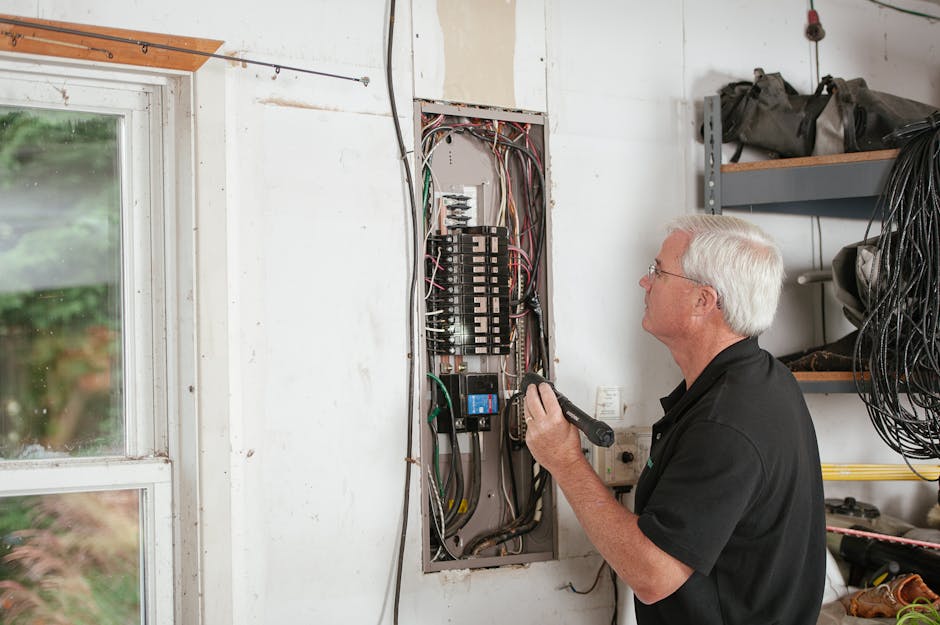
- Sparking or Smoke: Visible smoke or sparks coming from either your indoor air handler or your outdoor condenser unit is an absolute emergency. Cut the power at the main electrical panel if it is safe to do so, and call for emergency assistance right away.
Extreme Weather and Vulnerable Residents: When an HVAC Failure Is a True Emergency
In mild weather, a broken heater or air conditioner is merely an inconvenience. But when the weather outside hits extremes, your home can quickly become unlivable.
To help homeowners make the right call, we rely on the 40/90 Rule:
- The 40-Degree Rule (Heating): If the outdoor temperature is below 40°F (approx. 4°C) and your heating system fails, your home will lose its heat rapidly. Within 8 to 12 hours, the indoor temperature can drop to unsafe levels, putting your health and your plumbing at risk.
- The 90-Degree Rule (Cooling): If the outdoor temperature rises above 90°F (approx. 32°C) and your air conditioning fails, indoor temperatures can climb past 100°F within hours due to solar heat gain.
While healthy adults can tolerate moderate temperature swings, these thresholds become much tighter if you have vulnerable residents in your home. Infants, senior citizens, pregnant women, pets, and individuals with chronic respiratory or cardiovascular conditions cannot safely regulate their body temperatures in extreme heat or cold.
If your furnace quits during a freezing winter night, you can find localized help and fast response times through our specialized guides, such as the Emergency Furnace Repair Langley BC Guide, the Emergency Furnace Repair Pitt Meadows BC Guide, or the Emergency Furnace Repair Mission BC Guide.
Significant Water Leaks and Property Damage Risks
Not all HVAC emergencies are about air temperature; some are about water. Both heating systems (like boilers) and cooling systems (like air conditioners and heat pumps) handle large volumes of water or condensation.
- Clogged Condensate Drain Lines: Your air conditioner or high-efficiency furnace extracts gallons of moisture from the air as it runs. This water drains out through a small plastic pipe. If this pipe gets clogged with algae, dust, or debris, the water will back up. If your unit is located in an attic or upper-floor closet, this backup can overflow, leading to ruined ceilings, collapsed drywall, and mold growth within 24 to 48 hours.
- Frozen Evaporator Coils: If your air conditioner has low refrigerant or a severely dirty air filter, the evaporator coil can drop below freezing, turning into a solid block of ice. When that ice eventually melts, it can overwhelm your drain pan and flood your home.
- Boiler Leaks: Boilers operate under high pressure. An active, spraying water leak from a boiler can quickly flood your basement or mechanical room, destroying flooring and electrical systems.
If your boiler is leaking or you are experiencing a heating-related plumbing emergency, you can find immediate help by reviewing our Emergency Boiler Repair Maple Ridge Guide or contacting our expert team for Plumbing Emergency Service.
Complete System Failure During Peak Seasons
When a total system failure occurs during the absolute peak of summer or winter, time is of the essence. Your home's "thermal mass"—its ability to hold onto its indoor temperature—only provides a temporary buffer. During a severe cold snap or a summer heatwave, that buffer disappears within hours.
If your heat pump or air conditioner fails when you need it most, you need rapid, reliable local service. We provide dedicated, round-the-clock support throughout the Lower Mainland. Depending on your location, you can access our specialized regional guides to get your system back online quickly:
- Heat Pump Services:
- Air Conditioning Services:
Immediate Safety Protocols for Homeowners
If you suspect your HVAC system is experiencing a true emergency, knowing what to do in the first few minutes can prevent property damage and save lives. Follow these immediate safety protocols:
- Shut Down the System immediately: Go to your thermostat and switch the system to "OFF." Do not simply turn down the temperature settings.
- Cut the Power: If you smell burning, see smoke, or hear alarming electrical noises, go to your main electrical panel and flip the circuit breaker labeled for your HVAC system to the "OFF" position.
- Evacuate if Necessary: If you smell gas, suspect carbon monoxide poisoning, or see active flames, get everyone out of the house immediately. Do not stop to open windows, turn off lights, or grab personal belongings.
- Call from a Safe Distance: Once you and your family (including pets) are safely outside and away from the property, call 911 or your local gas utility. Only after emergency services have declared the home safe should you contact an HVAC professional to repair the system.
To help you decide what action to take, use this quick reference table:
| Symptom / Situation | Is it an Emergency? | Immediate Action Required |
|---|---|---|
| Smell of rotten eggs / sulfur | YES | Evacuate immediately, do not touch light switches, call 911/gas utility from outside. |
| CO Detector sounding alarm | YES | Evacuate immediately, call 911 from outside, seek medical care if dizzy or nauseous. |
| Sparks, smoke, or burning smell | YES | Turn off thermostat, shut off power at the main breaker panel, call for emergency service. |
| Active, flooding water leak | YES | Turn off system, shut off main water valve if necessary, call for emergency repair. |
| System blowing room-temp air (mild weather) | NO | Check thermostat settings, check air filter, schedule a standard service call. |
| Loud, constant metal grinding noise | YES | Shut down the system immediately to prevent motor destruction, call for service. |
| Slightly uneven temperatures in rooms | NO | Check for blocked vents, replace dirty air filter, schedule routine maintenance. |
Preventing System Crises Through Proactive Care
The best way to handle an HVAC emergency is to make sure it never happens in the first place. Statistics show that homeowners who invest in regular maintenance are 50% less likely to experience a total system breakdown.
By taking a few proactive steps, you can keep your system running smoothly and catch minor issues before they turn into late-night emergencies:
- Change Your Air Filters Regularly: A clogged air filter is the single most common cause of airflow issues, frozen AC coils, and furnace overheating. Change your 1-inch filters every 1 to 3 months, and larger media filters every 6 to 12 months.
- Keep Outdoor Units Clear: Ensure your outdoor condenser or heat pump has at least two feet of clear space around it. Clear away leaves, branches, weeds, and snow to maintain proper airflow.
- Schedule Twice-Yearly Professional Tune-ups: Have a licensed technician inspect your heating system in the autumn and your cooling system in the spring. During these visits, professionals can identify frayed wires, failing capacitors, cracked heat exchangers, and clogged drain lines before they fail during peak season.
For more practical strategies to keep your system in top shape, check out our HVAC Preventative Maintenance Tips and learn How to Prevent HVAC Emergencies with Maintenance.
Frequently Asked Questions about HVAC Emergencies
What should I do if I smell gas near my furnace?
Stop what you are doing immediately. Do not flip any light switches, use your phone, light a match, or start your car, as any spark can ignite the gas. Gather all family members and pets, evacuate the house immediately, and leave the front door wide open. Once you are a safe distance away from your home, call 911 or your local gas utility provider. Only re-enter your home after emergency officials have cleared it as safe, and then contact a licensed HVAC technician to find and repair the leak.
Is a loud screeching or banging sound considered an emergency?
Yes, in most cases, loud mechanical noises are a sign of impending system failure. A loud screeching sound usually means a bearing in the blower motor has failed or a belt has slipped, while a heavy banging or metal-on-metal rattling sound indicates a loose or broken fan blade. If you hear these noises, turn your system off immediately at the thermostat. Continuing to run a system with these symptoms can destroy the entire motor assembly, turning a simple part replacement into an expensive, extensive repair.
How long can my home retain heat if the furnace fails in May 2026?
During a mild spring month like May 2026, most well-insulated homes in the Lower Mainland can comfortably retain their indoor heat for 12 to 24 hours. Because outdoor temperatures are generally moderate during this time of year, a furnace failure is typically not a true emergency. You can safely wait for regular business hours to schedule a repair without worrying about frozen pipes or health risks, provided there are no gas smells, electrical hazards, or vulnerable residents in the home.
Conclusion
When your home's comfort system fails, knowing when an HVAC failure is a true emergency can save you from unnecessary panic, expensive property damage, and real physical danger. By understanding the 40/90 rule, recognizing key warning signs like gas odors and electrical smells, and keeping a close eye on vulnerable family members, you can make the right call every time.
At Valley Pacific Mechanical Contracting Ltd., we believe in providing a completely "headache-free" experience for our neighbors throughout the Lower Mainland. With over 30 years of mechanical expertise, our licensed technicians are ready to handle everything from routine spring tune-ups to late-night winter furnace emergencies in Maple Ridge, Pitt Meadows, Langley, Mission, Surrey, and Vancouver.
We stand behind our work with the Daikin Comfort Promise, ensuring you receive the highest standard of craftsmanship and customer service. If you are facing an HVAC crisis right now, or if you simply want to prevent one with a professional tune-up, do not wait. Contact Valley Pacific Mechanical Contracting today and let our family keep yours safe and comfortable year-round.


