


Beginner's Guide to Staying Safe in a Heating or Cooling Emergency



When Your Heat or AC Fails: What Every Lower Mainland Homeowner Needs to Know First
Knowing how to stay safe during a heating or cooling emergency can be the difference between a stressful night and a life-threatening situation — especially in the Lower Mainland, where summer heat waves and damp winter cold both push home comfort systems to their limits.
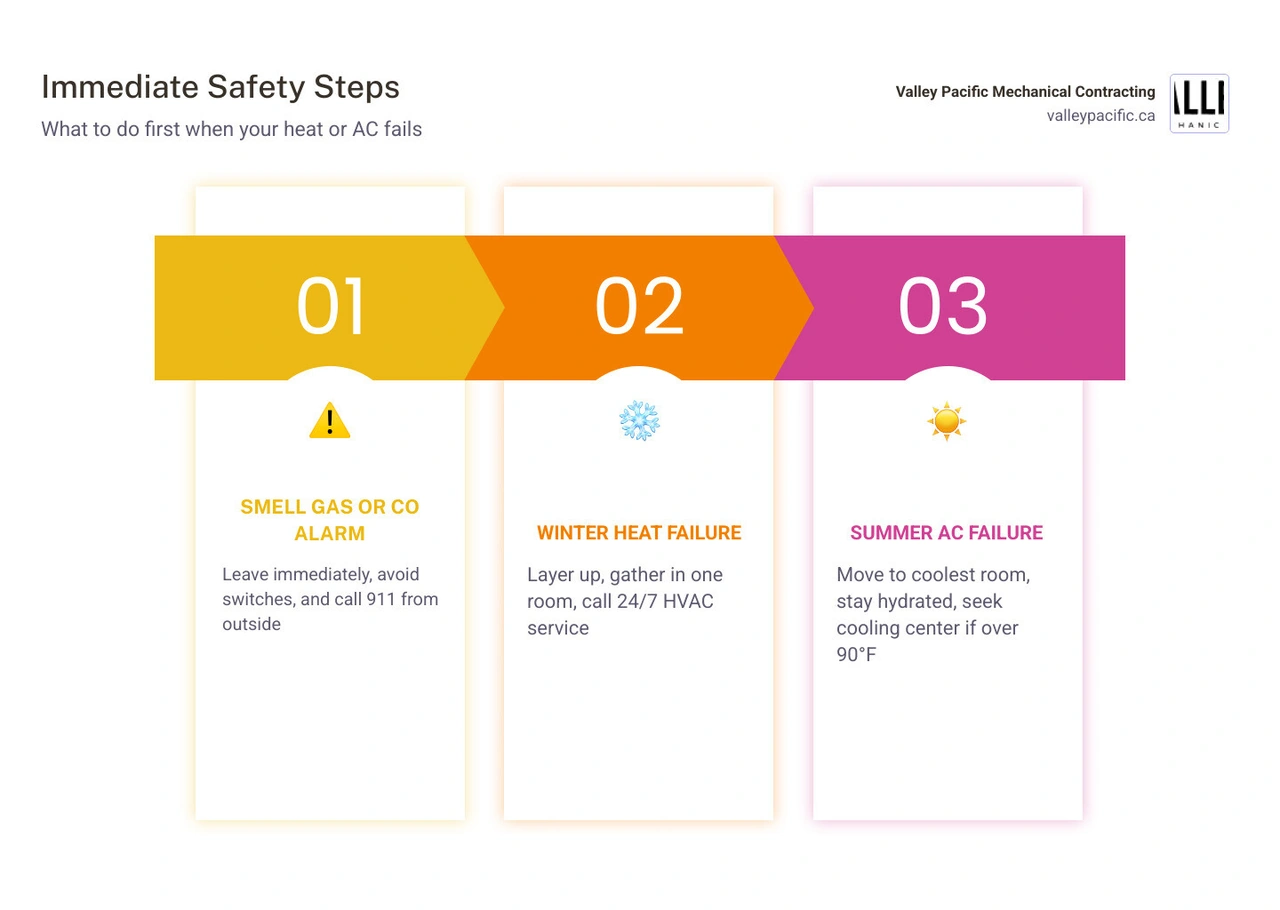
Here are the most important immediate steps to take:
- If you smell gas or your CO alarm sounds — leave your home immediately, do not touch any switches, and call 911 from outside.
- If your heat fails in winter — layer up, gather your household into one room, and call a 24/7 emergency HVAC service.
- If your AC fails during a heat wave — move to your coolest room, close blinds, stay hydrated, and seek a public cooling center if indoor temps exceed 90°F.
- Before calling for help — check your thermostat batteries, circuit breaker, and air filter. Simple fixes resolve roughly 25% of emergency calls.
- Protect vulnerable household members first — infants, seniors, and pets are at the highest risk during any temperature extreme.
Extreme heat kills more people every year than any other weather event in the United States — and Canada faces the same risks. In 2023 alone, heat waves contributed to roughly 2,300 deaths south of the border. Cold weather emergencies carry serious dangers too, from carbon monoxide poisoning to burst pipes. Whether your furnace goes out at 2 a.m. on a freezing January night or your air conditioner quits during a July heat wave in Pitt Meadows, knowing what to do in the first few minutes matters most.
This guide walks you through exactly what to do — and what to avoid — so you can protect your household until help arrives.
Essential how to stay safe during a heating or cooling emergency terms:
Essential Protocols: How to Stay Safe During a Heating or Cooling Emergency
When your home's climate control system breaks down unexpectedly, it is easy to let panic take over. However, the key to protecting your household and your property is a systematic approach to emergency triage. You must quickly determine whether your situation is a minor inconvenience that can wait for a standard service call, or a true emergency that requires immediate intervention, temporary relocation, or evacuation.
Understanding when an HVAC failure is a true emergency depends on two major factors: the outdoor temperature and the vulnerability of your household members.
- Sheltering in Place: If outdoor temperatures are relatively moderate (between 10°C and 25°C), and there are no hazardous smells or sounds, you can generally shelter in place safely. You can keep comfortable by adjusting your clothing, utilizing windows or heavy drapes, and scheduling a prompt but standard service appointment.
- Evacuation Criteria: If your home is experiencing a complete loss of heat when outdoor temperatures are below freezing, or a total loss of cooling during a severe heat wave, sheltering in place can quickly become dangerous. More importantly, if there is any sign of an active hazard—such as a gas leak, electrical sparking, or a carbon monoxide alarm—you must evacuate the premises immediately.

How to Stay Safe During a Heating or Cooling Emergency When Hazards Are Present
Some HVAC failures come with immediate physical hazards that require you to act without a second's delay. The most common and dangerous of these are natural gas leaks and carbon monoxide (CO) accumulation.
Natural gas is naturally odorless and colorless. To ensure leaks can be detected, utility companies add a chemical called mercaptan, which gives the gas a highly distinct "rotten eggs" smell. If you smell rotten eggs or hear a persistent hissing sound near your furnace, boiler, or gas lines, you must treat this as an active emergency gas leak.
Immediate Gas Leak Protocol:
- Do not touch any electrical switches. Turning a light on or off, unplugging an appliance, or even using a landline phone can create a tiny spark capable of igniting the gas.
- Evacuate immediately. Get every person and pet out of the house.
- Call for help from a safe distance. Once you are at least 100 feet away from the home, call 911 and your local gas utility provider. Do not re-enter the home until emergency responders have officially cleared it.
Carbon monoxide is another deadly threat. Known as the "silent killer," CO is completely colorless, odorless, and tasteless. It can leak into your living spaces due to a cracked heat exchanger in your furnace or a blocked exhaust vent. Because you cannot see or smell it, working carbon monoxide detectors on every floor of your home—especially near sleeping areas—are your only line of defense.
If your carbon monoxide alarm sounds, do not assume it is a false alarm. Evacuate your household to the fresh air outside immediately and call 911.
How to Stay Safe During a Heating or Cooling Emergency with Infants, Seniors, and Pets
During a temperature crisis, not everyone in your home will react the same way. Infants, seniors, and pets have a much harder time regulating their body temperatures, making them highly susceptible to extreme cold and heat.
- Infants and Young Children: Babies lose heat rapidly and are at a high risk of hypothermia in a cold house. Conversely, in a hot house, their sweat glands are not fully developed, putting them at risk of rapid dehydration and heat exhaustion. Keep infants clothed in appropriate layers and monitor their breathing and skin temperature closely.
- Seniors (65+): Older adults often have slower metabolisms, reduced physical mobility, or underlying medical conditions (such as cardiovascular or respiratory disease) that make them highly sensitive to temperature extremes. Certain medications can also impair the body's natural ability to sweat or retain heat. Check on elderly family members or neighbors frequently during an emergency.
- Pets: Dogs and cats cannot tell you when they are too hot or too cold. In extreme heat, watch for heavy panting, drooling, and red gums. In extreme cold, ensure they have warm bedding off the floor. Asphalt and dark pavement can burn pet paws during summer heat waves, and a fine of $500 or more can be issued in many jurisdictions for failing to provide adequate shade and water to outdoor animals.
Surviving the Deep Freeze: Winter Heating Crisis Management
Winter in the Lower Mainland, from Maple Ridge to Langley, can bring damp, biting cold that seeps into a home quickly when a heating system fails. If your furnace or boiler breaks down in the middle of a freezing winter night, your primary goal is to slow down the loss of heat from your body and your home.
To manage a winter heating crisis effectively, practice "room camping." Instead of trying to keep your entire house warm, select a single, small room—preferably on the south side of the house to take advantage of daytime sunlight—and gather your household there. Close the doors to all other rooms to trap your body heat and any temporary heat source in one space.
Block drafts by placing rolled-up towels or blankets at the base of doors and windows. Hang heavy blankets or quilts over windows to act as temporary insulation. Dress in multiple thin layers of clothing rather than one thick layer; thin layers trap warm air between them, keeping you warmer. Choose wool or synthetic moisture-wicking fabrics over cotton, which can hold moisture and make you feel colder.
If your furnace breaks down in Langley, consult our Emergency Furnace Repair Langley BC Guide. For boiler systems in Maple Ridge, refer to our Emergency Boiler Repair Maple Ridge Guide to understand your immediate repair options.
Safe Temporary Heating Alternatives
If you must use temporary heating sources while waiting for professional repairs, safety must remain your absolute priority.
- Space Heaters: Only use electric space heaters that are UL-approved and equipped with an automatic tip-over shut-off switch. Always plug space heaters directly into a wall outlet; never use extension cords or power strips, which can easily overheat and cause electrical fires.
- The Three-Foot Rule: Keep all space heaters at least three feet (one meter) away from anything flammable, including blankets, curtains, furniture, and paper. Never leave a space heater running unattended or while you are sleeping.
- Avoid Carbon Monoxide Risks: Never use outdoor heating or cooking equipment indoors. This includes charcoal grills, propane camp stoves, and kerosene heaters, which release deadly amounts of carbon monoxide.
- Do Not Use Your Gas Oven for Heat: Running a gas oven or stove continuously with the door open to heat your home is a major fire hazard and a common cause of carbon monoxide poisoning.
For emergency heating assistance in Maple Ridge, consult our 24 Hour Furnace Repair Maple Ridge Guide or our 24 Hour Boiler Repair Mission BC Tips for professional support in Mission.
Protecting Your Plumbing from Freezing
A secondary but highly destructive risk of a winter heating failure is frozen plumbing. When indoor temperatures drop below 13°C (55°F), the water inside your pipes can begin to freeze. As water freezes, it expands, exerting immense pressure that can easily burst copper, PEX, or galvanized pipes, leading to catastrophic water damage once the system thaws.
To protect your plumbing:
- Let your faucets drip. Turn on both hot and cold faucets slightly to allow a slow, steady drip. Moving water is much harder to freeze than standing water, and keeping the faucet open relieves pressure inside the pipe.
- Open cabinet doors. Open the cabinet doors under your kitchen and bathroom sinks. This allows whatever remaining warmth is left in your living spaces to circulate around the pipes.
- Locate your main water shut-off valve. Make sure you know exactly where your main water valve is located and how to turn it off. If a pipe does burst, shutting the water off immediately will minimize property damage.
If you suspect your pipes have already frozen or if you experience a burst pipe, immediately shut off your main water supply and contact our Plumbing Emergency Service for professional assistance.
Beating the Heat: Summer Cooling Emergency Strategies
While winter cold is a recognized hazard, extreme heat is actually responsible for the highest number of annual deaths among all weather-related hazards in North America. When your air conditioning fails during a summer heat wave in Pitt Meadows or Surrey, indoor temperatures can rapidly climb to dangerous levels.
When managing a summer cooling emergency, your strategy is the opposite of winter: you want to block out heat and maximize ventilation.
- Block the Sun: Close all drapes, blinds, and window coverings during the hottest parts of the day. Outdoor awnings are incredibly effective, reducing the solar heat entering your home by up to 80 percent.
- Stay Hydrated: Drink plenty of water before you feel thirsty. Avoid sugary, caffeinated, or alcoholic beverages, which can actually accelerate dehydration.
- Utilize Cooling Centers: If your home's indoor temperature rises above 32°C (90°F) and you do not have functional AC, seek out air-conditioned community spaces. Public libraries, shopping malls, and designated municipal cooling centers offer safe, cool environments to let your body temperature recover.
- Understand Fan Limitations: Electric fans are excellent for moving air, but they do not cool the air itself. When indoor temperatures exceed 32°C (90°F), fans can actually be counterproductive. Blowing hot air over your skin can accelerate dehydration and increase heat stress, giving you a false sense of cooling. In these temperatures, do not rely on fans as your primary cooling source.
If you need urgent cooling assistance, refer to our Emergency AC Repair Guide to get your system back up and running.
Recognizing Heat-Related Illnesses
During a cooling emergency, it is vital to monitor yourself and your family for signs of heat-related illness. Heat exhaustion can quickly progress to heat stroke, which is a life-threatening medical emergency.
| Condition | Common Symptoms | Immediate Action Required |
|---|---|---|
| Heat Cramps | Painful muscle spasms, heavy sweating, mild fatigue. | Stop activity, move to a cool place, and drink water or sports drinks. |
| Heat Exhaustion | Heavy sweating, pale or clammy skin, rapid and weak pulse, dizziness, headache, nausea, fainting, weakness. | Move to an air-conditioned room, loosen clothing, apply cool wet cloths, and sip cool water. Seek medical help if symptoms worsen or last over an hour. |
| Heat Stroke | Body temperature above 39.4°C (103°F), red, hot, dry or damp skin, rapid and strong pulse, confusion, throbbing headache, dizziness, unconsciousness. | Call 911 immediately. This is a medical emergency. Move the person to a cool area, apply ice packs or cool wet cloths to the neck, armpits, and groin, and do not give them anything to drink. |
Basic Troubleshooting and Professional Intervention
Before you call for emergency HVAC service, it is wise to perform a few basic troubleshooting checks. Nearly a quarter of all emergency service calls are resolved by simple adjustments that you can easily perform yourself.
- Check the Thermostat: Ensure your thermostat is set to the correct mode (Heat or Cool) and that the target temperature is set correctly. If the screen is blank or flashing, try replacing the batteries.
- Inspect the Circuit Breaker: High electrical demand during extreme weather can trip your circuit breakers. Locate your electrical panel and check the breaker dedicated to your heating or cooling system. If it has tripped, reset it once. If it trips again immediately, do not attempt to reset it a second time—this indicates an electrical fault that requires professional attention.
- Check the Air Filter: A heavily clogged air filter can completely choke your system's airflow. In winter, this can cause your furnace to overheat and shut down. In summer, it can cause your AC's evaporator coils to freeze into a solid block of ice. If your filter is dirty, replace it immediately.
- Clear the Outdoor Unit: Ensure your outdoor condenser unit (for ACs and heat pumps) is free of debris, leaves, snow, or ice. A blocked outdoor unit cannot exchange heat efficiently, which can cause the system to shut down.
If you have performed these basic checks and your system still refuses to start, it is time to call in the professionals. For heat pump systems in Langley, our 24 Hour Heat Pump Repair Langley Guide can help you navigate the next steps.
Preparing Your Home to Prevent Future HVAC Emergencies
The best way to handle a heating or cooling emergency is to prevent it from happening in the first place. By taking proactive steps to maintain your home and your HVAC equipment, you can significantly reduce the risk of a sudden system failure.
- Schedule Annual Professional Inspections: Just like your car, your heating and cooling systems require regular maintenance to operate safely and efficiently. Schedule a professional furnace or boiler tune-up in the fall, and an air conditioning check in the spring.
- Invest in Weatherization: Improve your home's thermal boundary by sealing gaps around doors and windows with fresh weather-stripping and caulk. Upgrading your attic and crawl space insulation helps keep your home warmer in the winter and cooler in the summer, reducing the workload on your HVAC system.
- Install Surge Protectors: Power outages and electrical surges during storms can easily fry the sensitive electronic control boards in modern HVAC systems. Installing a whole-home surge protector can protect your equipment from costly electrical damage.
- Keep Spare Supplies: Always keep a stock of replacement air filters, fresh batteries for your thermostat and smoke/CO detectors, and a well-stocked emergency kit with blankets, bottled water, and flashlights.
To learn more about keeping your systems in peak condition, read our comprehensive guide on how to prevent hvac emergencies with maintenance.
Frequently Asked Questions About Temperature Emergencies
What should I do if my furnace stops working in the middle of the night?
First, perform basic troubleshooting: check your thermostat batteries, ensure the system is set to "Heat," and verify that your circuit breaker hasn't tripped. If these are fine, gather your family and pets into a single room, close the door, and layer up with warm blankets and clothing. Do not use your gas stove or oven for heat. Once your household is safe and bundled up, contact a 24/7 HVAC provider. For immediate help in Maple Ridge, consult our 24 Hour Furnace Repair Maple Ridge Guide.
How long will food stay safe in the refrigerator during a power outage?
According to food safety guidelines, an unopened refrigerator will keep food cold and safe for about 4 hours during a power outage. A full freezer will maintain its temperature for approximately 48 hours (or 24 hours if it is only half full), provided the doors remain closed. Keep the doors closed as much as possible to trap the cold air inside.
Are fans effective when indoor temperatures exceed 90 degrees?
No. When indoor temperatures rise above 32°C (90°F), electric fans do not lower your body temperature. Instead, they blow hot air over your skin, which can actually speed up dehydration and increase heat stress. In these temperatures, you should seek an air-conditioned environment, take a cool shower, or use wet cloths to cool down.
Conclusion
When a heating or cooling emergency strikes, you do not have to face it alone. At Valley Pacific Mechanical Contracting, we have spent over 30 years helping homeowners across Maple Ridge, Pitt Meadows, Langley, Mission, Surrey, and Vancouver keep their homes safe and comfortable year-round.
Our team of fully licensed, experienced technicians is available 24/7 to handle your urgent heating, cooling, and plumbing needs. We are dedicated to providing a completely "headache-free" experience, backed by our Daikin Comfort Promise.
Whether you need emergency repairs, a seasonal tune-up, or a system replacement, we are here to support our Lower Mainland community with fast, reliable, and friendly service.
If you are facing a home comfort emergency or want to schedule preventative maintenance, contact us today through our Valley Pacific Services page.


