


Signs Your Air Filter Needs Changing: Know When to Replace

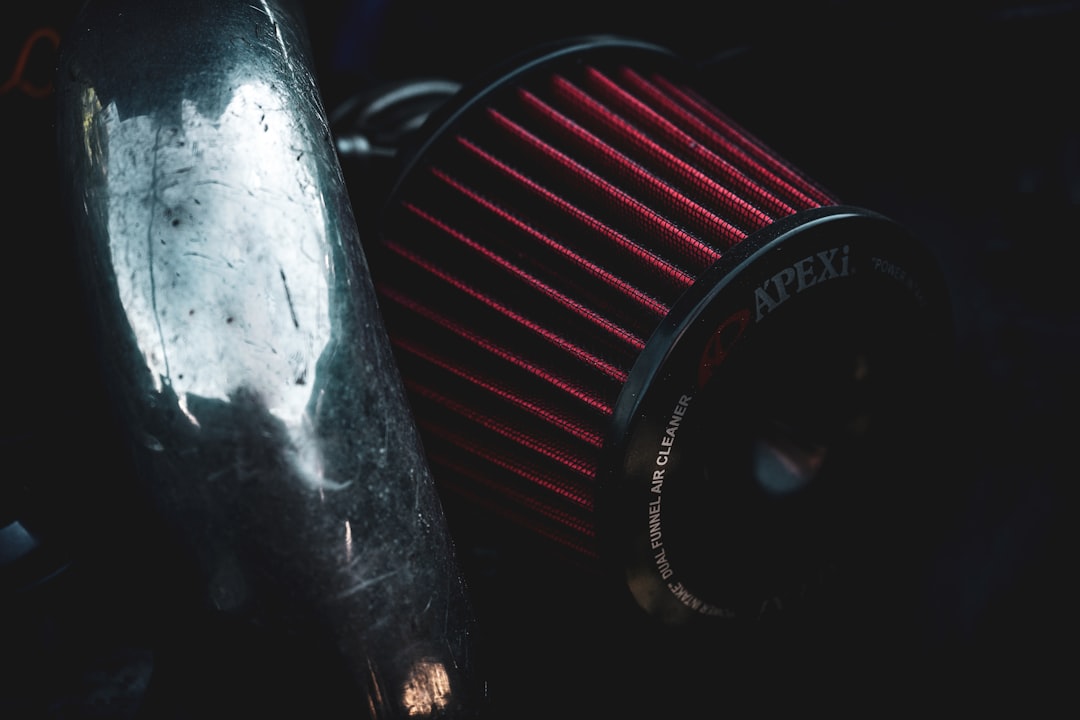


Why Knowing the Signs Your Air Filter Needs Changing Can Save You Money and Headaches
Knowing the signs your air filter needs changing is one of the simplest ways to protect your home comfort system — and your wallet. Most homeowners and drivers don't think about their air filter until something already feels wrong: a room that won't cool down, a spike in the energy bill, or an engine that hesitates on the highway. By then, the damage may already be underway.
Air filters — whether in your home HVAC system or your vehicle — do one essential job: keep dirt, dust, and debris out of places they don't belong. When they get clogged, everything downstream suffers.
Here in the BC Lower Mainland, where wildfire smoke, wet winters, and high pollen seasons put extra strain on filters, staying ahead of replacements matters even more.
Here are the most common signs your air filter needs changing:
- Visibly gray, brown, or clogged filter material
- Weak or reduced airflow from vents or engine intake
- Rising energy bills or noticeably worse fuel economy
- Increased dust buildup on surfaces or around vents
- Allergy symptoms or musty odors getting worse indoors
- Strange noises from your HVAC unit or vehicle engine
- Check engine light illuminated in your vehicle
- Black smoke from your exhaust or a gasoline smell on startup
- Your filter hasn't been changed in 90+ days (HVAC) or 12,000+ miles (vehicle)
Even one or two of these signs is enough reason to pull your filter out and take a look.
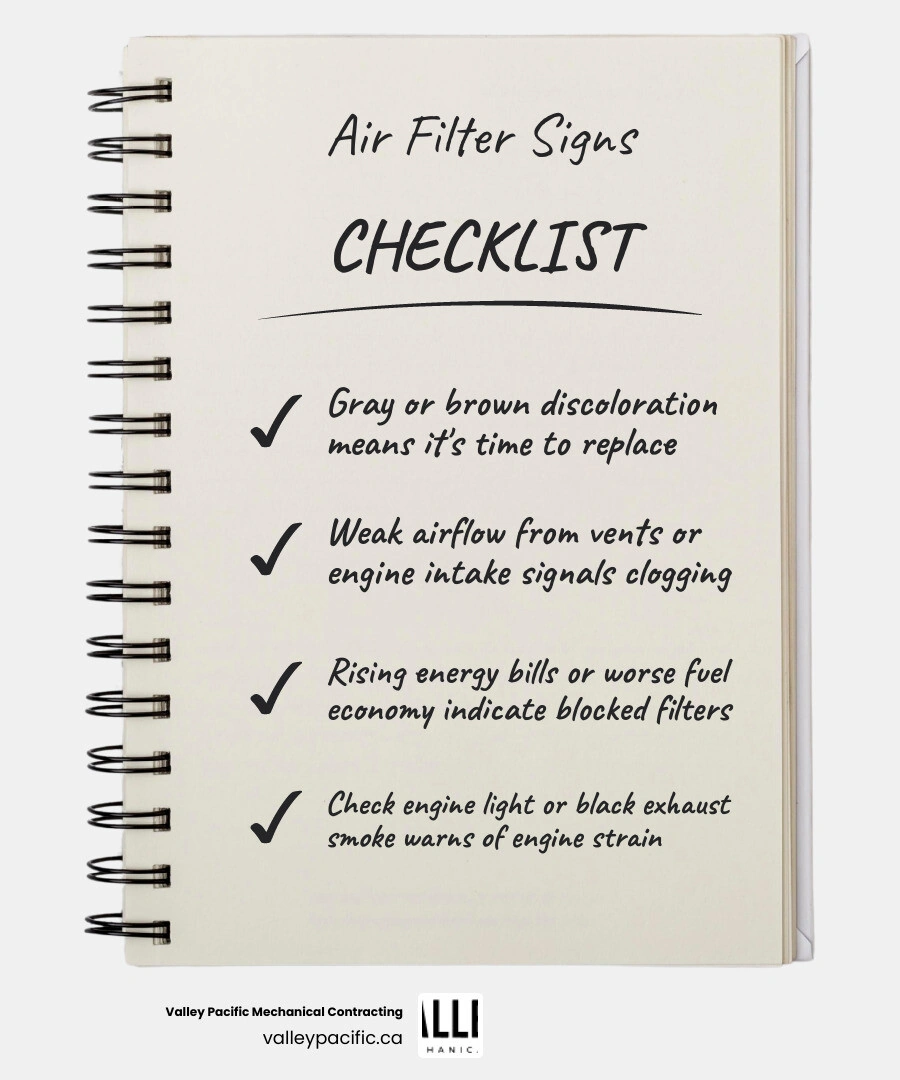
Simple signs your air filter needs changing glossary:
The Dual Role of Air Filtration: Home HVAC vs. Vehicle Engines
Whether you are relaxing in your living room in Maple Ridge or driving down the Fraser Highway in Langley, you are constantly relying on air filtration systems. While they operate in entirely different environments, both residential HVAC filters and automotive air filters share the same core mission: capturing airborne contaminants before they can damage complex machinery or harm human health.
In your home, the HVAC air filter sits within the return air ductwork. Its primary job is to protect the delicate internal components of your heating and cooling system—specifically the blower motor and the heat exchanger or evaporator coil—from dust and debris. As a secondary benefit, it cleans the air circulating through your living spaces.
In your vehicle, the engine air filter protects the combustion chamber. An internal combustion engine relies on a precise mixture of fuel and oxygen to run. To prevent road grit, sand, and insects from entering the engine cylinders, the air must pass through a highly efficient filter first.
The volume of air processed by these systems is staggering:
- Vehicle Engine: A car's engine needs roughly 15 times more air than fuel to run efficiently. For every single gallon of fuel an engine burns, it consumes about 10,000 gallons of air. At idle, a typical 2.0-liter engine pulls in about 25 cubic feet of clean air every single minute.
- Home HVAC: Your heating and cooling system circulates thousands of cubic feet of air per hour. If the filter is clogged, the blower motor must work twice as hard to push air through the dense barrier of trapped dust, leading to massive energy waste.
To help you understand the differences, let us look at how these two types of filters compare:
| Feature | Home HVAC Filter | Automotive Engine Filter |
|---|---|---|
| Primary Purpose | Protects HVAC components & improves indoor air quality | Protects engine combustion chamber from debris |
| Key Medium | Fiberglass, pleated paper, or electrostatic synthetic fibers | Pleated paper, cotton, or synthetic media |
| Air Volume Processed | Thousands of cubic feet per hour | 10,000 gallons of air per gallon of fuel burned |
| Primary Threat | Household dust, pet dander, mold spores, lint | Road dust, sand, insects, pollen, asphalt debris |
| Average Lifespan | 30 to 90 days (depending on thickness) | 12,000 to 15,000 miles (or once a year) |
To find the right filtration setup for your living space, check out our guide on the best air filter for your home.
Engine Air Filters vs. Cabin Air Filters
It is common for drivers to get confused between the two different air filters installed in modern vehicles: the engine air filter and the cabin air filter.
The engine air filter is located under the hood, usually inside a sealed plastic housing near the intake manifold. It ensures that the air used for engine combustion is free of abrasive particles. If grit slips past a damaged or missing engine filter, it can cause severe internal engine wear.
The cabin air filter, on the other hand, has nothing to do with the engine. It is typically located behind your glove box or under the dashboard. Its sole purpose is to clean the air that enters the passenger cabin through the heating, ventilation, and air conditioning (AC) vents. It traps road dust, pollen, exhaust fumes, and outdoor allergens so that you and your passengers can breathe clean air while driving.
Clear Signs Your Air Filter Needs Changing
Recognizing the signs your air filter needs changing before a total system failure occurs can save you from expensive repairs. Let's look at how to identify a clogged filter in both your home and your vehicle.
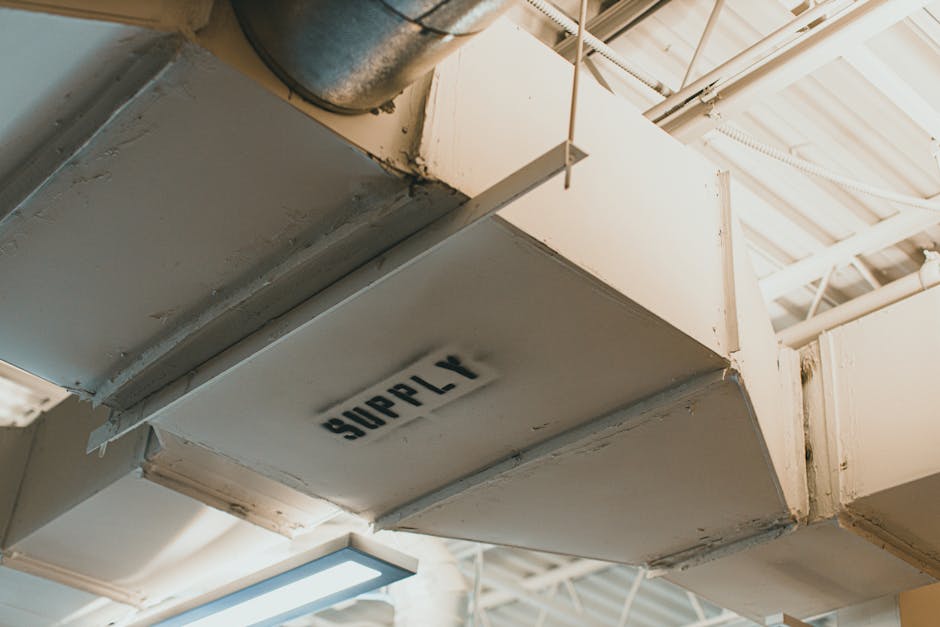
When an air filter becomes overloaded with debris, it creates airflow restriction. In a home, this means your furnace or air conditioner will struggle to push air to the furthest rooms of your house. In a vehicle, it means your engine will gasp for oxygen, leading to noticeable performance drops.
If you suspect your home system is struggling, our professional Furnace Filter Replacement Service can help keep your system running smoothly.
Visual Signs Your Air Filter Needs Changing in Your Home HVAC
A visual check is the most reliable way to confirm if your home HVAC filter is ready for the recycling bin or garbage. We recommend checking your filter once a month.
- Gray or Brown Discoloration: A brand-new filter is clean, bright white or off-white. As it collects dust, dander, and soot, it gradually darkens to a dull gray or dark brown.
- The Light Test: This is the gold standard of DIY diagnostic tests. Remove your HVAC filter and hold it up to a bright light source (such as a window or a flashlight). If the light cannot pass through the pleats easily, the filter is completely full and must be replaced immediately.
- Dusty Supply Vents and Grilles: Have you noticed a dark, fuzzy ring of dust forming on the drywall around your ceiling registers? Or perhaps your return grilles are caked in gray lint? This occurs when a saturated filter can no longer trap incoming particles, allowing them to bypass the filter and settle on your vents.
- Rapid Dust Accumulation: If you find yourself dusting your coffee table and shelves every two days instead of once a week, your filter is likely saturated and simply recirculating dust through your home.
Performance Signs Your Air Filter Needs Changing in Your Vehicle
Your car cannot tell you in plain English that its air filter is clogged, but it will drop several clear performance clues:
- Reduced Horsepower and Sluggish Acceleration: If you press down on the gas pedal to merge onto the highway in Langley and your car feels heavy, unresponsive, or hesitates, a clogged filter is often the culprit. Restricted airflow can reduce engine horsepower by up to 11%.
- Engine Misfires and Rough Idling: When the engine is starved of air, unburnt fuel accumulates in the combustion chamber. This can foul the spark plugs, causing the engine to miss a beat, shake, or make popping and coughing sounds while idling.
- Black Exhaust Smoke or Gasoline Smell: A restricted air supply causes a "rich" fuel mixture, meaning there is too much fuel and not enough oxygen. The unburnt fuel is pushed out through the exhaust system, resulting in a strong smell of gasoline on startup or even black, sooty smoke exiting the tailpipe.
- The Check Engine Light: Modern vehicles are packed with sensors, including the Mass Air Flow (MAF) sensor. If the sensor detects that the air intake volume has dropped below acceptable limits, it will trigger the onboard computer to illuminate the Check Engine light on your dashboard.
The Cost of Neglect: Efficiency, Health, and System Lifespan
Ignoring the signs your air filter needs changing is a gamble that rarely pays off. The consequences of neglecting this simple maintenance task stretch far beyond a dusty living room or a sluggish car ride.
When filters are left unchanged, they cause direct financial harm through inflated utility bills and sudden mechanical breakdowns. For comprehensive care, exploring HVAC Preventative Maintenance is an excellent way to protect your equipment. You can also read about the Benefits of Regular HVAC Maintenance in Pacific Northwest Coastal climates to see how our local weather patterns affect your system.
HVAC System Strain and Health Risks
When your home air filter is choked with dust, your HVAC system has to work overtime to keep your home comfortable. This strain creates several severe risks:
- Frozen Evaporator Coils: Your air conditioner or heat pump relies on a steady stream of warm indoor air passing over the cold evaporator coils to absorb heat. If a dirty filter blocks that airflow, the temperature around the coils drops rapidly. Moisture on the coils freezes solid, turning your AC into a block of ice and causing the system to shut down.
- Short Cycling and Blower Motor Failure: To protect itself from overheating due to restricted airflow, your furnace will frequently shut down and restart (known as short cycling). This constant on-off cycle puts immense wear on the blower motor, eventually burning it out.
- Carbon Monoxide Risks: In a gas furnace, restricted airflow causes the internal heat exchanger to run dangerously hot. Over time, this extreme thermal stress can cause the metal exchanger to crack. A cracked heat exchanger can allow toxic, odorless carbon monoxide gas to leak directly into your home's breathing air.
- Allergy and Respiratory Issues: According to the EPA, indoor air can be two to five times more polluted than outdoor air. A dirty filter can no longer trap microscopic irritants like mold spores, pollen, pet dander, and dust mites. This leads to increased sneezing, itchy eyes, headaches, and severe flare-ups for family members living with asthma or allergies.
Automotive Engine Damage
In your vehicle, a neglected engine air filter can lead to catastrophic internal damage:
- Cylinder Wall Micro-Scratches: When a dirty filter tears or allows fine road grit to bypass the seals, abrasive particles enter the engine cylinders. These tiny pieces of debris act like sandpaper, carving micro-scratches into the polished cylinder walls and destroying the engine's compression over time.
- Spark Plug Fouling: As unburnt fuel deposits soot onto your spark plugs due to a rich air-fuel mixture, the plugs will fail to spark cleanly, leading to poor ignition, hard starts, and expensive catalytic converter damage.
- Mass Air Flow Sensor Damage: Fine dust bypassing a degraded filter can coat the delicate hot-wire element of your MAF sensor, leading to incorrect air-volume readings and erratic engine performance.
Replacement Schedules: How Often to Swap Your Filters
How often should you replace your filters? While there are general guidelines, your actual replacement schedule depends heavily on your lifestyle and local environment.
For your home, we recommend checking out our detailed guide on How Often Should You Change Your HVAC Air Filter. You can also find useful advice in our HVAC Preventative Maintenance Tips and learn How to Maintain Your Heating and Cooling System.
As a general rule of thumb, follow these timelines:
- 1-Inch Pleated HVAC Filters: Replace every 30 to 60 days.
- 2-Inch Pleated HVAC Filters: Replace every 90 days.
- 4-Inch to 5-Inch Media Filters: Replace every 6 to 12 months.
- HEPA Filters: These high-efficiency filters can last up to one year with regular monthly inspections.
- Vehicle Engine & Cabin Air Filters: Most manufacturers recommend replacing both filters every 12,000 to 15,000 miles (approximately 19,000 to 24,000 kilometers) or at least once a year.
Factors That Accelerate Clogging
Several environmental and lifestyle factors can quickly cut your filter's lifespan in half:
- Pet Dander: If you have furry family members who shed, their hair and fine dander will quickly coat the surface of your HVAC filter. Homes with multiple pets should check their filters every 30 days.
- Wildfire Smoke: During the dry summer months in the Lower Mainland, wildfire smoke can carry dense plumes of fine particulate matter (PM2.5) into our communities. This microscopic ash will clog high-efficiency filters rapidly.
- Home Construction and Renovations: If you are remodeling your kitchen in Maple Ridge or sanding drywall in your Pitt Meadows home, the fine gypsum dust will bypass basic filters and clog them within days. Always use a temporary filter during construction and swap it for a fresh one immediately after the work is completed.
- High Pollen Seasons: Spring and early summer bring heavy pollen counts from the dense forests and agricultural areas surrounding Langley and Mission, which can saturate both home and vehicle filters quickly.
- Household Smoking and Candles: Burning candles or smoking tobacco indoors releases fine soot particles and sticky residues that bind to filter fibers, rendering them useless far ahead of schedule.
Frequently Asked Questions About Air Filter Maintenance
Can an air filter be cleaned and reused, or should it always be replaced?
The vast majority of residential HVAC filters and vehicle air filters are disposable and designed for single-use. They are made from pleated paper or electrostatic synthetic fibers that rely on a delicate structure to trap microscopic particles.
Washing a disposable filter destroys its physical fibers, ruins its electrostatic charge, and creates a damp environment where mold and mildew can easily grow. Once reinstalled, a washed disposable filter will either block airflow entirely or allow dust to pass directly into your system.
Only clean a filter if it is explicitly labeled as "washable" or "reusable" by the manufacturer. Reusable filters (often made of plastic mesh or woven synthetic material) must be vacuumed, rinsed thoroughly with lukewarm water, and allowed to dry completely before being put back into service.
What is the "white sheet test" for home HVAC systems?
The white sheet test is a simple, visual DIY diagnostic check to see if your filtration system is failing or letting dirt bypass the filter.
To perform this test, take a clean, white cotton bedsheet or a piece of white cheesecloth and tape it securely over one of your primary supply air vents. Leave it there for about 24 to 48 hours while running your heating or cooling system normally.
If the sheet remains clean and white, your filter is doing its job. If the sheet develops a gray, dusty circle or dark spots, it means your filter is either completely full, incorrectly sized, or has collapsed inside the housing, allowing unfiltered air and duct debris to bypass the filtration system entirely.
Can a dirty air filter cause my air conditioner to freeze up?
Yes, absolutely. A dirty air filter is the single most common cause of frozen air conditioner coils.
Your air conditioning system works by blowing warm indoor air across a cold evaporator coil filled with refrigerant. The refrigerant absorbs the heat from the air, cooling your home. If a dirty filter restricts the airflow, there will not be enough warm air passing over the coil to balance out the freezing temperatures of the refrigerant.
As a result, the condensation on the coil will freeze solid. Once ice begins to form, it blocks any remaining airflow, compounding the problem until your entire indoor unit is encased in ice and your system shuts down completely.
Conclusion
Keeping a close eye on the signs your air filter needs changing is one of the most effective, low-cost habits you can build to protect your home comfort and your vehicle's engine health. A simple filter swap can lower your monthly energy consumption by 5% to 15%, prevent premature equipment failure, and dramatically improve the quality of the air your family breathes.
At Valley Pacific Mechanical Contracting, we believe in providing a completely "headache-free" experience for our residential and commercial clients across the BC Lower Mainland—including Maple Ridge, Pitt Meadows, Langley, Surrey, and Vancouver. Backed by over 30 years of mechanical expertise, our friendly, licensed technicians are always ready to help you keep your home systems running safely and efficiently. Plus, with our commitment to the Daikin Comfort Promise, you can rest easy knowing that your comfort is always our top priority.
Don't wait for your system to struggle. Schedule your preventative maintenance plan today and let our expert team keep your home running at peak performance all year round!


