


What to Expect During an Emergency Service Call: Detailed Guide


What to Expect During an Emergency Service Call in the Lower Mainland
What to expect during an emergency service call is something every homeowner in the Lower Mainland should understand before a crisis hits — not while your furnace is dead on a freezing January night or your AC has given out during a July heat dome. When your heating or cooling system fails unexpectedly, the uncertainty of not knowing what comes next can be just as stressful as the breakdown itself.
Over 60% of HVAC emergencies happen during peak seasons — exactly when your system is working hardest and a professional is hardest to reach. Knowing the process in advance means you can stay calm, act fast, and help the technician resolve the issue as quickly as possible.
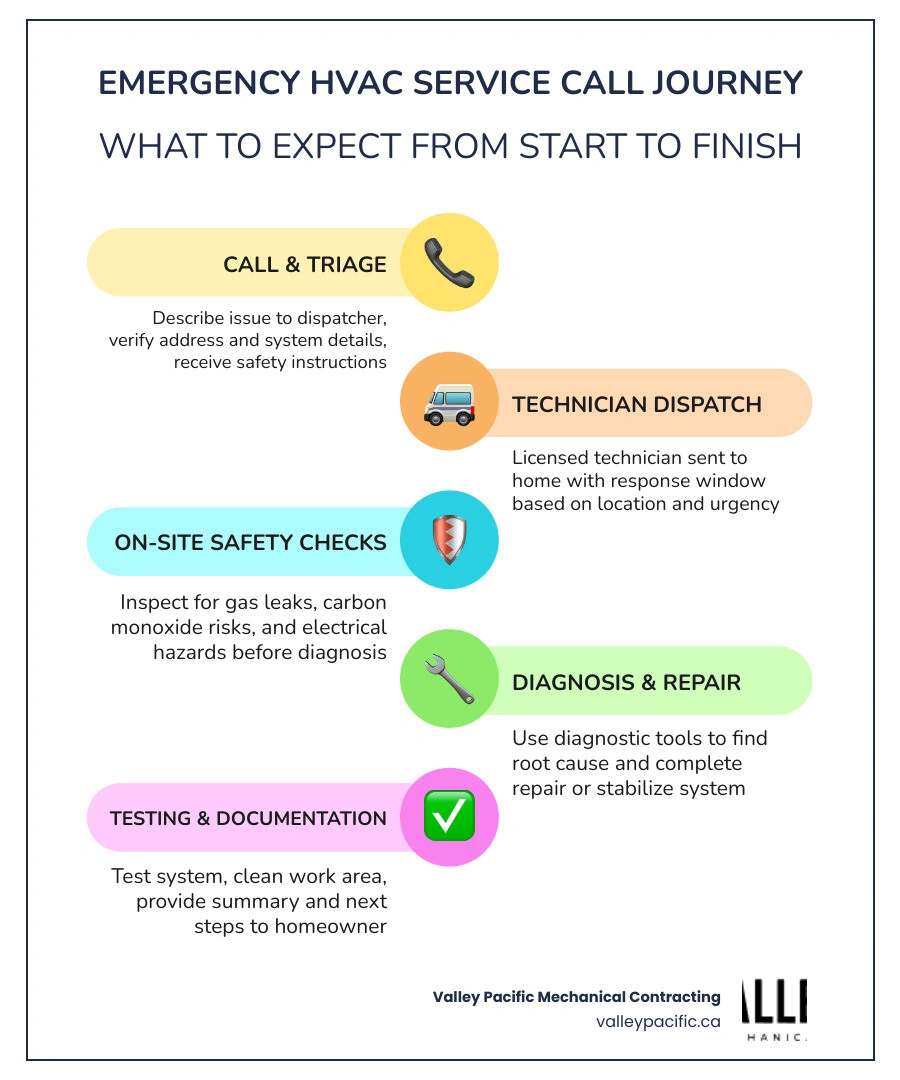
Here is a quick overview of what the emergency service process looks like from start to finish:
- Call and triage - You describe the issue to a dispatcher, who assesses urgency and gathers key details about your system and location.
- Technician dispatch - A licensed technician is sent to your home, typically arriving within a short response window depending on your location in the Lower Mainland.
- On-site safety checks - The technician inspects for gas leaks, carbon monoxide risks, and electrical hazards before anything else.
- Diagnosis and repair - Using specialized diagnostic tools, the technician identifies the root cause and completes the repair or stabilizes the system.
- Testing and documentation - The system is tested under real operating conditions, the work area is cleaned up, and you receive a summary of what was done and what to watch for.
Most emergency repairs are resolved within one to three hours once the technician is on-site. Simple issues like a failed capacitor or tripped breaker can take under an hour, while more complex repairs involving motors or heat exchangers may take longer.
The sections below walk you through each stage in detail — from recognizing a true emergency to preparing your home and understanding exactly what happens when the technician arrives.
Explore more about what to expect during an emergency service call:
- emergency hvac repair tips for the lower mainland homeowners
- how to prevent hvac emergencies with maintenance
- when an hvac failure is a true emergency
Is It a True HVAC Emergency or a Routine Repair?
When your heating or cooling system acts up, your first instinct might be to call for immediate help. However, before requesting an urgent dispatch, it is helpful to determine whether your situation is a true residential emergency or a routine issue that can wait for a standard appointment.
A true HVAC emergency is defined by immediate risks to your family’s health, your home’s structural safety, or the integrity of your property. For instance, a complete heating failure when outdoor temperatures plunge below freezing poses a direct threat of hypothermia and frozen water pipes. Conversely, if your system is making an unusual noise but is still maintaining a safe temperature on a mild autumn afternoon, it is likely a routine repair.
Understanding this distinction is especially important during peak heating and cooling seasons, when high demand can strain local service schedules. By accurately assessing the situation, you can avoid unnecessary after-hours service calls while ensuring that critical safety hazards are addressed immediately. To help you evaluate your system's status, read our guide on When an HVAC Failure is a True Emergency.
| Issue Type | Emergency HVAC Situation | Routine HVAC Repair |
|---|---|---|
| Safety Hazards | Gas odors, carbon monoxide alarms, electrical sparking, burning smells. | Minor rattling noises, worn-out fan belts. |
| Extreme Weather | Heating failure below 0°C; cooling failure above 30°C with vulnerable residents. | System struggling slightly during mild 15°C weather. |
| Property Risk | Active water leaks from boilers or primary condensate lines flooding walls. | Slow, minor condensate drip contained in a drain pan. |
| System Status | Total system shutdown with no airflow or response from the thermostat. | System runs but cycles on and off more frequently than usual. |
Red Flags That Require Immediate Dispatch
If you notice any of the following warning signs, do not wait to see if the problem improves. These are critical red flags that require immediate professional attention to protect your household:
- The Odour of Rotten Eggs: Natural gas is inherently odorless, but utility companies add a chemical called mercaptan to give it a distinct rotten egg smell. If you smell gas near your furnace, boiler, or gas meter, evacuate your home immediately and call for emergency assistance from a safe distance.
- Carbon Monoxide (CO) Alarms: CO is a colorless, odorless, and tasteless gas that can be lethal. If your CO detector sounds, turn off your heating system, open the windows, evacuate the premises, and call emergency services.
- Burning Smells or Visible Smoke: A strong plastic or electrical burning odor coming from your vents or the equipment itself often indicates melting wire insulation, an overheated blower motor, or failing electrical components.
- Electrical Sparking or Repeatedly Tripping Breakers: If you see sparks or if the circuit breaker dedicated to your HVAC system trips immediately after being reset, there is a severe electrical fault that poses a fire hazard.
- Total Heating Failure in Freezing Weather: When winter temperatures drop below freezing, a lack of heating can quickly lead to burst pipes, which can cause catastrophic water damage inside your walls and floors.
For a deeper dive into managing these urgent scenarios safely, review our Emergency HVAC Repair Tips for the Lower Mainland Homeowners.
Troubleshooting Steps Before You Call
Before you pick up the phone to request an emergency dispatch, performing a few basic checks can save you time and stress. Roughly 40% of emergency service calls stem from simple, easily resolvable issues that do not actually require a technician.
- Check the Thermostat Batteries and Settings: Ensure your thermostat is turned on, set to the correct mode (Heat or Cool), and that the temperature setting is active. If the display is blank or fading, replace the batteries first.
- Inspect the Circuit Breaker Panel: Locate your main electrical panel and check the breaker labeled for your furnace, heat pump, or air conditioner. If it has tripped to the "Off" or neutral position, switch it fully to "Off" and then back to "On" once. Note: If it trips a second time, do not attempt to reset it again; call a professional.
- Examine the Air Filter: A severely clogged air filter restricts airflow, which can cause a furnace to overheat and shut down via its high-limit switch, or cause an air conditioning coil to freeze over. Replace a dirty filter immediately and see if the system restarts.
- Verify the Emergency Power Switches: Many heating systems have an external power switch (which looks like a standard light switch) located on or near the indoor unit. Ensure this switch has not been accidentally flipped to the "Off" position.
Taking these preventive troubleshooting steps is a key part of maintaining a reliable system. Learn more about avoiding unexpected breakdowns by reading How to Prevent HVAC Emergencies with Maintenance.
What to Expect During an Emergency Service Call: Step-by-Step

When you contact us for emergency assistance, we follow a structured, highly disciplined process to restore safety and comfort to your home. Knowing what to expect during an emergency service call helps remove the guesswork and keeps you informed from the moment you place the call to the final sign-off.
Step 1: The Initial Triage and Dispatch Call
The emergency process begins the moment you speak with our dispatcher. Think of this initial call as a triage protocol designed to gather critical information so our technician arrives fully prepared. During this conversation, the dispatcher will ask you several key questions:
- What are the specific symptoms your system is exhibiting (e.g., no heat, unusual noises, water leaks, or error codes on the thermostat)?
- Have you noticed any burning smells, gas odors, or sounding alarms?
- What is the make, model, and approximate age of your heating or cooling equipment?
- Is there anyone vulnerable in the home, such as infants, elderly family members, or individuals with medical conditions?
Based on your answers, the dispatcher will verify your address, provide immediate safety instructions (such as turning off the main gas valve or shutting down the system at the breaker), and assign a priority level to your call. For residents in the Langley area experiencing winter heating failures, our Emergency Furnace Repair Langley BC Guide outlines this initial contact phase in detail.
Step 2: On-Site Safety Checks and Diagnostics
Upon arrival at your property, our technician's first priority is to perform a series of vital safety checks. Before touching any mechanical parts, the technician will inspect the area around the equipment for gas leaks, test for carbon monoxide levels, and check the electrical connections for signs of overheating or short circuits. This step is critical; over 51,000 home fires annually are attributed to electrical failures, and we ensure your system is electrically sound before proceeding.
Once safety is confirmed, the technician transitions to diagnostic testing. Using specialized tools such as multimeters, pressure gauges, and combustion analyzers, they perform a systematic root cause analysis. Rather than simply replacing the first broken part they see, they inspect connected components to ensure a minor fault hasn't caused a cascading failure elsewhere in the system. For homeowners utilizing hydronic systems, our Emergency Boiler Repair Maple Ridge Guide explains how these diagnostic steps are tailored to hot water heating systems.
Step 3: Resolving the Issue and System Testing
After identifying the root cause of the breakdown, the technician will clearly explain their findings and outline the necessary repairs. Once you approve the plan, they will retrieve the required parts from their service vehicle—which we keep fully stocked with common replacement components—to complete the repair.
Once the new parts are installed, the technician does not simply pack up and leave. They will cycle the system through several complete runs to verify that all safety limits, temperature rises, and pressure levels are within manufacturer specifications. Finally, they will clean up the work area, leaving your utility space as clean as they found it. If you are dealing with a cooling failure during a summer heatwave, you can read our Emergency AC Repair Guide to see how we verify system pressures and refrigerant charges before wrapping up the service call.
Common HVAC Emergencies and How They Are Resolved
Different seasons bring different mechanical challenges. Understanding the most common HVAC emergencies and how we resolve them can help you understand what our technicians are looking for when they inspect your system.
Furnace and Boiler Failures in Cold Weather
During our damp, cold winters in the Lower Mainland, a heating failure is more than just uncomfortable—it can cause serious damage to your home. Some of the most common heating emergencies we encounter include:
- Cracked Heat Exchangers: In a gas furnace, a cracked heat exchanger can allow toxic carbon monoxide to leak into your home’s breathing air. If we detect a crack during our safety inspection, the system must be shut down immediately for safety, and the heat exchanger or the entire furnace must be replaced.
- Failed Pilot Lights or Igniters: Modern furnaces use hot-surface igniters or spark ignition systems to light the burners. If these components crack or wear out, the furnace will cycle but fail to produce flame. We resolve this by replacing the igniter and cleaning the flame sensor.
- Boiler Leaks and Zone Valve Failures: Hydronic heating systems rely on pressurized hot water. A leaking boiler pipe or a failed zone valve can prevent heat from reaching specific areas of your home. Addressing water leaks quickly is essential, as the average home can waste nearly 10,000 gallons of water annually due to leaks, which can damage floors and drywall.
To learn more about local heating repairs, check out our 24-Hour Furnace Repair Maple Ridge Guide. We also provide specialized local emergency services across neighboring communities, which you can read about in our Emergency Furnace Repair Pitt Meadows BC Guide and our Emergency Furnace Repair Mission BC Guide. If your home relies on hot water heating, our 24-Hour Boiler Repair Mission BC Tips offer practical advice on handling hydronic failures.
Air Conditioning and Heat Pump Failures in Extreme Heat
When summer temperatures spike, air conditioners and heat pumps work under immense load, which can lead to sudden mechanical or electrical failures:
- Frozen Evaporator Coils: Restricted airflow (often from a dirty filter) or a refrigerant leak can cause the indoor evaporator coil to drop below freezing, turning into a solid block of ice. We resolve this by turning off the cooling system to let the coil safely melt, finding and repairing the refrigerant leak, and restoring proper airflow.
- Failed Capacitors: The start and run capacitors provide the electrical boost needed to start the compressor and fan motors. Capacitors are highly sensitive to heat and can fail during hot weather. Replacing a failed capacitor is a straightforward repair that can usually be completed in under an hour.
- Reversing Valve Issues in Heat Pumps: In a heat pump, the reversing valve directs the flow of refrigerant to switch the system between heating and cooling modes. If this valve gets stuck, your system may blow warm air when you need cooling.
If your heat pump or AC goes down during a heatwave, you can find localized support in our 24-Hour Heat Pump Repair Langley Guide, our 24-Hour Heat Pump Repair Pitt Meadows Guide, or our 24-Hour Heat Pump Repair Maple Ridge Guide. For traditional air conditioning systems, our 24-Hour AC Service Maple Ridge Tips are an excellent resource for restoring cool air quickly.
How to Prepare Your Home for the Technician's Arrival
When an emergency technician is en route to your home, taking a few minutes to prepare your space can make the service call significantly faster, safer, and more efficient.
Clearing Access and Securing Pets
To diagnose and repair your system quickly, our technician will need unimpeded access to several key areas of your property:
- Clear the Indoor Unit Area: Ensure there is a clear, well-lit path to your furnace, boiler, or indoor heat pump handler. Remove any stored boxes, seasonal items, or laundry that might be blocking the equipment. Technicians need at least two to three feet of working clearance around the unit.
- Clear the Outdoor Unit Area: If you have an outdoor air conditioner or heat pump, clear away any overgrown brush, weeds, leaves, or snow.
- Secure Your Pets: The noise of diagnostic testing and the movement of tools can be stressful for pets. For their safety and the safety of our technician, please secure your dogs, cats, or other animals in a separate room before the technician arrives.
- Locate the Electrical Panel: Ensure the path to your main electrical panel is clear so the technician can safely shut off and restore power to the HVAC system during testing.
These preparation steps complement regular maintenance to keep your home safe. For more information on keeping your systems running smoothly, read our resource on HVAC Preventative Maintenance.
Gathering System History and Documentation
Providing our technician with a brief history of your equipment can speed up the diagnostic process. If possible, try to gather the following details before they arrive:
- Age of the Equipment: Knowing how old your system is helps the technician determine if a component is nearing the end of its natural lifespan.
- Maintenance Records: If you have records of recent tune-ups or filter changes, keep them handy.
- Previous Repair History: If the system has experienced similar issues in the past, let the technician know. This can help them identify recurring patterns or underlying issues.
- Warranty Information: If your system is still covered under a manufacturer’s warranty, having those documents ready can help streamline the parts replacement process.
To schedule a visit or ask questions about your system's history, you can reach out directly via our Contact Us page.
Frequently Asked Questions About Emergency HVAC Services
What to expect during an emergency service call if I smell gas?
If you smell a rotten egg odor near your gas furnace or boiler, you must prioritize personal safety over all else. Stop what you are doing and evacuate everyone from the home immediately.
- Do not flip any light switches, use your house phone, or plug in appliances, as a tiny electrical spark could ignite the gas.
- Do not start your car if it is parked in an attached garage.
- Leave the front door open as you exit to help ventilate the space.
- Once you are a safe distance from the house, call your local gas utility company and 911.
- Once the utility company has shut off the gas supply and declared the home safe to enter, our technicians can perform a thorough gas leak inspection and repair the faulty pipe or valve.
What to expect during an emergency service call for a heat pump?
When a technician inspects a heat pump during an emergency call, they focus on components that are unique to these dual-heating and cooling systems. The technician will check the reversing valve to ensure it is directing refrigerant properly, test the defrost control board (which prevents ice buildup on the outdoor coil during winter), and inspect the auxiliary electric heat strips. These heat strips act as a backup heating source during extreme cold, and confirming they are working properly ensures your home stays warm even if the primary compressor fails.
How long does a typical emergency service visit take?
On average, an emergency HVAC service visit takes between one and three hours once the technician is on-site. The exact timeline is broken down as follows:
- Initial Walkthrough and Safety Checks: 10 to 15 minutes.
- System Diagnostics and Root Cause Analysis: 20 to 45 minutes.
- Repairs and Component Replacement: 30 minutes to two hours, depending on the complexity of the issue and part availability.
- Testing, Safety Verification, and Cleanup: 15 to 30 minutes.
If a highly specialized part is required and cannot be sourced immediately after hours, our priority shifts to stabilizing your home. This may include providing temporary heating solutions to keep your family comfortable until the part is delivered and installed.
Conclusion
Facing an unexpected heating or cooling breakdown can be incredibly stressful, but understanding what to expect during an emergency service call can help you navigate the situation with confidence. By recognizing the warning signs of a true emergency, performing basic troubleshooting, and preparing your home for the technician's arrival, you can help ensure a fast and safe resolution to your HVAC issues.
At Valley Pacific Mechanical Contracting Ltd., we are proud to be an Indigenous-owned business based in Maple Ridge, serving families and businesses across the Lower Mainland—including Langley, Pitt Meadows, Mission, Surrey, and Vancouver. With over 30 years of mechanical contracting expertise, our fully licensed technicians are committed to providing a "headache-free" experience. We stand behind our work with 24/7 emergency service and the Daikin Comfort Promise, ensuring your home remains safe, comfortable, and warm in every season.
If you are experiencing an HVAC emergency or want to protect your home from future breakdowns, contact us today to learn more about our comprehensive Valley Pacific Services.


